


![(1R,3S,5R)-2-{[(2-Methyl-2-propanyl)oxy]carbonyl}-2-azabicyclo[3.1.0]hexane-3-carboxylic acid structure](https://static.chemtradehub.com/structs/197/197142-34-0-6a44.webp "(1R,3S,5R)-2-{[(2-Methyl-2-propanyl)oxy]carbonyl}-2-azabicyclo[3.1.0]hexane-3-carboxylic acid structure")
ReaxFF-MPNN machine learning potential: a combination of reactive force field and message passing neural networks
文献情報
出版日
2021-08-10
DOI
10.1039/D1CP01656C
インパクトファクター
3.676
著者
Li-Yuan Xue, Yu-Shi Wen, Shi-Quan Feng, Xiao-Na Huang, Lei Guo, Heng-Shuai Li, Shou-Xin Cui, Gui-Qing Zhang
原文を見る
要旨
Reactive force field (ReaxFF) is a powerful computational tool for exploring material properties. In this work, we proposed an enhanced reactive force field model, which uses message passing neural networks (MPNN) to compute the bond order and bond energies. MPNN are a variation of graph neural networks (GNN), which are derived from graph theory. In MPNN or GNN, molecular structures are treated as a graph and atoms and chemical bonds are represented by nodes and edges. The edge states correspond to the bond order in ReaxFF and are updated by message functions according to the message passing algorithms. The results are very encouraging; the investigation of the potential, such as the potential energy surface, reaction energies and equation of state, are greatly improved by this simple improvement. The new potential model, called reactive force field with message passing neural networks (ReaxFF-MPNN), is provided as an interface in an atomic simulation environment (ASE) with which the original ReaxFF and ReaxFF-MPNN potential models can do MD simulations and geometry optimizations within the ASE. Furthermore, machine learning, based on an active learning algorithm and gradient optimizer, is designed to train the model. We found that the active learning machine not only saves the manual work to collect the training data but is also much more effective than the general optimizer.
おすすめジャーナル

Chemistry of Heterocyclic Compounds

Journal of the American Chemical Society

Chemical & Pharmaceutical Bulletin

Advances in Colloid and Interface Science

Ferroelectrics

Anti-Corrosion Methods and Materials

Canadian Metallurgical Quarterly

Chemistry of Natural Compounds

Cement and Concrete Research

Journal of the Chinese Chemical Society
関連文献
Structural dynamics upon photoexcitation-induced charge transfer in a dicopper(i)–disulfide complex
Mateusz Rebarz, Martin Rohrmüller, Shirly Espinoza, Miroslav Kloz, Norman Kretzschmar, Adam Neuba, Jochen Ortmeyer, Roland Schoch, Matthias Bauer, Wolf Gero Schmidt, Gerald Henkel
2018-02-12
Paper
DOI: 10.1039/C7CP04880G
Associative detachment (AD) paths for H and CN− in the gas-phase: astrophysical implications
Stanka V. Jerosimić, Franco A. Gianturco, Roland Wester
2017-10-17
Paper
DOI: 10.1039/C7CP05573K
Atomistic modeling of La3+ doping segregation effect on nanocrystalline yttria-stabilized zirconia
Shenli Zhang, Haoyan Sha, Ricardo H. R. Castro, Roland Faller
2018-04-17
Paper
DOI: 10.1039/C8CP02010H
Singlet–triplet energy gaps and the degree of diradical character in binuclear copper molecular magnets characterized by spin-flip density functional theory
Natalie Orms, Anna I. Krylov
2018-01-22
Paper
DOI: 10.1039/C7CP07356A
Adsorption of amphiphilic graft copolymers in solvents selective for the grafts on a lyophobic surface: a coarse-grained simulation study
Zuzana Limpouchová, Karel Procházka
2018-01-29
Paper
DOI: 10.1039/C7CP08327K
Bandgap scaling and negative differential resistance behavior of zigzag phosphorene antidot nanoribbons (ZPANRs)
Santhia Carmel, Adhithan Pon, N. Meenakshisundaram, R. Ramesh, Arkaprava Bhattacharyya
2018-05-01
Paper
DOI: 10.1039/C8CP01435C
Anomalous diffusion of water molecules at grain boundaries in ice Ih
Pedro Augusto Franco Pinheiro Moreira, Roberto Gomes de Aguiar Veiga, Ingrid de Almeida Ribeiro, Julian Helfferich
2018-04-30
Paper
DOI: 10.1039/C8CP00933C
Effects of CNT size on the desalination performance of an outer-wall CNT slit membrane
Elisa Y. M. Ang, Teng Yong Ng, Rongming Lin, Zishun Liu, K. R. Geethalakshmi
2018-04-19
Paper
DOI: 10.1039/C8CP01191E
The structure–electrochemical property relationship of quinone electrodes for lithium-ion batteries
Licheng Miao, Luojia Liu, Zhenfeng Shang, Yixin Li, Yong Lu, Fangyi Cheng, Jun Chen
2018-04-17
Paper
DOI: 10.1039/C8CP00597D
B2O3/SiO2 substitution effect on structure and properties of Na2O–CaO–SrO–P2O5–SiO2 bioactive glasses from molecular dynamics simulations
Mengguo Ren, Xiaonan Lu, Lu Deng, Po-Hsuen Kuo, Jincheng Du
2018-05-11
Paper
DOI: 10.1039/C7CP08358K
こちらもおすすめ
化合物よくある質問
間溴苯甲酰腈の市場動向や研究トレンドはどうですか?
間 brom 苯甲酰腈は、合成化学や薬物化学において重要な Intermediate として使用されています。市場動向としては、その合成性と機能性により、研究開...
24999-51-7(3-Bromophenyl)(oxo)...
287966-62-5Desulfo Glucoraphani...
化合物よくある質問
Methyl 2-amino-5-(trifluoromethyl)benzoateに適用される法規ガイドラインは何ですか?
CAS番号117324-58-0の塩酸メチル2アミノ-5-トリフルオロメチルベンゼートは、GHS分類により腐食性物質と判定されます。REACH規則では、製造、販...
117324-58-0Methyl 2-amino-5-(tr...
化合物よくある質問
3-ブロモ-1,3,4,5-四水化-2H-1-ベンザアゼピン-2-オンは安全ですか?
毒性があるため、適切な安全対策が必須です。皮膚や粘膜への刺激性が強く、吸入や誤飲により健康被害を引き起こす可能性があります。取扱時にはガスマスクや手袋、眼鏡を使...
86499-96-93-Bromo-1,3,4,5-tetr...
化合物よくある質問
三氟甲基ピリジン-2-甲アミン塩酸塩は安全ですか?
三氟甲基ピリジン-2-甲アミン塩酸塩は安全性に注意が必要です。毒性は低レベルですが、直接的接触や吸入は避けるべきです。適切な手袋や防塵マスクを着用し、密閉された...
871826-12-9(5-(Trifluoromethyl)...
化合物よくある質問
1-エチル-4-(4-硝基フェニル)ピペリジンは安全ですか?
1-エチル-4-(4-硝基フェニル)ピペリジンは有毒であり、取扱には注意が必要です。保管や作業中に手袋を着用し、目や皮膚に接触しないように注意する必要があります...
115619-00-61-Ethyl-4-(4-nitroph...
化合物よくある質問
1,1-ジメトキシプロパン-2-オンは安全ですか?
1,1-ジメトキシプロパン-2-オンは一般的に低毒性ですが、皮膚や目への刺激性があるため、取扱いには注意が必要です。蒸気や液体の吸入には有害な可能性があり、適切...
6342-56-91,1-dimethoxypropan-...
化合物よくある質問
コバルト(II) 3,3'-{[(1S,2S)-1,2-ジメチルフENCYCLICALE-1,2-エチエンジイル]ビス[ニトロリルメチルイリデン]}ビス[4-オキソ-2-ペンテン-2-olate]について「に適用される法規ガイドラインは何ですか?
この化合物はCAS番号259259-80-8に対応しています。GHS分類では、毒性、燃焼性、反応性、炎症性を考慮に入れ、適切な危険性分類が行われます。REACH...
259259-80-8Cobalt(2+) (2E,2'E)-...
化合物よくある質問
「カーバミル酸, N-[8-[[2-[[2-(2,6-ジオキソ-3-ピペリジニル)-2,3-ジオキソ-1,3-ジヒドロ-1H-イソイソインドール-4-イルオキシ]アセチル]アミノ]オクチル]-1,1-ジメチレチルエステル」はどのように保存すればよいですか?
この化合物は、冷却庫で-20℃の温度、乾燥した容器に保管し、直日光から保護する必要があります。湿度の高い環境や高温は避けてください。
1950635-34-32-Methyl-2-propanyl ...
1433975-21-3FMoc-D-4-Aph(tBu-CbM...
掲載誌
Physical Chemistry Chemical Physics

CiteScore:
5.5
自己引用率:
10.3%
年間論文数:
3036
Physical Chemistry Chemical Physics (PCCP) is an international journal co-owned by 19 physical chemistry and physics societies from around the world. This journal publishes original, cutting-edge research in physical chemistry, chemical physics and biophysical chemistry. To be suitable for publication in PCCP, articles must include significant innovation and/or insight into physical chemistry; this is the most important criterion that reviewers and Editors will judge against when evaluating submissions. The journal has a broad scope and welcomes contributions spanning experiment, theory, computation and data science. Topical coverage includes spectroscopy, dynamics, kinetics, statistical mechanics, thermodynamics, electrochemistry, catalysis, surface science, quantum mechanics, quantum computing and machine learning. Interdisciplinary research areas such as polymers and soft matter, materials, nanoscience, energy, surfaces/interfaces, and biophysical chemistry are welcomed if they demonstrate significant innovation and/or insight into physical chemistry. Joined experimental/theoretical studies are particularly appreciated when complementary and based on up-to-date approaches.
おすすめ化合物
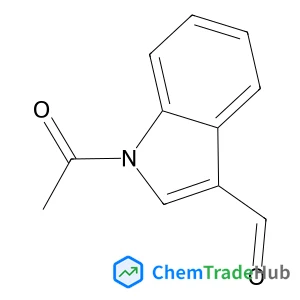
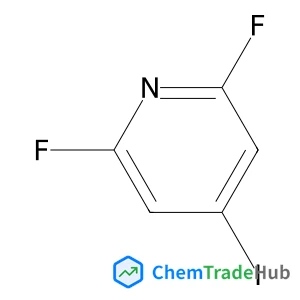
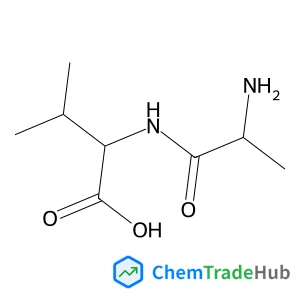
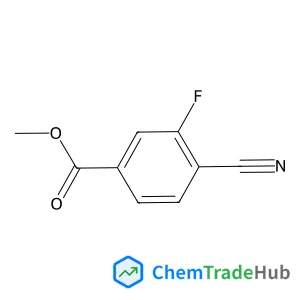
おすすめサプライヤー




免責事項
このページに表示される学術雑誌情報は、参考および研究目的のみを目的としています。当社は雑誌出版社とは提携しておらず、投稿の取り扱いも行っておりません。出版に関するお問い合わせは、各雑誌出版社に直接ご連絡ください。
表示されている情報に誤りがある場合は、support@chemtradehub.com までご連絡ください。迅速に確認し、対応いたします。