


Effects of molecular shape on alcohol aggregation and water hydrogen bond network behavior in butanol isomer solutions
文献情報
出版日
2021-05-18
DOI
10.1039/D1CP00634G
インパクトファクター
3.676
著者
Seungeui Choi, Saravanan Parameswaran, Jun-Ho Choi
原文を見る
要旨
Despite butanol isomers such as n-butanol, sec-butanol, isobutanol and tert-butanol having the same chemical formula, their liquid–liquid phase diagrams are distinct. That is, tert-butanol is miscible in water at all concentrations, while the other three butanol isomers are partially miscible under ambient conditions. The molecular shape of tert-butanol is close to globular and differs from the other three butanol molecules with a relatively long carbon chain. By performing molecular dynamics simulations and graph theoretical analysis of the four water–butanol isomer mixtures at varying concentrations, we show how distinct butanol aggregates are formed which depend upon the molecular shape and affect the water H-bond network structure and phase diagram in the binary liquid. The three butanol isomers of n-butanol, sec-butanol and isobutanol at concentrated solutions form chain-like alcohol aggregates, but tert-butanol forms small aggregates due to the distinct packing behavior caused by its globular molecular shape. By employing the graph theoretical analysis such as the degree distribution and the eigenvalue spectrum from the adjacency matrix in the graphical representation of the alcohol H-bond network, we show that the tert-butanol aggregates have a different morphological structure from that of the other three butanol isomers in aqueous solution. The graph theoretically distinct butanol aggregates are categorized into two groups, water-compatible and water-incompatible, depending upon the interaction between the alcohol and water molecules. Based upon our observations, we propose that the water-incompatible networks of n-butanol, sec-butanol and isobutanol aggregates do not change the water structure significantly, forming two separate liquid phases that are alcohol-rich and water-rich. However, the water-compatible network of tert-butanol aggregates has a considerable interaction with the water molecules and causes significant disruption of the water H-bond network, forming a homogeneous solution. Understanding the alcohol aggregation behavior and water structure in butanol–water mixtures provides a critical clue in appreciating fundamental issues such as miscibility and phase separation in aqueous solution systems.
おすすめジャーナル

Drug Discovery Today

Russian Journal of Coordination Chemistry

Current Opinion in Colloid & Interface Science

Saudi Pharmaceutical Journal

Russian Journal of Organic Chemistry

Russian Journal of General Chemistry

Acta Materialia

New Journal of Chemistry

Journal of Natural Medicines

Journal of Saudi Chemical Society
関連文献
Balancing the transesterification reactivity of isosorbide with diphenyl carbonate: preferential activation of exo-OH
Ming Zhang, Yifei Tu, Zibo Zhou, Guozhang Wu
2020-07-23
Paper
DOI: 10.1039/D0PY00764A
Folded amphiphilic homopolymer micelles in water: uniform self-assembly beyond amphiphilic random copolymers
Yoshihiko Kimura, Makoto Ouchi, Takaya Terashima
2020-07-06
Paper
DOI: 10.1039/D0PY00685H
Anion-induced thermoresponsiveness in cationic polycysteine and DNA binding
Mahammad Anas, Priyanka Dinda, Mahuya Kar, Tarun K. Mandal
2021-10-12
Paper
DOI: 10.1039/D1PY01187A
Tellurophene-containing π-conjugated polymers with unique heteroatom–heteroatom interactions by post-element-transformation of an organotitanium polymer
Hiroki Nishiyama, Feng Zheng, Shinsuke Inagi, Hiroyuki Fueno, Ikuyoshi Tomita
2020-07-07
Communication
DOI: 10.1039/D0PY00724B
Effects of various Cu(0), Fe(0), and proanthocyanidin reducing agents on Fe(iii)-catalysed ATRP for the synthesis of PMMA block copolymers and their self-assembly behaviours
Yi-Shen Huang, Han-Yu Hsueh, Junko Aimi, Li-Chieh Chou, Yu-Chi Lu, Chung-Chi Wang, Kuo-Yu Chen, Chih-Feng Huang
2020-06-18
Paper
DOI: 10.1039/D0PY00658K
Polymer actuators based on covalent adaptable networks
Yahe Wu, Yan Ji
2020-05-14
Review Article
DOI: 10.1039/D0PY00075B
Tailoring polymer dispersity by mixing ATRP initiators
Kostas Parkatzidis, Manon Rolland, Nghia P. Truong, Athina Anastasaki
2021-09-21
Communication
DOI: 10.1039/D1PY01044A
High-performance polyamides with engineered disorder
Julien Cretenoud, Sandor Balog, Véronique Michaud, Jean-Marc Chenal, Olivier Lame, Christopher J. G. Plummer, Holger Frauenrath
2021-10-15
Paper
DOI: 10.1039/D1PY01225H
Post-polymerization modification of polybenzoxazines with boronic acids supported by B–N interactions
Yuki Tsukamoto, Jumpei Kida, Daisuke Aoki, Hideyuki Otsuka
2021-09-01
Communication
DOI: 10.1039/D1PY00657F
Aqueous ROPISA of α-amino acid N-carboxyanhydrides: polypeptide block secondary structure controls nanoparticle shape anisotropy
Pedro Salas-Ambrosio, Ségolène Antoine, Emmanuel Ibarboure, Olivier Sandre, Mark W. Grinstaff, Sébastien Lecommandoux, Colin Bonduelle
2021-09-21
Paper
DOI: 10.1039/D1PY00995H
こちらもおすすめ
化合物よくある質問
3-イチチルビフェニルはどのように合成されますか?
3-イチチルビフェニルは、ビフェニルとイチプロピオニトリルを回収率約90%で反応させて合成されます。触媒は通常、亜リチウムホウ素を用います。
5668-93-93-Ethylbiphenyl
化合物よくある質問
8-溴-5-三氟甲基喹啉はどのように合成されますか?
8-溴-5-三氟甲基喹啉は、5-トリフルオロメチル-2-メチル-1,3-ベンゼンジオールをブロモエタノールと反応させて生成します。この反応は塩基性条件下で行われ...
917251-92-48-Bromo-5-(trifluoro...
化合物よくある質問
ジメチル4-(4,4,5,5-テトラメチル-1,3,2-ドioxaborolan-2-基)-2,6-ピリジンジカルボイル酸フェニルアミニドの代替品はありますか?
ジメチル4-(4,4,5,5-テトラメチル-1,3,2-ドioxaborolan-2-基)-2,6-ピリジンジカルボイル酸フェニルアミニドの代替品としては、4-...
741709-66-0Dimethyl 4-(4,4,5,5-...
化合物よくある質問
N-(3,5-ヘキサクロロ-4-ピリドインイル)-8-メチオキシ-5-キノリンカーボン酸の市場動向や研究トレンドはどのようなものでしょうか?
N-(3,5-ヘキサクロロ-4-ピリドインイル)-8-メチオキシ-5-キノリンカーボン酸の市場動向は、主に産業用途での需要により影響を受けます。研究トレンドとし...
199871-63-1N-(3,5-Dichloro-4-py...
化合物よくある質問
イソステアロイルグリセリルは安全ですか?
イソステアロイルグリセリルは一般的に安全性が高いとされていますが、過度な使用や個人差により皮�owsん炎などの反応が起こる可能性があります。使用前に医師に相談す...
222723-55-92-[(5Z,8Z,11Z,14Z)-5...
化合物よくある質問
1-(二苯甲基)-3,3-二氟-氮杂环丁烷の市場動向や研究トレンドはどうですか?
1-(二苯甲基)-3,3-二氟-氮杂环丁烷の市場動向は、医薬品や合成化学の研究分野で注目を集めています。新興研究は、該当化合物の合成改良と生体内での作用メカニズ...
288315-02-61-Benzhydryl-3,3-dif...
化合物よくある質問
3-チオフェンスチオールの物理化学的性質は何ですか?
3-チオフェンスチオールのCAS番号は7774-73-4です。結晶性の白色粉末で、分子量は122.17です。この化合物は水に微溶解し、エタノールやジクロロメタン...
7774-73-43-Thiophenethiol
化合物よくある質問
2-Methyl-2-propanyl (2S)-2-(aminomethyl)-1-piperidinecarboxylateは安全ですか?
2-Methyl-2-propanyl (2S)-2-(aminomethyl)-1-piperidinecarboxylateは一定の安全性基準を満たしていま...
475105-35-22-Methyl-2-propanyl ...
化合物よくある質問
CAS番号1316822-90-8の化合物は安全ですか?
CAS番号1316822-90-8の化合物は安全性に関しては評価が不足していますが、一般的には生物学的に活性な物質であり、取り扱いには適切な安全防護措置が必要で...
1316822-90-8Gal beta(1-3)[Neu5Ac...
化合物よくある質問
Tert-butyl 2-(2-羟基乙基)哌嗪-1-羧酸はどのように保存すればよいですか?
Tert-butyl 2-(2-羟基乙基)哌嗪-1-羧酸は、冷暗所で保存し、直射日光から遠ざけてください。容器は密閉し、高湿度や高温を避けて保管してください。
517866-79-4Tert-butyl 2-(2-hydr...
掲載誌
Physical Chemistry Chemical Physics

CiteScore:
5.5
自己引用率:
10.3%
年間論文数:
3036
Physical Chemistry Chemical Physics (PCCP) is an international journal co-owned by 19 physical chemistry and physics societies from around the world. This journal publishes original, cutting-edge research in physical chemistry, chemical physics and biophysical chemistry. To be suitable for publication in PCCP, articles must include significant innovation and/or insight into physical chemistry; this is the most important criterion that reviewers and Editors will judge against when evaluating submissions. The journal has a broad scope and welcomes contributions spanning experiment, theory, computation and data science. Topical coverage includes spectroscopy, dynamics, kinetics, statistical mechanics, thermodynamics, electrochemistry, catalysis, surface science, quantum mechanics, quantum computing and machine learning. Interdisciplinary research areas such as polymers and soft matter, materials, nanoscience, energy, surfaces/interfaces, and biophysical chemistry are welcomed if they demonstrate significant innovation and/or insight into physical chemistry. Joined experimental/theoretical studies are particularly appreciated when complementary and based on up-to-date approaches.
おすすめ化合物
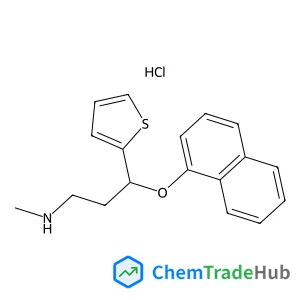
N-Methyl-3-(1-naphthyloxy)-3-(2-thienyl)-1-propanamine hydrochloride (1:1)
CAS番号:
1188266-11-6
分子式:
C18H20ClNOS
おすすめサプライヤー




免責事項
このページに表示される学術雑誌情報は、参考および研究目的のみを目的としています。当社は雑誌出版社とは提携しておらず、投稿の取り扱いも行っておりません。出版に関するお問い合わせは、各雑誌出版社に直接ご連絡ください。
表示されている情報に誤りがある場合は、support@chemtradehub.com までご連絡ください。迅速に確認し、対応いたします。