












High-performance polyamides with engineered disorder
文献情報
出版日
2021-10-15
DOI
10.1039/D1PY01225H
インパクトファクター
5.582
著者
Julien Cretenoud, Sandor Balog, Véronique Michaud, Jean-Marc Chenal, Olivier Lame, Christopher J. G. Plummer, Holger Frauenrath
原文を見る
要旨
The extraordinary property profiles of many biological materials derive from their hierarchical structure and control of order and disorder at different length scales. Application of these concepts to the design of synthetic polymers may provide new routes to lightweight materials that combine high stiffness, strength, and toughness. Here, we use high-temperature reactive melt extrusion to introduce aliphatic substitutional defects into a high-performance semiaromatic copolyamide that are able to conform to the dominant crystalline phase. This allows us to generate microstructural disorder while maintaining or even increasing the macroscopic degree of crystallinity, and hence engineer a strain-induced phase transformation in the resulting polyamides that results in an increase in chain extension along the tensile axis in the crystalline regions. The yield stress and stiffness consequently remain comparable to those of the base semiaromatic polyamide, but the strain-to-failure and tensile toughness increase more than five-fold. Tailoring the concentration and distribution of microstructural defects is hence a straightforward and powerful strategy for optimizing performance in semicrystalline polyamides.
関連文献
Benzimidazole-containing aramid nanofiber for naked-eye detection of heavy metal ions
Zheng Cheng, Zhenyuan Bai, Yu Dai, Longbo Luo, Xiangyang Liu
2018-09-18
Paper
DOI: 10.1039/C8AN01484A
Transformations to reduce the effect of particle size in mid-infrared spectra of biomass
Borja Cantero-Tubilla, Larry P. Walker
2018-09-10
Paper
DOI: 10.1039/C8AN01137K
Direct, uncorrected, molecule-free analysis of 236U from uranium-bearing particles with NAUTILUS: a new kind of mass spectrometer
D. Willingham, E. E. Groopman, K. S. Grabowski, L. Sangely
2018-09-07
Paper
DOI: 10.1039/C8AN01451E
Near infrared spectroscopic assessment of developing engineered tissues: correlations with compositional and mechanical properties
Arash Hanifi, Uday Palukuru, Cushla McGoverin, Michael Shockley, Eliot Frank, Alan Grodzinsky, Richard G. Spencer, Nancy Pleshko
2016-12-08
Paper
DOI: 10.1039/C6AN02167K
NIR two-photon fluorescent probe for biothiol detection and imaging of living cells in vivo
Xiang Xia, Ying Qian
2018-09-20
Paper
DOI: 10.1039/C8AN01605D
Determination of the illegal adulteration of natural healthcare products with chemical drugs using surface-enhanced Raman scattering
Jiawei Wu, Lixia Zhang, Xiangfeng Bu, Peng Li, Bing Zhao, Yuan Tian
2018-09-18
Paper
DOI: 10.1039/C8AN01286E
Quantitative NMR of quadrupolar nucleus as a novel analytical method: hydrolysis behaviour analysis of aluminum ion
Genki Sakata, Minoru Mizuhata
2017-04-19
Paper
DOI: 10.1039/C7AN00067G
Estimating and correcting interference fringes in infrared spectra in infrared hyperspectral imaging
Ghazal Azarfar, Ebrahim Aboualizadeh, Nicholas M. Walter, Simona Ratti, Camilla Olivieri, Alessandra Norici, Michael Nasse, Achim Kohler, Mario Giordano
2018-09-03
Paper
DOI: 10.1039/C8AN00093J
Electrochemical aptasensors for zeatin detection based on MoS2 nanosheets and enzymatic signal amplification
Yunlei Zhou, Huanshun Yin, Yue Wang, Chengji Sui, Minghui Wang, Shiyun Ai
2018-09-07
Paper
DOI: 10.1039/C8AN01356J
こちらもおすすめ
化合物よくある質問
3-イチチルビフェニルはどのように合成されますか?
3-イチチルビフェニルは、ビフェニルとイチプロピオニトリルを回収率約90%で反応させて合成されます。触媒は通常、亜リチウムホウ素を用います。
5668-93-93-Ethylbiphenyl
化合物よくある質問
8-溴-5-三氟甲基喹啉はどのように合成されますか?
8-溴-5-三氟甲基喹啉は、5-トリフルオロメチル-2-メチル-1,3-ベンゼンジオールをブロモエタノールと反応させて生成します。この反応は塩基性条件下で行われ...
917251-92-48-Bromo-5-(trifluoro...
化合物よくある質問
ジメチル4-(4,4,5,5-テトラメチル-1,3,2-ドioxaborolan-2-基)-2,6-ピリジンジカルボイル酸フェニルアミニドの代替品はありますか?
ジメチル4-(4,4,5,5-テトラメチル-1,3,2-ドioxaborolan-2-基)-2,6-ピリジンジカルボイル酸フェニルアミニドの代替品としては、4-...
741709-66-0Dimethyl 4-(4,4,5,5-...
化合物よくある質問
N-(3,5-ヘキサクロロ-4-ピリドインイル)-8-メチオキシ-5-キノリンカーボン酸の市場動向や研究トレンドはどのようなものでしょうか?
N-(3,5-ヘキサクロロ-4-ピリドインイル)-8-メチオキシ-5-キノリンカーボン酸の市場動向は、主に産業用途での需要により影響を受けます。研究トレンドとし...
199871-63-1N-(3,5-Dichloro-4-py...
化合物よくある質問
イソステアロイルグリセリルは安全ですか?
イソステアロイルグリセリルは一般的に安全性が高いとされていますが、過度な使用や個人差により皮�owsん炎などの反応が起こる可能性があります。使用前に医師に相談す...
222723-55-92-[(5Z,8Z,11Z,14Z)-5...
化合物よくある質問
1-(二苯甲基)-3,3-二氟-氮杂环丁烷の市場動向や研究トレンドはどうですか?
1-(二苯甲基)-3,3-二氟-氮杂环丁烷の市場動向は、医薬品や合成化学の研究分野で注目を集めています。新興研究は、該当化合物の合成改良と生体内での作用メカニズ...
288315-02-61-Benzhydryl-3,3-dif...
化合物よくある質問
3-チオフェンスチオールの物理化学的性質は何ですか?
3-チオフェンスチオールのCAS番号は7774-73-4です。結晶性の白色粉末で、分子量は122.17です。この化合物は水に微溶解し、エタノールやジクロロメタン...
7774-73-43-Thiophenethiol
化合物よくある質問
2-Methyl-2-propanyl (2S)-2-(aminomethyl)-1-piperidinecarboxylateは安全ですか?
2-Methyl-2-propanyl (2S)-2-(aminomethyl)-1-piperidinecarboxylateは一定の安全性基準を満たしていま...
475105-35-22-Methyl-2-propanyl ...
化合物よくある質問
CAS番号1316822-90-8の化合物は安全ですか?
CAS番号1316822-90-8の化合物は安全性に関しては評価が不足していますが、一般的には生物学的に活性な物質であり、取り扱いには適切な安全防護措置が必要で...
1316822-90-8Gal beta(1-3)[Neu5Ac...
化合物よくある質問
Tert-butyl 2-(2-羟基乙基)哌嗪-1-羧酸はどのように保存すればよいですか?
Tert-butyl 2-(2-羟基乙基)哌嗪-1-羧酸は、冷暗所で保存し、直射日光から遠ざけてください。容器は密閉し、高湿度や高温を避けて保管してください。
517866-79-4Tert-butyl 2-(2-hydr...
掲載誌
Polymer Chemistry

CiteScore:
8.6
自己引用率:
7.3%
年間論文数:
457
Polymer Chemistry welcomes submissions in all areas of polymer science that have a strong focus on macromolecular chemistry. Manuscripts may cover a broad range of fields, yet no direct application focus is required.
おすすめ化合物
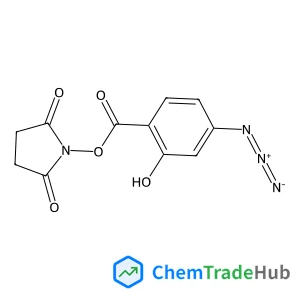
![1,10-bis(3,5-dimethylphenyl)-12-hydroxy-4,5,6,7-tetrahydroiindeno[7,1-de:1',7'-fg][1,3,2]dioxaphosphocine 12-oxide structure](https://static.chemtradehub.com/structs/141/1412439-82-7-b9a9.webp "1,10-bis(3,5-dimethylphenyl)-12-hydroxy-4,5,6,7-tetrahydroiindeno[7,1-de:1',7'-fg][1,3,2]dioxaphosphocine 12-oxide structure")

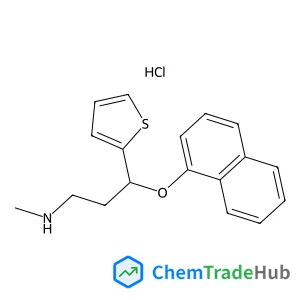
N-Methyl-3-(1-naphthyloxy)-3-(2-thienyl)-1-propanamine hydrochloride (1:1)
CAS番号:
1188266-11-6
分子式:
C18H20ClNOS
おすすめサプライヤー




免責事項
このページに表示される学術雑誌情報は、参考および研究目的のみを目的としています。当社は雑誌出版社とは提携しておらず、投稿の取り扱いも行っておりません。出版に関するお問い合わせは、各雑誌出版社に直接ご連絡ください。
表示されている情報に誤りがある場合は、support@chemtradehub.com までご連絡ください。迅速に確認し、対応いたします。