












Accurate elemental boiling points from first principles
文献情報
出版日
2020-10-12
DOI
10.1039/D0CP02884C
インパクトファクター
3.676
著者
Odile R. Smits
原文を見る
要旨
The normal boiling point (NBP) is a fundamental property of liquids and marks the intersection of the Gibbs energies of the liquid and the gas-phase at ambient pressure. This work provides the first comprehensive demonstration of the calculation of boiling points of atomic liquids through first-principles molecular-dynamics simulations. To this end, thermodynamic integration (TDI) and perturbation theory (TPT) are combined with a density-functional theory (DFT) Hamiltonian, which provides absolute Gibbs energies, internal energies, and entropies of atomic liquids with an accuracy of a few meV/atom. Linear extrapolation to the intersection with the Gibbs energy of a non-interacting gas-phase eventually pins-down the NBPs. While these direct results can already be quite accurate, they are susceptible to a systematic over or underbinding of the employed density functional. It is shown how this dependency can be strongly reduced and the robustness of the method increased through a simple linear correction termed λ-scaling. Eventually, by carefully tuning of the technical parameters of the approach, the walltime per element is reduced from weeks to about a day (10–20k core-hours), enabling extensive testing for B, Al, Na, K, Ca, Sr, Ba, Mn, Cu, Xe, and Hg. This comprehensive benchmark demonstrates the excellent performance and robustness of the approach with a mean absolute deviation (MAD) of less than 2% from experimental NBPs and very similar accuracy for liquid entropies (MAD 2.3 J (mol K)−1, 2% relative). In some cases, the uncertainties in the predictions are several times smaller than the variation between literature values, allowing us to clear out long-standing ambiguities in the NBPs of B and Ba.
おすすめジャーナル
関連文献
Oriented growth of the functionalized metal–organic framework CAU-1 on –OH- and –COOH-terminated self-assembled monolayers
Florian Hinterholzinger, Camilla Scherb, Tim Ahnfeldt, Norbert Stock, Thomas Bein
2010-04-13
Paper
DOI: 10.1039/B924657F
A molecular model for H2 interactions in aliphatic and aromatic hydrocarbons
Susana Figueroa-Gerstenmaier, Simona Giudice, Luigi Cavallo, Giuseppe Milano
2009-04-17
Paper
DOI: 10.1039/B900176J
Why Turing mechanism is an obstacle to stationary periodic patterns in bounded reaction-diffusion media with advection
Arik Yochelis, Moshe Sheintuch
2010-03-17
Communication
DOI: 10.1039/B921918H
In situ characterization of a cold and short pulsed molecular beam by femtosecond ion imaging
Daniel Irimia, Rob Kortekaas, Maurice H. M. Janssen
2009-03-14
Paper
DOI: 10.1039/B822960K
Growth of solid conical structures during multistage drying of sessile poly(ethylene oxide) droplets‡
David Willmer, Kyle Anthony Baldwin, David John Fairhurst
2010-03-03
Paper
DOI: 10.1039/B922727J
Ligand dynamics on the surface of zirconium oxo clusters
Philip Walther, Michael Puchberger, F. Rene Kogler, Karlheinz Schwarz, Ulrich Schubert
2009-03-26
Paper
DOI: 10.1039/B820731C
Structural investigation of Au(111)/butylthiolate adsorption phases
A. Chaudhuri, D. C. Jackson, T. J. Lerotholi, Robert G. Jones, T.-L. Lee, B. Detlefs, D. P. Woodruff
2010-02-23
Paper
DOI: 10.1039/B921281G
From nanocrystal synthesis to functional nanostructure fabrication: laser ablation in liquid
P. Liu, H. Cui, C. X. Wang, G. W. Yang
2010-03-12
Perspective
DOI: 10.1039/B918759F
こちらもおすすめ
化合物よくある質問
噻奈普汀乙酯の物理化学的性質は何ですか?
CAS番号66981-77-9の噻奈普汀乙酯は、結晶性白色粉末であり、分子量は476.9 g/molです。この化合物は水に溶けにくく、一般的には有機溶媒で溶解し...
66981-77-9Ethyl 7-[(3-chloro-6...
化合物よくある質問
アミピシリン不純物Fとは何ですか?
アミピシリン不純物Fは、CAS番号124774-48-7の化合物です。これは、抗生物質アミピシリンの生産過程で生成される不純物の一つであり、(4S)-2-({[...
124774-48-7Ampicillin impurity ...
化合物よくある質問
イリジウム(I)ヘキサフルオロフォスファートの代替品はありますか?
イリジウム(I)ヘキサフルオロフォスファートの代替品として、他の有機金属化合物や非有機金属化合物が使用されることがあります。具体的には、ダイゾニウム塩や他の金属...
870077-94-43-Di-i-propylphosphi...
化合物よくある質問
含有3-(苯氧基甲基)苯硼酸频那醇酯の廃棄物はどのように処理すべきですか?
含有3-(苯氧基甲基)苯硼酸频那醇酯の廃棄物は、安全な方法で処理する必要があります。まず、廃棄物を適切な容器に収集し、避けて保管します。次に、専門の廃棄処理業者...
912569-68-74,4,5,5-Tetramethyl-...
化合物よくある質問
2-甲基辛-1-醇を取り扱う際の実験室安全事項は何ですか?
取り扱う際は、密閉のゴーグルと手袋を着用することが推奨されます。ドラフトチャンバーを使用し、漏洩時には速やかに取り扱いを中止し、適切な排気設備を使用してください...
818-81-52-Methyl-1-octanol
14066-05-8Scandium triperchlor...
化合物よくある質問
3α-アセトキノイドコレステロールエステルはどのように保存すればよいですか?
3α-アセトキノイドコレステロールエステルは、常温から低温(0-5℃)の暗所で保存し、密閉容器に入れることで安定性を保つことが推奨されます。また、湿気や酸素から...
30365-63-0Methyl (3alpha,5beta...
化合物よくある質問
2-ぶンジロキシ-4-(トリフルオロメチル)フェノルビノン酸の主な用途は何ですか?
2-ぶンジロキシ-4-(トリフルオロメチル)フェノルビノン酸は、化学合成の触媒としての使用や、医薬品の合成材料としての役割があります。また、特定の合成路線で使用...
1701435-39-3[2-(Benzyloxy)-4-(tr...
化合物よくある質問
(2S,3R)-2-氨基-3-甲基丁二酸はどのように合成されますか?
(2S,3R)-2-氨基-3-甲基丁二酸は、2-ヒドロキシ-3-メチル丁酸とアミノ化反応を行うことで合成されます。触媒としてジクロロメタンが使用され、選択性と収...
121570-10-3(2S,3R)-2-amino-3-me...
化合物よくある質問
1-Benzyl-2-phenyl-1H-imidazoleはどのように保存すればよいですか?
この化合物は常温で避けてください。直射日光を避け、密閉容器で保存し、湿気を防水の容器に入れて保管してください。
37734-89-71-Benzyl-2-phenyl-1H...
掲載誌
Physical Chemistry Chemical Physics

CiteScore:
5.5
自己引用率:
10.3%
年間論文数:
3036
Physical Chemistry Chemical Physics (PCCP) is an international journal co-owned by 19 physical chemistry and physics societies from around the world. This journal publishes original, cutting-edge research in physical chemistry, chemical physics and biophysical chemistry. To be suitable for publication in PCCP, articles must include significant innovation and/or insight into physical chemistry; this is the most important criterion that reviewers and Editors will judge against when evaluating submissions. The journal has a broad scope and welcomes contributions spanning experiment, theory, computation and data science. Topical coverage includes spectroscopy, dynamics, kinetics, statistical mechanics, thermodynamics, electrochemistry, catalysis, surface science, quantum mechanics, quantum computing and machine learning. Interdisciplinary research areas such as polymers and soft matter, materials, nanoscience, energy, surfaces/interfaces, and biophysical chemistry are welcomed if they demonstrate significant innovation and/or insight into physical chemistry. Joined experimental/theoretical studies are particularly appreciated when complementary and based on up-to-date approaches.
おすすめ化合物
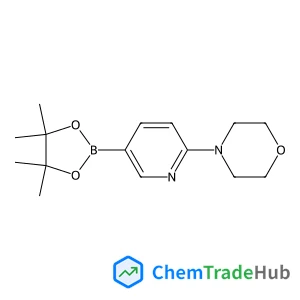
4-(5-(4,4,5,5-tetramethyl-1,3,2-dioxaborolan-2-yl)pyridin-2-yl)morpholine
CAS番号:
485799-04-0
分子式:
C15H23BN2O3
おすすめサプライヤー





免責事項
このページに表示される学術雑誌情報は、参考および研究目的のみを目的としています。当社は雑誌出版社とは提携しておらず、投稿の取り扱いも行っておりません。出版に関するお問い合わせは、各雑誌出版社に直接ご連絡ください。
表示されている情報に誤りがある場合は、support@chemtradehub.com までご連絡ください。迅速に確認し、対応いたします。