












Growth of solid conical structures during multistage drying of sessile poly(ethylene oxide) droplets‡
文献情報
出版日
2010-03-03
DOI
10.1039/B922727J
インパクトファクター
3.676
著者
David Willmer, Kyle Anthony Baldwin, David John Fairhurst
原文を見る
要旨
Sessile droplets of aqueous poly(ethylene oxide) solution, with average molecular weight of 100 kDa, are monitored during evaporative drying at ambient conditions over a range of initial concentrations c0. For all droplets with c0 ≥ 3%, central conical structures, which can be hollow and nearly 50% taller than the initial droplet, are formed during a growth stage. Although the formation of superficially similar structures has been explained for glass-forming polymers using a skin-buckling model which predicts the droplet to have constant surface area during the growth stage (L. Pauchard and C. Allain, Europhys. Lett., 2003, 62, 897–903), we demonstrate that this model is not applicable here as the surface area is shown to increase during growth for all c0. We interpret our experimental data using a proposed drying and deposition process comprising the four stages: pinned drying; receding contact line; “bootstrap” growth, during which the liquid droplet is lifted upon freshly-precipitated solid; and late drying. Additional predictions of our model, including a criterion for predicting whether a conical structure will form, compare favourably with observations. We discuss how the specific chemical and physical properties of PEO, in particular its amphiphilic nature, its tendency to form crystalline spherulites rather than an amorphous glass at high concentrations and its anomalous surface tension values for MW = 100 kDa may be critical to the observed drying process.
関連文献
In situ FTIR spectroscopy study to reveal Ga-modified ZSM-5 for boosting isobutene amination
Shiqing Wang, Xiaocheng Lan, Shiyong Xing, Babar Ali, Tiefeng Wang
2022-03-25
Paper
DOI: 10.1039/D2RE00055E
Device for automated screening of irradiation wavelength and intensity – investigation of the wavelength dependence of photoreactions with an arylazo sulfone in continuous flow
Thomas Roider, Norbert Frommknecht, Alexandra Höltzel, Ulrich Tallarek
2022-06-14
Paper
DOI: 10.1039/D2RE00142J
Catalytic conversion of carbon-containing impurity methyldichlorosilane to purify raw material trichlorosilane of polysilicon production
Qiang Geng, Guoqiang Huang
2022-04-07
Paper
DOI: 10.1039/D1RE00569C
Outstanding Reviewers for Reaction Chemistry & Engineering in 2021
2022-06-30
Editorial
DOI: 10.1039/D2RE90024F
Cellulose hydrogenolysis to alcohol and ketone products using Co@C catalysts in the phosphoric acid aqueous solution
Longlong Ma
2022-09-21
Paper
DOI: 10.1039/D2RE00273F
A scalable twin surface dielectric barrier discharge system for pollution remediation at high gas flow rates
Alexander Böddecker, Arisa Bodnar, Lars Schücke, Jonas Giesekus, Katja Wenselau, Ryan T. Nguyen-Smith, Timothy Oppotsch, Christian Oberste-Beulmann, Martin Muhler, Peter Awakowicz
2022-08-01
Paper
DOI: 10.1039/D2RE00167E
Evaluation of amine-based solid adsorbents for direct air capture: a critical review
Debashis Panda, Vaishnavi Kulkarni, Sanjay Kumar Singh
2022-11-22
Review Article
DOI: 10.1039/D2RE00211F
ZnO nanoflakes self-assembled from the water splitting process using a hydroelectric cell
Jyoti Shah, Abha Shukla, Manoranjan Kar, Govind Gupta, Shipra Jain, R. K. Kotnala
2022-05-17
Paper
DOI: 10.1039/D2RE00094F
In situ copper nanoparticle immobilization on the indigo carmine-functionalized chitosan: a versatile biocatalyst towards CO2 fixation and click reactions in water
Vida Khodkari, Mohammad Taghi Nazeri, Siamak Javanbakht
2022-09-29
Paper
DOI: 10.1039/D2RE00195K
こちらもおすすめ
化合物よくある質問
環戊烷-1,3-二甲酸甲酯はどのように合成されますか?
環戊烷-1,3-二甲酸甲酯は、環戊烷と塩酸によるヒンデンブルク反応を経由して合成されます。この反応では、環戊烷が塩酸と作用し、1,3-ジカルボキシ基が導入されま...
2435-36-1Dimethyl 1,3-cyclope...
化合物よくある質問
4-メトキシ-1,2,3-スチアゼ-3,5-ジオンとは何ですか?
4-メトキシ-1,2,3-スチアゼ-3,5-ジオンは、CAS番号107843-77-6の化合物で、(E)-ベンジル3-(3,4-ジヒドロキシフェニル) acry...
107843-77-6(E)-Benzyl 3-(3,4-di...
化合物よくある質問
プロスタグランジンA2について「に適用される法規ガイドラインは何ですか?'
プロスタグランジンA2 (CAS番号: 41691-92-3) は、化学物質の安全管理に関する規制として、GHS (危険物質の国際的ハザード分類・ラベル付けシス...
41691-92-316,16-DIMETHYL PROST...
化合物よくある質問
4-アミノ-1-ナフタレン sulfonic 酸についての物理化学的性質は何ですか?
4-アミノ-1-ナフタレン sulfonic 酸のCAS番号は84-86-6です。この化合物は結晶性で、分子量は212.15 g/molです。アルコールや水など...
84-86-64-Amino-1-naphthalen...
化合物よくある質問
N-GlcNAc-生物素を取り扱う際の実験室安全事項は何ですか?
N-GlcNAc-生物素は吸収性があり、皮膚や目への接触を避けることが重要です。PPE(個体保護具)は使用し、ドラフトチャンバーは必要に応じて使用します。漏洩時...
1272755-69-72-Acetamido-2-deoxy-...
化合物よくある質問
3-アミノメチルフローラノピペリジン-1-カルボニル酸テルブチルエステルとは何ですか?
CAS番号1209781-11-2の3-アミノメチルフローラノピペリジン-1-カルボニル酸テルブチルエステルは、有機化合物の一種で、化学式はC10H17FNO3...
1209781-11-22-Methyl-2-propanyl ...
化合物よくある質問
6-溴-1-甲基-1H-ベンゾ[d][1,2,3]三氮唑はどのように合成されますか?
6- bromo-1-methyl-1H-benzotriazoleは、ブロモフリオリンと1-メチル-1H-ベンゾ[d][1,2,3]三氮唑の反応により合成され...
944718-32-56-Bromo-1-methyl-1H-...
化合物よくある質問
4-硫代尿苷はどのように合成されますか?
4-硫代尿苷は、尿素とD-リボシルヒドロキシアルデヒドを用いてスルホン化反応を経て合成されます。通常は塩酸ヒドロキシチオニルスルホン酸などの触媒を使用し、選択性...
6741-73-71-(4-thio-beta-D-rib...
化合物よくある質問
ブレインナトリユリックペプチド32ラットとは何ですか?
ブレインナトリユリックペプチド32ラット(CAS番号: 133448-20-1)は、心臓で作られるホルモンの一つで、心不全の診断や予後評価に使用されます。
133448-20-1Brain Natriuretic Pe...
化合物よくある質問
1-(3-氮杂啶)-4-羟基哌啶双盐酸盐の物理化学的性質は何ですか?
CAS番号810680-60-5の1-(3-氮杂啶)-4-羟基哌啶双盐酸盐は、白色の結晶性粉末である。分子量は360.84 g/molで、水に溶けやすい。反応活...
810680-60-51-(3-Azetidinyl)-4-p...
掲載誌
Physical Chemistry Chemical Physics

CiteScore:
5.5
自己引用率:
10.3%
年間論文数:
3036
Physical Chemistry Chemical Physics (PCCP) is an international journal co-owned by 19 physical chemistry and physics societies from around the world. This journal publishes original, cutting-edge research in physical chemistry, chemical physics and biophysical chemistry. To be suitable for publication in PCCP, articles must include significant innovation and/or insight into physical chemistry; this is the most important criterion that reviewers and Editors will judge against when evaluating submissions. The journal has a broad scope and welcomes contributions spanning experiment, theory, computation and data science. Topical coverage includes spectroscopy, dynamics, kinetics, statistical mechanics, thermodynamics, electrochemistry, catalysis, surface science, quantum mechanics, quantum computing and machine learning. Interdisciplinary research areas such as polymers and soft matter, materials, nanoscience, energy, surfaces/interfaces, and biophysical chemistry are welcomed if they demonstrate significant innovation and/or insight into physical chemistry. Joined experimental/theoretical studies are particularly appreciated when complementary and based on up-to-date approaches.
おすすめ化合物
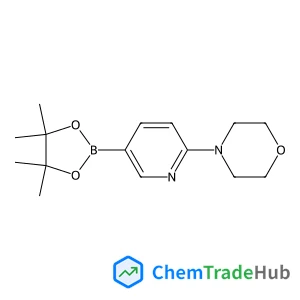
4-(5-(4,4,5,5-tetramethyl-1,3,2-dioxaborolan-2-yl)pyridin-2-yl)morpholine
CAS番号:
485799-04-0
分子式:
C15H23BN2O3
おすすめサプライヤー





免責事項
このページに表示される学術雑誌情報は、参考および研究目的のみを目的としています。当社は雑誌出版社とは提携しておらず、投稿の取り扱いも行っておりません。出版に関するお問い合わせは、各雑誌出版社に直接ご連絡ください。
表示されている情報に誤りがある場合は、support@chemtradehub.com までご連絡ください。迅速に確認し、対応いたします。