












![N-[(5,6-Dichloro-1H-benzimidazol-2-yl)methyl]-9-(1-methyl-1H-pyrazol-4-yl)-2-(4-morpholinyl)-9H-purin-6-amine structure](https://static.chemtradehub.com/structs/238/2387704-62-1-25f4.webp "N-[(5,6-Dichloro-1H-benzimidazol-2-yl)methyl]-9-(1-methyl-1H-pyrazol-4-yl)-2-(4-morpholinyl)-9H-purin-6-amine structure")
A molecular model for H2 interactions in aliphatic and aromatic hydrocarbons
文献情報
出版日
2009-04-17
DOI
10.1039/B900176J
インパクトファクター
3.676
著者
Susana Figueroa-Gerstenmaier, Simona Giudice, Luigi Cavallo, Giuseppe Milano
原文を見る
要旨
A model for molecular hydrogen interacting with aliphatic and aromatic hydrocarbons is presented. The model has been derived using ab initio techniques and molecular dynamics simulations. In particular, quadrupole moments of hydrogen, and variation on energy with intermolecular distance of different conformations for the hydrogen–benzene couple were calculated using the Møller–Plesset method. Hydrogen was modelled using a two-centre Lennard-Jones potential plus electrostatic interactions. Lennard-Jones parameters were optimized on the basis of a correct reproduction of experimental data of hydrogen solubility in benzene and cyclohexane, calculated using the test particle insertion method. Different sets of parameters for specific interactions (hydrogen–aliphatic and hydrogen–aromatic systems) were considered avoiding the simple use of Lorentz–Berthelot combining rules. Additionally, structural and thermodynamic properties of hydrogen–benzene, hydrogen–cyclohexane and hydrogen in an equimolar mixture of benzene–cyclohexane at different low concentrations of hydrogen were investigated by means of molecular dynamics simulations. Electrostatic charges were taken from ab initio quantum mechanical calculations but after careful analysis of the calculated properties, their irrelevance was evidenced. Moreover, Coulombic interactions make simulations more expensive and, therefore, we do not recommend their inclusion in the modelling of hydrogen–aliphatic and aromatic interactions.
関連文献
Deamidation reaction network mapping of pharmacologic and related proteins: impact of solvation dielectric on the degradation energetics of asparagine dipeptides
Katherine E. Lawson, Joseph K. Dekle, Megan N. Evans, Andrew J. Adamczyk
2022-04-01
Paper
DOI: 10.1039/D2RE00110A
Pore flow-through catalytic membrane reactor for steam methane reforming: characterization and performance
M. Angulo, I. Agirre, A. Arratibel, M. A. Llosa Tanco, D. A. Pacheco Tanaka, V. L. Barrio
2022-07-12
Paper
DOI: 10.1039/D1RE00571E
Influence of pH on the kinetics of hydrolysis reactions: the case of epichlorohydrin and glycidol
Flavio Tollini, Alice Occhetta, Francesca Broglia, Vincenzo Calemma, Stefano Carminati, Giuseppe Storti, Mattia Sponchioni, Davide Moscatelli
2022-07-04
Paper
DOI: 10.1039/D2RE00191H
Oxidative desulfurization of fuel oil catalyzed by a carbon nitride supported phosphotungstic acid based dicationic ionic liquid
Xingjian Liu, Jingwen Li, Yanwen Guo, Jiang Wu, Bing Hu
2022-01-09
Paper
DOI: 10.1039/D1RE00514F
Influence of support texture and reaction conditions on the accumulation and activity in the gas-phase aldol condensation of n-pentanal on porous silica
Markus Schörner, Stefanie Kämmerle, Dorothea Wisser, Benjamin Baier, Martin Hartmann, Matthias Thommes, Marco Haumann
2022-08-23
Paper
DOI: 10.1039/D2RE00143H
A low-cost and high-performance 3D micromixer over a wide working range and its application for high-sensitivity biomarker detection
Liuyong Shi
2022-07-27
Paper
DOI: 10.1039/D2RE00103A
Rational design of a graphitic carbon nitride catalytic–biocatalytic system as a photocatalytic platform for solar fine chemical production from CO2
Satyam Singh, Rajesh K. Yadav, Tae Wu Kim, Chandani Singh, Pooja Singh, Atul P. Singh, Alok Kumar Singh, Atresh Kumar Singh, Jin-Ook Baeg, Sarvesh Kumar Gupta
2022-04-06
Paper
DOI: 10.1039/D2RE00079B
Industrial data science – a review of machine learning applications for chemical and process industries
Max Mowbray, Mattia Vallerio, Carlos Perez-Galvan, Antonio Del Rio Chanona
2022-04-21
Review Article
DOI: 10.1039/D1RE00541C
Process analytical technology (PAT): applications to flow processes for active pharmaceutical ingredient (API) development
Courtney N. Talicska, Eamon C. O'Connell, Howard W. Ward, Angel R. Diaz, Mark A. Hardink, Douglas Connolly, Kevin P. Girard, Tomislav Ljubicic
2022-03-31
Paper
DOI: 10.1039/D2RE00004K
An assessment of a multipoint dosing approach for exothermic nitration in CSTRs in series
S. Kulkarni
2022-05-06
Paper
DOI: 10.1039/D2RE00045H
こちらもおすすめ
化合物よくある質問
環戊烷-1,3-二甲酸甲酯はどのように合成されますか?
環戊烷-1,3-二甲酸甲酯は、環戊烷と塩酸によるヒンデンブルク反応を経由して合成されます。この反応では、環戊烷が塩酸と作用し、1,3-ジカルボキシ基が導入されま...
2435-36-1Dimethyl 1,3-cyclope...
化合物よくある質問
4-メトキシ-1,2,3-スチアゼ-3,5-ジオンとは何ですか?
4-メトキシ-1,2,3-スチアゼ-3,5-ジオンは、CAS番号107843-77-6の化合物で、(E)-ベンジル3-(3,4-ジヒドロキシフェニル) acry...
107843-77-6(E)-Benzyl 3-(3,4-di...
化合物よくある質問
プロスタグランジンA2について「に適用される法規ガイドラインは何ですか?'
プロスタグランジンA2 (CAS番号: 41691-92-3) は、化学物質の安全管理に関する規制として、GHS (危険物質の国際的ハザード分類・ラベル付けシス...
41691-92-316,16-DIMETHYL PROST...
化合物よくある質問
4-アミノ-1-ナフタレン sulfonic 酸についての物理化学的性質は何ですか?
4-アミノ-1-ナフタレン sulfonic 酸のCAS番号は84-86-6です。この化合物は結晶性で、分子量は212.15 g/molです。アルコールや水など...
84-86-64-Amino-1-naphthalen...
化合物よくある質問
N-GlcNAc-生物素を取り扱う際の実験室安全事項は何ですか?
N-GlcNAc-生物素は吸収性があり、皮膚や目への接触を避けることが重要です。PPE(個体保護具)は使用し、ドラフトチャンバーは必要に応じて使用します。漏洩時...
1272755-69-72-Acetamido-2-deoxy-...
化合物よくある質問
3-アミノメチルフローラノピペリジン-1-カルボニル酸テルブチルエステルとは何ですか?
CAS番号1209781-11-2の3-アミノメチルフローラノピペリジン-1-カルボニル酸テルブチルエステルは、有機化合物の一種で、化学式はC10H17FNO3...
1209781-11-22-Methyl-2-propanyl ...
化合物よくある質問
6-溴-1-甲基-1H-ベンゾ[d][1,2,3]三氮唑はどのように合成されますか?
6- bromo-1-methyl-1H-benzotriazoleは、ブロモフリオリンと1-メチル-1H-ベンゾ[d][1,2,3]三氮唑の反応により合成され...
944718-32-56-Bromo-1-methyl-1H-...
化合物よくある質問
4-硫代尿苷はどのように合成されますか?
4-硫代尿苷は、尿素とD-リボシルヒドロキシアルデヒドを用いてスルホン化反応を経て合成されます。通常は塩酸ヒドロキシチオニルスルホン酸などの触媒を使用し、選択性...
6741-73-71-(4-thio-beta-D-rib...
化合物よくある質問
ブレインナトリユリックペプチド32ラットとは何ですか?
ブレインナトリユリックペプチド32ラット(CAS番号: 133448-20-1)は、心臓で作られるホルモンの一つで、心不全の診断や予後評価に使用されます。
133448-20-1Brain Natriuretic Pe...
化合物よくある質問
1-(3-氮杂啶)-4-羟基哌啶双盐酸盐の物理化学的性質は何ですか?
CAS番号810680-60-5の1-(3-氮杂啶)-4-羟基哌啶双盐酸盐は、白色の結晶性粉末である。分子量は360.84 g/molで、水に溶けやすい。反応活...
810680-60-51-(3-Azetidinyl)-4-p...
掲載誌
Physical Chemistry Chemical Physics

CiteScore:
5.5
自己引用率:
10.3%
年間論文数:
3036
Physical Chemistry Chemical Physics (PCCP) is an international journal co-owned by 19 physical chemistry and physics societies from around the world. This journal publishes original, cutting-edge research in physical chemistry, chemical physics and biophysical chemistry. To be suitable for publication in PCCP, articles must include significant innovation and/or insight into physical chemistry; this is the most important criterion that reviewers and Editors will judge against when evaluating submissions. The journal has a broad scope and welcomes contributions spanning experiment, theory, computation and data science. Topical coverage includes spectroscopy, dynamics, kinetics, statistical mechanics, thermodynamics, electrochemistry, catalysis, surface science, quantum mechanics, quantum computing and machine learning. Interdisciplinary research areas such as polymers and soft matter, materials, nanoscience, energy, surfaces/interfaces, and biophysical chemistry are welcomed if they demonstrate significant innovation and/or insight into physical chemistry. Joined experimental/theoretical studies are particularly appreciated when complementary and based on up-to-date approaches.
おすすめ化合物

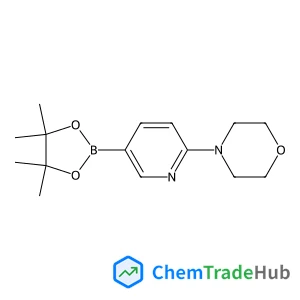
4-(5-(4,4,5,5-tetramethyl-1,3,2-dioxaborolan-2-yl)pyridin-2-yl)morpholine
CAS番号:
485799-04-0
分子式:
C15H23BN2O3
おすすめサプライヤー


免責事項
このページに表示される学術雑誌情報は、参考および研究目的のみを目的としています。当社は雑誌出版社とは提携しておらず、投稿の取り扱いも行っておりません。出版に関するお問い合わせは、各雑誌出版社に直接ご連絡ください。
表示されている情報に誤りがある場合は、support@chemtradehub.com までご連絡ください。迅速に確認し、対応いたします。