












Separation and quantification of dead species in styreneRAFT polymerization by gradient polymerelution chromatography
文献情報
出版日
2012-03-23
DOI
10.1039/C2PY20102J
インパクトファクター
5.582
著者
Ruiwei Guo, Zhipeng Shi, Xingxing Wang, Anjie Dong
原文を見る
要旨
In living polymerization, the inevitable dead chain impurities, due to bimolecular termination and side reactions, are not only an obstacle for the synthesis of pure block copolymers but also an impairment in the application performance of the resulting polymer materials. In this paper, a simple separation and quantification method based on gradient polymer elution chromatography (GPEC) was developed to experimentally investigate the dead species in RAFT polymerization of styrene. The RAFT-prepared polystyrene (PSt) was extended with methyl acrylate in a specially-designed chain extension reaction, in which the living PSt chains were extended and transformed into block copolymer, but the remaining dead PSt chains (D-PSt) will remain constant and can be separated and quantified by GPEC. The systematic experimental investigation of the effect of various polymerization parameters on the mass fraction of dead species (fD-PSt) in RAFT-prepared polystyrene (PSt) was implemented. The results clearly demonstrated the initiator concentration and RAFT agent concentration can exhibit a linear and inversely proportional dependence on fD-PSt, respectively. In addition, the dead chains were found to be formed throughout the entire RAFT process. These unambiguous experimental data confirmed the previous theoretical calculation and model prediction, which may be beneficial to understand RAFT processes, optimize polymerization conditions and to minimize dead polymer contaminations. Moreover, the method based on GPEC proposed here was able to fractionate and quantify the dead and living species, which can serve as a powerful tool in the mechanistic study of the living radical polymerizations.
関連文献
Synthesis of highly branched polymers by reversible complexation-mediated copolymerization of vinyl and divinyl monomers
Hongjun Yang, Zhongrui Wang, Yulei Zheng, Wenyan Huang, Xiaoqiang Xue, Bibiao Jiang
2017-02-21
Paper
DOI: 10.1039/C7PY00174F
Correction: Amphiphilic and double hydrophilic block copolymers containing a polydehydroalanine block
Peter Bellstedt
2017-01-17
Correction
DOI: 10.1039/C7PY90013A
Functionalisation of MWCNTs with poly(lauryl acrylate) polymerised by Cu(0)-mediated and RAFT methods
Jaipal Gupta, Daniel J. Keddie, Chaoying Wan, David M. Haddleton, Tony McNally
2016-05-12
Paper
DOI: 10.1039/C6PY00522E
Polymerization-induced self-assembly of PVAc-b-PVDF block copolymers via RAFT dispersion polymerization of vinylidene fluoride in dimethyl carbonate
Marc Guerre, Mona Semsarilar, Franck Godiard, Bruno Améduri, Vincent Ladmiral
2017-01-20
Paper
DOI: 10.1039/C6PY02203K
Dendrimer–doxorubicin conjugate as enzyme-sensitive and polymeric nanoscale drug delivery vehicle for ovarian cancer therapy
Chengyuan Zhang, Dayi Pan, Kui Luo, Ning Li, Chunhua Guo, Xiuli Zheng, Zhongwei Gu
2014-05-20
Paper
DOI: 10.1039/C4PY00601A
A highly active chiral (S,S)-bis(oxazoline) Pd(ii) alkyl complex/activator catalytic system for vinyl polymerization of norbornene in air and water
Yingda Huang, Jianyun He, Zhanxiong Liu, Guilong Cai, Shaowen Zhang, Xiaofang Li
2016-12-26
Paper
DOI: 10.1039/C6PY01859A
Visible-light-induced living radical polymerization using in situ bromine-iodine transformation as an internal boost
Xiaodong Liu, Qinghua Xu, Lifen Zhang, Zhenping Cheng, Xiulin Zhu
2017-03-24
Paper
DOI: 10.1039/C7PY00366H
Camptothecin prodrug block copolymer micelles with high drug loading and target specificity
Sue Watson, Anna M. Grabowska
2014-05-15
Paper
DOI: 10.1039/C4PY00369A
Differences in electroactive terpolymers based on VDF, TrFE and 2,3,3,3-tetrafluoropropene prepared by batch solution and semi-continuous aqueous suspension polymerizations
Vincent Ladmiral, Thierry Lannuzel, Fabrice Domingues Dos Santos, Bruno Améduri
2016-12-14
Paper
DOI: 10.1039/C6PY01874B
こちらもおすすめ
化合物よくある質問
6- bromo-1-cyclopropyl-1H-benzimidazoleの市場動向や研究トレンドはどうですか?
6- bromo-1-cyclopropyl-1H-benzimidazoleは、抗炎症、抗ウイルス作用を持つことが報告されており、新薬開発の研究対象として注目...
1416713-53-56-Bromo-1-cyclopropy...
化合物よくある質問
環氧プロpanol-d5を取り扱う際の実験室安全事項は何ですか?
取り扱う際には、防護眼鏡と手袋を使用し、ドラフトチャンバー内で操作することを推奨します。漏洩時には適切な手順で処理し、安全データシートを常に参照してください。
1246819-20-4Glycidol-d5
化合物よくある質問
2,2’-ジメチル-3,3’-ビピリジンはどのように合成されますか?
2,2’-ジメチル-3,3’-ビピリジンは、ピリジンと2-メチルアクリルアミドを有機合成反応で合成します。この反応では、ピリジンと2-メチルアクリルアミドを含有...
86156-55-02,2’-Dimethyl-3,3’-b...
化合物よくある質問
6-甲基ピリジン-2-ボリック酸の主な用途は何ですか?
6-甲基ピリジン-2-ボリック酸は、合成化学、医薬品合成、以及研究用途などに広く使用され、特に組換えDNA技術や分子生物学の研究において重要な役割を果たします。
372963-50-3(6-Methyl-2-pyridiny...
化合物よくある質問
(R)-3-(1-甲基-2-氧環己基)プロpano酸メチルは安全ですか?
(R)-3-(1-甲基-2-氧環己基)プロpano酸メチルは一定の安全性がありますが、直接的な皮膚接触や吸入は避けるべきです。使用する際は適切な個々の安全データ...
94089-47-1methyl 3-[(1R)-1-met...
化合物よくある質問
ketorolacはどのように保存すればよいですか?
ketorolacは、密封して遮光容器に保管し、直射日光や高温を避けて保存してください。温度は常温で保存し、湿度をなるべく低く保つことが推奨されます。
74103-06-3rac Ketorolac
化合物よくある質問
L-2,3-二氨基丙酸二盐酸盐を取り扱う際の実験室安全事項は何ですか?
L-2,3-二氨基丙酸二盐酸盐は腐食性が強く、皮膚や粘膜に刺激を与える可能性があります。取り扱う際は、防塵マスク、ゴーグル、手袋を使用し、適切な排気設備を使用し...
19777-68-5(S)-2,3-Diaminopropa...
化合物よくある質問
2-(4-溴ピリジン-2-基)乙腈の物理化学的性質は何ですか?
2-(4-溴ピリジン-2-基)乙腈のCAS番号は312325-73-8です。主に結晶形態で存在し、分子量は159.01 g/molです。この化合物は水に溶けやす...
312325-73-8(4-Bromo-2-pyridinyl...
化合物よくある質問
3-フローロ-[1,1-ベンジレン]-3,4-ジカルボン酸を取り扱う際の実験室安全事項は何ですか?
この化合物は毒性は低いですが、直接的な接触や吸入に注意が必要です。PPE(個人防護具)を着用し、ドラフトチャンバーを使用して操作することを推奨します。また、漏洩...
1261915-32-53'-Fluoro-[1,1'-biph...
化合物よくある質問
3-(1-氧代-1,3-二氢-2H-2-异吲哚)丙酸の主な用途は何ですか?
3-(1-氧代-1,3-二氢-2H-2-异吲哚)丙酸は、薬理学研究や医薬品製造において広く用いられる化合物です。また、工業的な用途でも一部の化学反応の触媒や助剤...
83747-30-23-(1-Oxo-1,3-dihydro...
掲載誌
Polymer Chemistry

CiteScore:
8.6
自己引用率:
7.3%
年間論文数:
457
Polymer Chemistry welcomes submissions in all areas of polymer science that have a strong focus on macromolecular chemistry. Manuscripts may cover a broad range of fields, yet no direct application focus is required.
おすすめ化合物
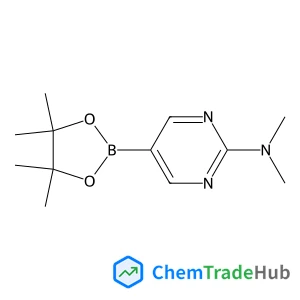
N,N-Dimethyl-5-(4,4,5,5-tetramethyl-1,3,2-dioxaborolan-2-yl)-2-pyrimidinamine
CAS番号:
1032759-30-0
分子式:
C12H20BN3O2
おすすめサプライヤー




免責事項
このページに表示される学術雑誌情報は、参考および研究目的のみを目的としています。当社は雑誌出版社とは提携しておらず、投稿の取り扱いも行っておりません。出版に関するお問い合わせは、各雑誌出版社に直接ご連絡ください。
表示されている情報に誤りがある場合は、support@chemtradehub.com までご連絡ください。迅速に確認し、対応いたします。