


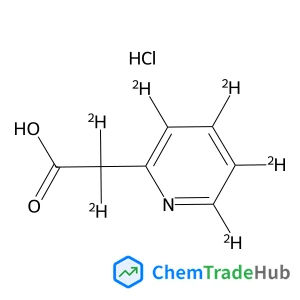
2,2-dideuterio-2-(3,4,5,6-tetradeuterio-2-pyridyl)acetic acid;hydrochloride
CAS番号:
1329799-67-8
分子式:
C7H2ClD6NO2
Jaipal Gupta, Daniel J. Keddie, Chaoying Wan, David M. Haddleton, Tony McNally
Poly(lauryl acrylate) P[LA] of various molar masses were prepared via reversible addition–fragmentation chain transfer (RAFT) polymerisation and Cu(0)-mediated radical polymerisation, for the purpose of improving the dispersion and interfacial adhesion of MWCNTs with polymers such as isotactic poly(propylene) (iPP). Lauryl acrylate (LA) was polymerised via RAFT to high conversion (95%), furnished polymers in good agreement with theoretical Mn with dispersity increasing with increasing Mn. LA polymerised via the Cu(0)-mediated method to full conversion (>98%), gave polymers in good agreement with theoretical Mn and low dispersity (Đ ≈ 1.2) for lower molar mass polymers. Low molar mass tailing was also observed for P[LA] via Cu(0)-mediated polymerisation for higher molar mass polymers. Thermogravimetric analysis (TGA) of P[LA] via RAFT showed an onset of degradation occurred at ≈340–350 °C, however, this decreased to ≈250–260 °C for lower molar mass polymers. TGA of the RAFT agent revealed an onset of degradation of ≈200–250 °C. Free radicals generated from thermal degradation of end groups did not influence the thermal stability of the P[LA] backbone and ‘unzipping’ commonly seen with methacrylates was not observed. TGA analysis of P[LA] via the Cu(0)-mediated method revealed a similar degradation profile to that of P[LA] via RAFT. The thermal stability of P[LA] is sufficient to allow for melt processing with iPP. P[LA] via RAFT mixed with MWCNTs showed an adsorption of ≈10–25 wt% P[LA] on to the MWCNTs. The onset of thermal degradation of the P[LA] remained unchanged after adsorption on to the MWCNTs. P[LA] via the Cu(0)-mediated method adsorbed up to 85 wt% and an increase in thermal stability of ≈50 °C was recorded. Increasing P[LA] and MWCNT concentration independently also resulted in an increase in the level of adsorption, possibility due to increased CH–π interaction. The difference in thermal stability could possibly be due to heat transfer from the P[LA] to the MWCNTs, resulting in delayed pyrolysis of P[LA]. Size exclusion chromatography (SEC) and matrix-assisted laser desorption/ionization time of flight mass spectrometry (MALDI-TOF MS) of P[LA] after heating to 200 °C for 30 min in air showed loss of end groups but, the P[LA] backbone remained preserved for both polymer types. Evidence from transmission electron micrographs (TEM) shows the P[LA] adsorbing onto the MWCNT surface. Melt processing composites of P[LA] via Cu(0)-mediated with MWCNTs and iPP was possible as the P[LA] was thermally stable during the both extrusion and in the TGA when studied post melt mixing.

Russian Chemical Bulletin

Chemical Communications

Current Opinion in Colloid & Interface Science

Saudi Pharmaceutical Journal

Nature Medicine

Journal of Natural Medicines

Current Opinion in Solid State & Materials Science

Journal of Saudi Chemical Society

Drug Discovery Today

Organic Process Research & Development
Meng Cheng, Shengtong Sun, Peiyi Wu
DOI: 10.1039/C9CP04440J
DOI: 10.1039/C9CP04445K
Om Prakash, Hao Fan, Lisa H. M. de Groot, Valtýr Freyr Hlynsson, Simon Kaufhold, Olga Gordivska, Nicolás Velásquez, Pavel Chabera, Pieter Glatzel, Kenneth Wärnmark, Petter Persson, Jens Uhlig
DOI: 10.1039/C9CP06309A
DOI: 10.1039/D0CP00434K
Xiaofan Li, Qingzhu Zhang, Yuanxiang Gu
DOI: 10.1039/C9CP03246K
Bao-Di Gou, Yu-Xi Gao, Gang Wu, Tian-Lan Zhang
DOI: 10.1039/C9CP04250D
T. C. Phong
DOI: 10.1039/C9CP04719K
Changjun Jiang
DOI: 10.1039/C9CP04169A
DOI: 10.1039/C9CP04113C
Vitor H. Paschoal, Rafael S. Freitas, Luiz F. O. Faria, Mauro C. C. Ribeiro
DOI: 10.1039/D0CP00374C
CAS番号163217-74-1の「邻羟基阿托伐他汀内酯标准品」は、GHS分類では危険物に分類されず、主にREACH規則とFDA/EPAの管理対象となります。R...
メチル(3R)-3-アミノ-2,3-ジヒドロ-1-ベンゾファンラニン-5-カルボイル酸塩塩酸塩は、医薬品や合成化学の研究に広く用いられます。また、特定の薬物の前...
トランス-4-メチルピロリジン-3-オール塩酸塩は、4-メチルピロリジンの塩酸塩化によって合成されます。一般的な合成方法では、4-メチルピロリジンを塩酸に加えて...
硫雜環丁烷-1,1-二氧化物は安全ではありません。毒性は報告されていませんが、高温下で分解し、可燃性があるため、高圧ガスは注意が必要です。密閉した容器で保管し、...
9-ヒドロキシエリプチシネ塩酸塩は、エリプチシネから塩酸を添加することで合成されます。選択性は高いですが、収率は約70%です。
5-塩素-2-(メチルアミノ)フェニル-(2-塩素フェニル)メタン酮のCAS番号は5621-86-3です。この化合物は白色の結晶性粉末で、分子量は415.03で...
1-[2-(4-甲氧基-苯氧基)-乙基]-哌嗪は、直射日光を避けて暗所に、室温(15-25℃)で保管し、密閉容器に入れることで安定性を保つことができます。
2-[3-(4-甲氧基フェニル)プロピル]-4,4,5,5-四メチル-1,3,2-ドイボロロールアンは、医薬品の合成、有機合成化学、および新材料の研究で使用され...

Polymer Chemistry welcomes submissions in all areas of polymer science that have a strong focus on macromolecular chemistry. Manuscripts may cover a broad range of fields, yet no direct application focus is required.
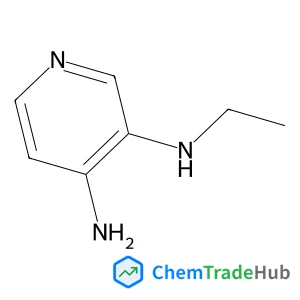
![(3R,5R)-1-[(Benzyloxy)carbonyl]-5-methyl-3-piperidinecarboxylic acid structure](https://static.chemtradehub.com/structs/126/1269757-29-0-c552.webp "(3R,5R)-1-[(Benzyloxy)carbonyl]-5-methyl-3-piperidinecarboxylic acid structure")
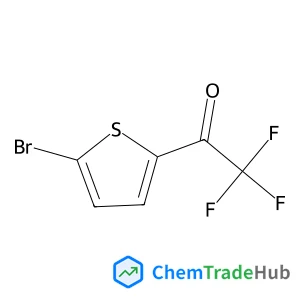
![S-[2,3-Bis(palmitoyloxy)propyl]-N-[(9H-fluoren-9-ylmethoxy)(hydroxy)methylene]cysteine structure](https://static.chemtradehub.com/structs/210/210532-98-2-f6a7.webp "S-[2,3-Bis(palmitoyloxy)propyl]-N-[(9H-fluoren-9-ylmethoxy)(hydroxy)methylene]cysteine structure")






