












![(1R,3S,5R)-2-{[(2-Methyl-2-propanyl)oxy]carbonyl}-2-azabicyclo[3.1.0]hexane-3-carboxylic acid structure](https://static.chemtradehub.com/structs/197/197142-34-0-6a44.webp "(1R,3S,5R)-2-{[(2-Methyl-2-propanyl)oxy]carbonyl}-2-azabicyclo[3.1.0]hexane-3-carboxylic acid structure")
p-Aminobenzoic acid protonation dynamics in an evaporating droplet by ab initio molecular dynamics
文献情報
出版日
2021-08-20
DOI
10.1039/D1CP01495A
インパクトファクター
3.676
著者
Patrick R. Batista, Tatiana C. Penna, Lucas C. Ducati, Thiago C. Correra
原文を見る
要旨
Protonation equilibria are known to vary from the bulk to microdroplet conditions, which could induce many chemical and physical phenomena. Protonated p-aminobenzoic acid (PABA + H+) can be considered a model for probing the protonation dynamics in an evaporating droplet, as its protonation equilibrium is highly dependent on the formation conditions from solution via atmospheric pressure ionization sources. Experiments using diverse experimental techniques have shown that protic solvents allow formation of the O-protomer (PABA protonated in the carboxylic acid group) stable in the gas phase, while aprotic solvents yield the N-protomer (protonated in the amino group) that is the most stable protomer in solution. In this work, we explore the protonation equilibrium of PABA solvated by different numbers of water molecules (n = 0 to 32) using ab initio molecular dynamics. For n = 8–32, the protonation is either at the NH2 group or in the solvent network. The solvent network interacts with the carboxylic acid group, but there is no complete proton transfer to form the O-protomer. For smaller clusters, however, solvent-mediated proton transfers to the carboxylic acid were observed, both via the Grotthuss mechanism and the vehicle or shuttle mechanism (for n = 1 and 2). Thermodynamic considerations allowed a description of the origins of the kinetic trapping effect, which explains the observation of the solution structure in the gas phase. This effect likely occurs in the final evaporation steps, which are outside the droplet size range covered by previous classical molecular dynamics simulations of charged droplets. These results may be considered relevant in determining the nature of the species observed in the ubiquitous ESI based mass spectrometry analysis, and in general for droplet chemistry, explaining how protonation equilibria are drastically changed from bulk to microdroplet conditions.
関連文献
Radiation-induced disorder in compressed lanthanide zirconates
Sulgiye Park, Cameron L. Tracy, Fuxiang Zhang, Changyong Park, Sergey N. Tkachev, Maik Lang, Rodney C. Ewing
2018-02-12
Paper
DOI: 10.1039/C7CP08664D
The effect of different organic solvents on sodium ion storage in carbon nanopores
Sharif Khan, Tomonori Ohba, Qiong Cai
2018-02-05
Paper
DOI: 10.1039/C7CP04878E
A drastic influence of the anion nature and concentration on high pressure intrusion–extrusion of electrolyte solutions in Silicalite-1
A. Ryzhikov, H. Nouali, T. J. Daou, J. Patarin
2018-02-01
Paper
DOI: 10.1039/C7CP06520E
Magnetism of NaFePO4 and related polyanionic compounds
Oier Arcelus, Sergey Nikolaev, Javier Carrasco
2018-04-27
Paper
DOI: 10.1039/C8CP01961D
Phenyl radical + propene: a prototypical reaction surface for aromatic-catalyzed 1,2-hydrogen-migration and subsequent resonance-stabilized radical formation
Zachary J. Buras, Te-Chun Chu, Adeel Jamal, Nathan W. Yee, Joshua E. Middaugh, William H. Green
2018-04-13
Paper
DOI: 10.1039/C8CP01159A
Viable aromatic BenHn stars enclosing a planar hypercoordinate boron or late transition metal
Xue-Feng Zhao, Jia-Jia Li, Hai-Ru Li, Caixia Yuan, Xinxin Tian, Si-Dian Li, Yan-Bo Wu, Zhi-Xiang Wang
2018-02-19
Paper
DOI: 10.1039/C7CP06955C
A potential material for hydrogen storage: a Li decorated graphitic-CN monolayer
Yong-Dao Chen, Song Yu, Wen-Hui Zhao, Shun-Fang Li, Xiang-Mei Duan
2018-04-25
Paper
DOI: 10.1039/C8CP01145A
Antagonistic effects of natural osmolyte mixtures and hydrostatic pressure on the conformational dynamics of a DNA hairpin probed at the single-molecule level
Satyajit Patra, Christian Anders, Paul Hendrik Schummel, Roland Winter
2018-03-13
Paper
DOI: 10.1039/C8CP00907D
Solvent effects for vertical absorption and emission processes in solution using a self-consistent state specific method based on constrained equilibrium thermodynamics
Ting-Jun Bi, Long-Kun Xu, Fan Wang, Xiang-Yuan Li
2018-04-23
Paper
DOI: 10.1039/C8CP00930A
Persistent homology analysis of ion aggregations and hydrogen-bonding networks
2018-04-27
Paper
DOI: 10.1039/C8CP01552J
こちらもおすすめ
化合物よくある質問
間溴苯甲酰腈の市場動向や研究トレンドはどうですか?
間 brom 苯甲酰腈は、合成化学や薬物化学において重要な Intermediate として使用されています。市場動向としては、その合成性と機能性により、研究開...
24999-51-7(3-Bromophenyl)(oxo)...
287966-62-5Desulfo Glucoraphani...
化合物よくある質問
Methyl 2-amino-5-(trifluoromethyl)benzoateに適用される法規ガイドラインは何ですか?
CAS番号117324-58-0の塩酸メチル2アミノ-5-トリフルオロメチルベンゼートは、GHS分類により腐食性物質と判定されます。REACH規則では、製造、販...
117324-58-0Methyl 2-amino-5-(tr...
化合物よくある質問
3-ブロモ-1,3,4,5-四水化-2H-1-ベンザアゼピン-2-オンは安全ですか?
毒性があるため、適切な安全対策が必須です。皮膚や粘膜への刺激性が強く、吸入や誤飲により健康被害を引き起こす可能性があります。取扱時にはガスマスクや手袋、眼鏡を使...
86499-96-93-Bromo-1,3,4,5-tetr...
化合物よくある質問
三氟甲基ピリジン-2-甲アミン塩酸塩は安全ですか?
三氟甲基ピリジン-2-甲アミン塩酸塩は安全性に注意が必要です。毒性は低レベルですが、直接的接触や吸入は避けるべきです。適切な手袋や防塵マスクを着用し、密閉された...
871826-12-9(5-(Trifluoromethyl)...
化合物よくある質問
1-エチル-4-(4-硝基フェニル)ピペリジンは安全ですか?
1-エチル-4-(4-硝基フェニル)ピペリジンは有毒であり、取扱には注意が必要です。保管や作業中に手袋を着用し、目や皮膚に接触しないように注意する必要があります...
115619-00-61-Ethyl-4-(4-nitroph...
化合物よくある質問
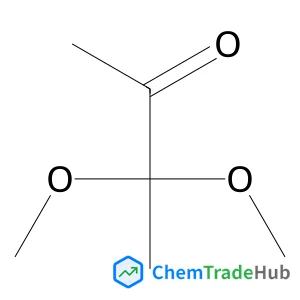
1,1-ジメトキシプロパン-2-オンは安全ですか?
1,1-ジメトキシプロパン-2-オンは一般的に低毒性ですが、皮膚や目への刺激性があるため、取扱いには注意が必要です。蒸気や液体の吸入には有害な可能性があり、適切...
6342-56-91,1-dimethoxypropan-...
化合物よくある質問
コバルト(II) 3,3'-{[(1S,2S)-1,2-ジメチルフENCYCLICALE-1,2-エチエンジイル]ビス[ニトロリルメチルイリデン]}ビス[4-オキソ-2-ペンテン-2-olate]について「に適用される法規ガイドラインは何ですか?
この化合物はCAS番号259259-80-8に対応しています。GHS分類では、毒性、燃焼性、反応性、炎症性を考慮に入れ、適切な危険性分類が行われます。REACH...
259259-80-8Cobalt(2+) (2E,2'E)-...
化合物よくある質問
「カーバミル酸, N-[8-[[2-[[2-(2,6-ジオキソ-3-ピペリジニル)-2,3-ジオキソ-1,3-ジヒドロ-1H-イソイソインドール-4-イルオキシ]アセチル]アミノ]オクチル]-1,1-ジメチレチルエステル」はどのように保存すればよいですか?
この化合物は、冷却庫で-20℃の温度、乾燥した容器に保管し、直日光から保護する必要があります。湿度の高い環境や高温は避けてください。
1950635-34-32-Methyl-2-propanyl ...
1433975-21-3FMoc-D-4-Aph(tBu-CbM...
掲載誌
Physical Chemistry Chemical Physics

CiteScore:
5.5
自己引用率:
10.3%
年間論文数:
3036
Physical Chemistry Chemical Physics (PCCP) is an international journal co-owned by 19 physical chemistry and physics societies from around the world. This journal publishes original, cutting-edge research in physical chemistry, chemical physics and biophysical chemistry. To be suitable for publication in PCCP, articles must include significant innovation and/or insight into physical chemistry; this is the most important criterion that reviewers and Editors will judge against when evaluating submissions. The journal has a broad scope and welcomes contributions spanning experiment, theory, computation and data science. Topical coverage includes spectroscopy, dynamics, kinetics, statistical mechanics, thermodynamics, electrochemistry, catalysis, surface science, quantum mechanics, quantum computing and machine learning. Interdisciplinary research areas such as polymers and soft matter, materials, nanoscience, energy, surfaces/interfaces, and biophysical chemistry are welcomed if they demonstrate significant innovation and/or insight into physical chemistry. Joined experimental/theoretical studies are particularly appreciated when complementary and based on up-to-date approaches.
おすすめ化合物
おすすめサプライヤー




免責事項
このページに表示される学術雑誌情報は、参考および研究目的のみを目的としています。当社は雑誌出版社とは提携しておらず、投稿の取り扱いも行っておりません。出版に関するお問い合わせは、各雑誌出版社に直接ご連絡ください。
表示されている情報に誤りがある場合は、support@chemtradehub.com までご連絡ください。迅速に確認し、対応いたします。