












Two-stage thiol-based click reactions for the preparation and adhesion of hydrogels
文献情報
出版日
2020-04-06
DOI
10.1039/C9PY01503E
インパクトファクター
5.582
著者
Wen Jing Yang, Wenya Xu, Xi Tao, Wen Wang, Yaqin Hu, Xue Li, En-Tang Kang, Lianhui Wang
原文を見る
要旨
The fabrication of adhesive hydrogel systems is quite important for biological applications. Herein, two-stage thiol-based click reactions have been employed for the preparation and adhesion of hydrogels. In the first stage, two self-adhesive hydrogels (HG-1 and HG-2) were constructed via the thiol-based click reactions and thiol–thiol coupling reaction under different stimuli, employing the same functional copolymer poly(propargyl methacrylate-co-N-(3,4-dihydroxyphenethyl) methacrylamide-co-poly(ethylene glycol) methyl ether methacrylate) (poly(PMA-co-DMA-co-PEGMA), polyPDP) and a 4-arm thiol-PEG cross-linker. Subsequently, the two prepared hydrogels achieved responsive self-adhesion properties via the second stage of thiol-based click reactions between the preserved functional groups under different stimuli. Moreover, the self-adhered hydrogels exhibited increased mechanical strength after adhesion. The present strategy thus provides a facile approach for the fabrication of hydrogel systems with on-demand self-adhesive properties.
関連文献
Anti-amyloidogenic indolizino[3,2-c]quinolines as imaging probes differentiating dense-core, diffuse, and coronal plaques of amyloid-β
Kyeonghwan Kim, Jeong Hwa Lee, Sunmi Kim, Songmin Lee, Donghee Lee, Hye Yun Kim, Ikyon Kim, YoungSoo Kim
2021-10-11
Research Article
DOI: 10.1039/D1MD00030F
Target 2035 – update on the quest for a probe for every protein
Susanne Müller, Suzanne Ackloo, Arij Al Chawaf, Hartmut Beck, Shaunna Beedie, Ulrich A. K. Betz, Gustavo Arruda Bezerra, Paul E. Brennan, David Brown, Peter J. Brown, Alex N. Bullock, Adrian J. Carter, Apirat Chaikuad, Mathilde Chaineau, Alessio Ciulli, Ian Collins, Jan Dreher, Kristina Edfeldt, Aled M. Edwards, Ursula Egner, Stephen M. Fuchs, Matthew D. Hall, Ingo V. Hartung, Alexander Hillisch, Stephen H. Hitchcock, Evert Homan, Natarajan Kannan, James R. Kiefer, Stefan Knapp, Milka Kostic, Stefan Kubicek, Andrew R. Leach, Sven Lindemann, Hisanori Matsui, Jordan L. Meier, Maurice Michel, Maxwell R. Morgan, Anke Mueller-Fahrnow, Dafydd R. Owen, Benjamin G. Perry, Saul H. Rosenberg, Kumar Singh Saikatendu, Cora Scholten, Sujata Sharma, Anton Simeonov, Michael Sundström, Matthew H. Todd, Claudia Tredup, Timothy M. Willson, Georg E. Winter
2021-12-03
Opinion
DOI: 10.1039/D1MD00228G
Design, synthesis, crystal structure and anti-plasmodial evaluation of tetrahydrobenzo[4,5]thieno[2,3-d]pyrimidine derivatives
Kavita Pal, Md Kausar Raza, Jenny Legac, Md. Ataur Rahman, Shoaib Manzoor, Philip J. Rosenthal, Nasimul Hoda
2021-05-18
Research Article
DOI: 10.1039/D1MD00038A
Modulating β-arrestin 2 recruitment at the δ- and μ-opioid receptors using peptidomimetic ligands
Krishna K. Sharma, Robert J. Cassell, Hongyu Su, Benjamin R. Cummins, Kendall L. Mores, David K. Johnson
2021-08-16
Research Article
DOI: 10.1039/D1MD00025J
Expanding the repertoire of methanocarba nucleosides from purinergic signaling to diverse targets
Kenneth A. Jacobson, Veronica Salmaso, R. Rama Suresh, Dilip K. Tosh
2021-07-13
Review Article
DOI: 10.1039/D1MD00167A
Introducing the metacore concept for multi-target ligand design
Dagmar Stumpfe, Alexander Hoch, Jürgen Bajorath
2021-04-15
Research Article
DOI: 10.1039/D1MD00056J
Recent advances in urea- and thiourea-containing compounds: focus on innovative approaches in medicinal chemistry and organic synthesis
Riccardo Ronchetti, Andrea Carotti, Antimo Gioiello, Emidio Camaioni
2021-05-13
Review Article
DOI: 10.1039/D1MD00058F
Structural modifications that increase gut restriction of bile acid derivatives
Ali Nakhi, Henry L. Wong, Peter I. Dosa
2021-02-12
Research Article
DOI: 10.1039/D0MD00425A
SAR study of 4-arylazo-3,5-diamino-1H-pyrazoles: identification of small molecules that induce dispersal of Pseudomonas aeruginosa biofilms
Charlotte U. Jansen, Jesper Uhd, Jens B. Andersen, Louise D. Hultqvist, Tim H. Jakobsen, Martin Nilsson, Michael Givskov, Tim Tolker-Nielsen, Katrine M. Qvortrup
2021-09-03
Research Article
DOI: 10.1039/D1MD00275A
こちらもおすすめ
化合物よくある質問
カルボニル基が付いた5-氰基-1-{[(2-メチル-2-プロpanyl)オキシ]カーボンイル}1H-吲哚-2-イリド-2-ボリン酸はどのように保存すればよいですか?
カルボニル基が付いた5-氰基-1-{[(2-メチル-2-プロpanyl)オキシ]カーボンイル}1H-吲哚-2-イリド-2-ボリン酸は、直射日光を避けて室温(15...
475102-15-9(5-Cyano-1-{[(2-meth...
化合物よくある質問
tert-ブチル2-クロロメチルピリジン-3-基炭酸エステルの市場動向や研究トレンドはどうですか?
この化合物は合成化学分野において、特にピリジン化合物の合成や改良に用いられます。最近の研究では、ピリジン化合物の新規合成法や特性の改良が注目されています。市場動...
1203498-98-9tert-Butyl 2-chloro-...
化合物よくある質問
聚二季戊四醇六丙烯酸酯はどの業界で使用されていますか?
聚二季戊四醇六丙烯酸酯は、医薬品、ポリマー、センサー、半導体などの業界で広く使用されています。特にポリマー業界では硬化剤として、医薬分野では医療機器の製造に使用...
29570-58-93-(Acryloyloxy)-2-({...
化合物よくある質問
1-氯-5-硝基异喹啉の市場動向や研究トレンドはどうですか?
1-氯-5-硝基异喹啉は、薬理学や合成化学の研究分野で注目されています。市場動向としては、その生物学的な活性や合成可能性を評価する研究が増えています。また、代替...
58142-97-51-Chloro-5-nitroisoq...
化合物よくある質問
2-チロール-5-メチルスルフェニル-3-trifルオルメチルベンゼンはどのように合成されますか?
2-チロール-5-メチルスルフェニル-3-trifルオルメチルベンゼンは、トリフルオロメチル化反応と硫化反応を経て合成されます。通常、トリフルオロメチル化剤と硫...
957066-04-51-Chloro-4-(methylsu...
化合物よくある質問
p-トールイルマグネシウムブロミドの物理化学的性質は何ですか?
p-トールイルマグネシウムブロミドのCAS番号は4294-57-9です。この化合物は白色の結晶性粉末で、分子量は204.32です。溶剤中で良好に溶解しますが、水...
4294-57-9p-Tolylmagnesium bro...
化合物よくある質問
1-(5-甲基-2-硫化素基)プロパン-1-酮の市場動向や研究トレンドはどうですか?
1-(5-甲基-2-硫化素基)プロパン-1-酮の市場動向は、化学産業全体の需要に影響を受けますが、最近では pharmaceutical 分野での応用が注目され...
59303-13-81-(5-Methyl-2-thieny...
化合物よくある質問
十一碳烯酰甘氨酸を取り扱う際の実験室安全事項は何ですか?
十一碳烯酰甘氨酸は吸入や皮膚から吸収されることがあり、取り扱う際には防塵マスクと手袋を使用してください。ドラフトチャンバーを用いて漏洩を処理し、適切なSDS(S...
54301-26-7N-10-Undecenoylglyci...
化合物よくある質問
1H,1H-全氟-3,6-二氧杂葵-1-醇を取り扱う際の実験室安全事項は何ですか?
この化合物は吸入や皮膚吸収による毒性があるため、防塵マスク、ゴーグル、防護手袋を使用する必要があります。ドラフトチャンバーでの操作が必要です。漏洩時には即座に換...
152914-73-32,2-Difluoro-2-[1,1,...
化合物よくある質問
3-(4-(フルオロメチルオキシ)フェニル)-1,2,4-オキサジアゾール-5-カルボハイドライドは安全ですか?
安全性は化合物の使用方法によります。直接的な毒性は報告されていませんが、吸入や皮膚接触には注意が必要です。適切な防護服を着用し、換気を図ることを推奨します。
883028-82-83-(4-(Trifluorometho...
掲載誌
Polymer Chemistry

CiteScore:
8.6
自己引用率:
7.3%
年間論文数:
457
Polymer Chemistry welcomes submissions in all areas of polymer science that have a strong focus on macromolecular chemistry. Manuscripts may cover a broad range of fields, yet no direct application focus is required.
おすすめ化合物
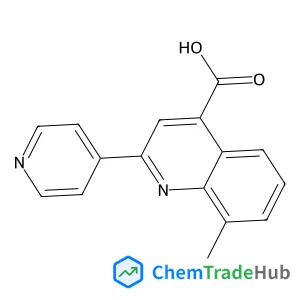
![2-Methyl-2-propanyl [2-(2-oxa-6-azaspiro[3.3]hept-6-yl)ethyl]carbamate structure](https://static.chemtradehub.com/structs/141/1415562-38-7-c0a4.webp "2-Methyl-2-propanyl [2-(2-oxa-6-azaspiro[3.3]hept-6-yl)ethyl]carbamate structure")
2-Methyl-2-propanyl [2-(2-oxa-6-azaspiro[3.3]hept-6-yl)ethyl]carbamate
CAS番号:
1415562-38-7
分子式:
C12H22N2O3
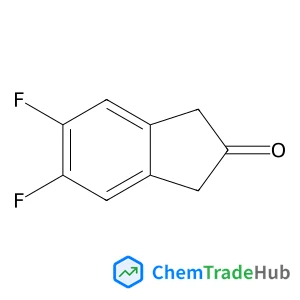
![Benzyl 2-{[(tert-butoxy)carbonyl]amino}acetate structure](https://static.chemtradehub.com/structs/542/54244-69-8-6399.webp "Benzyl 2-{[(tert-butoxy)carbonyl]amino}acetate structure")
おすすめサプライヤー





免責事項
このページに表示される学術雑誌情報は、参考および研究目的のみを目的としています。当社は雑誌出版社とは提携しておらず、投稿の取り扱いも行っておりません。出版に関するお問い合わせは、各雑誌出版社に直接ご連絡ください。
表示されている情報に誤りがある場合は、support@chemtradehub.com までご連絡ください。迅速に確認し、対応いたします。