












A surface plasmon resonance enhanced photoelectrochemical immunoassay based on perovskite metal oxide@gold nanoparticle heterostructures
文献情報
出版日
2019-08-14
DOI
10.1039/C9AN01395D
インパクトファクター
4.616
著者
Lijia Zhang, Zhongbin Luo, Lingshan Su, Dianping Tang
原文を見る
要旨
An innovative visible light-driven photoelectrochemical (PEC) immunosensing system was reasonably established for the sensitive detection of prostate-specific antigen (PSA) by using perovskite metal oxide@gold nanoparticle heterostructures (BaTiO3/Au) as the photoactive materials. When plasmonic Au nanoparticles were directly decorated on BaTiO3, a several times surface plasmon resonance (SPR) enhancement of photocurrent density was induced via the injection of hot electrons from visible light-excited Au nanoparticles into the conduction band of BaTiO3, and the combination of BaTiO3 and Au nanoparticles was employed as a promising platform for developing a photoelectrochemical bioanalysis. As a proof of concept, PSA had been detected by the BaTiO3/Au nanocomposite-based PEC sensor. To design such an immunoassay protocol, a monoclonal anti-PSA capture antibody (cAb)-coated microplate and glucose oxidase/polyclonal anti-PSA detection antibody-modified gold nanoparticles (GOx–Au NP–dAb) were used as the immunoreaction platform and signal probe, respectively. Upon the addition of target PSA, a sandwiched immunocomplex was formed accompanying the immuno-recognition between the antigen and antibody, and then the carried GOx could oxidize glucose to produce H2O2. The photocurrent of the BaTiO3/Au nanocomposite-functionalized electrode amplified with increasing H2O2 concentration since H2O2 is considered as a good hole scavenger. On the basis of the above-mentioned mechanisms and the optimized conditions, the assembled PEC immunosensor was linear with the logarithm of the PSA concentration in the range of 0.01–40 ng mL−1 with a detection limit of 4.2 pg mL−1. It afforded rapid response, good precision, and high stability and specificity, implying its great promise in photoelectrochemical immunoassays. More generally, this system sets up an ideal PEC immunosensing system based on the BaTiO3/Au nanocomposites and represents an innovative and low-cost “signal-on” assay scheme for the practical quantitative screening of low-abundance proteins.
関連文献
Dynamic micellar oligomers of amyloid beta peptides play a crucial role in their aggregation mechanisms
Bertrand Morel, Maria Paz Carrasco, Samuel Jurado, Carmen Marco, Francisco Conejero-Lara
2018-07-23
Paper
DOI: 10.1039/C8CP02685H
Understanding dissolution process of chitin crystal in ionic liquids: theoretical study
Takuya Uto, Satoshi Idenoue, Kazuya Yamamoto, Jun-ichi Kadokawa
2018-07-30
Paper
DOI: 10.1039/C8CP02749H
Spectroscopic characterisation of centropolyindanes
Stewart F. Parker, Lisha Zhong, Marco Harig, Dietmar Kuck
2019-02-04
Paper
DOI: 10.1039/C8CP07311B
Experimental and theoretical investigation of long-wavelength fluorescence emission in push–pull benzazoles: intramolecular proton transfer or charge transfer in the excited state?
Guilherme Wiethaus, Josene Maria Toldo, Fabiano da Silveira Santos, Rodrigo da Costa Duarte, Paulo Fernando Bruno Gonçalves, Fabiano Severo Rodembusch
2019-01-28
Paper
DOI: 10.1039/C8CP05186K
Computational modelling of atomic layer etching of chlorinated germanium surfaces by argon
Shenli Zhang, Yihan Huang, Gulcin Tetiker, Saravanapriyan Sriraman, Alex Paterson, Roland Faller
2019-02-20
Communication
DOI: 10.1039/C9CP00125E
Nature of halogen bonding involving π-systems, nitroxide radicals and carbenes: a highlight of the importance of charge transfer
Adrian M. Mak
2018-10-02
Paper
DOI: 10.1039/C8CP04075C
Electron localization in niobium doped CaMnO3 due to the energy difference of electronic states of Mn and Nb
Yi Li, Jian Liu, Ji-Chao Li, Yu-Fei Chen, Xin-Miao Zhang, Xue-Jin Wang, Fu-Ning Wang, Wen-Bin Su, Lan-Ling Zhao, Chun-Lei Wang
2018-07-23
Paper
DOI: 10.1039/C8CP02783H
Towards high-level theoretical studies of large biodiesel molecules: an ONIOM/RRKM/Master-equation approach to the isomerization and dissociation kinetics of methyl decanoate radicals
Yicheng Chi, Lidong Zhang, Peng Zhang, Liusi Sheng
2019-02-06
Paper
DOI: 10.1039/C8CP05593A
こちらもおすすめ
化合物よくある質問
2-ブロモ-9,9-ジフェニル-9H-フルオレンの主な用途は何ですか?
2-溴-9,9-二苯基芴は、医薬品、工業材料、有機合成の研究分野で応用されます。特に、レーザー材料や機能性ポリマーの合成に使用されることがあります。また、蛍光色...
474918-32-62-Bromo-9,9-diphenyl...
化合物よくある質問
四氯化铱の市場動向や研究トレンドはどうですか?
四氯化铱の市場は研究開発分野で注目されており、特にナノ技術や金属有機框架(MOFs)の分野での需要が増加傾向にあります。価格は安定しており、中国や韓国での生産が...
207399-11-9Tetrachloroiridium h...
882-06-44-Nitrocinnamic acid
化合物よくある質問
1-(4-溴-3-氟苯基)-2-氯乙酮を含む廃棄物はどのように処理すべきですか?
1-(4-溴-3-氟苯基)-2-氯乙酮 (CAS番号: 1260857-14-4) の廃棄物は専門的な廃棄処理が必要です。まず、廃棄物は密閉された容器に収集し、...
1260857-14-41-(4-Bromo-3-fluorop...
化合物よくある質問
苦参酚Kとは何ですか?
苦参酚Kは、CAS番号101236-49-1を持つ化合物で、主に天然由来の生薬から抽出されます。この化合物は、抗炎症作用や抗癌作用を持つことが報告されています。
101236-49-1Kushenol K
化合物よくある質問
POTASSIUM (1-(TERTBUTOXYCARBONYL)AZETIDIN-3-YL)TRIFLUOROBORATE を含む廃棄物はどのように処理すべきですか?
POTASSIUM (1-(TERTBUTOXYCARBONYL)AZETIDIN-3-YL)TRIFLUOROBORATE を含む廃棄物は、まず安全なエント...
1430219-73-0Potassium (1-(tert-b...
化合物よくある質問
4-庚基-4’-联苯羧酸の市場動向や研究トレンドはどうですか?
4-庚基-4’-聯苯羧酸は、特殊化学品や合成化学の分野で用いられる化学物質ですが、市場動向としては、研究開発の進展とともに需要が増加しています。また、環境配慮型...
58573-94-74'-Heptyl-4-biphenyl...
化合物よくある質問
6-ブロモ-3-メトキシ-1-フェニル-1H-インドゾールを含む廃棄物はどのように処理すべきですか?
6-ブロモ-3-メトキシ-1-フェニル-1H-インドゾールを含む廃棄物は、適切な化学廃棄処理が必要です。通常、廃棄物は密閉容器に収集され、専門の廃棄処理業者に引...
1332527-03-36-Bromo-3-methoxy-1-...
化合物よくある質問
4,4-二甲基-2-吡咯烷酮はどの業界で使用されていますか?
4,4-二甲基-2-吡咯烷酮は医薬、ポリマー、センサー、半導体などの業界で広く使用されています。特に溶媒としての性能が高く評価されています。
66899-02-34,4-dimethylpyrrolid...
51312-42-6Sodium Phosphotungst...
掲載誌
Analyst

CiteScore:
7.8
自己引用率:
5.6%
年間論文数:
653
Analyst publishes analytical and bioanalytical research that reports premier fundamental discoveries and inventions, and the applications of those discoveries, unconfined by traditional discipline barriers.
おすすめ化合物
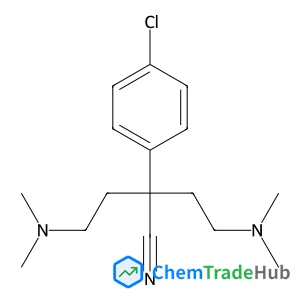
2-(4-Chlorophenyl)-4-(dimethylamino)-2-(2-(dimethylamino)ethyl)butanenitrile
CAS番号:
1246816-57-8
分子式:
C16H24ClN3
おすすめサプライヤー






免責事項
このページに表示される学術雑誌情報は、参考および研究目的のみを目的としています。当社は雑誌出版社とは提携しておらず、投稿の取り扱いも行っておりません。出版に関するお問い合わせは、各雑誌出版社に直接ご連絡ください。
表示されている情報に誤りがある場合は、support@chemtradehub.com までご連絡ください。迅速に確認し、対応いたします。