












Nature of halogen bonding involving π-systems, nitroxide radicals and carbenes: a highlight of the importance of charge transfer
文献情報
出版日
2018-10-02
DOI
10.1039/C8CP04075C
インパクトファクター
3.676
著者
Adrian M. Mak
原文を見る
要旨
The recently developed adiabatic absolutely localized molecular orbital energy decomposition analysis (ALMO-EDA) has proven to be useful in determining the effects of different energy components on the geometries of complexes bound by intermolecular interactions. The authors have applied it to systems such as the water dimer, water–ion complexes, metallocenes and lone-pair type halogen-bonded (XB) dimers. In this study, we have extended the second-generation ALMO-EDA method to 40 different XB complexes by benchmarking against its classical counterpart and symmetry-adapted perturbation theory (SAPT). In addition, we have examined the nature of halogen bonding involving less studied XB acceptors, namely π-systems, radicals and carbenes, using the adiabatic ALMO-EDA analyses, particularly to shed light on how each energy component affects the geometries of the XB complexes. Our results show that the second-generation ALMO-EDA predicts a higher electrostatic energy contribution in all XB complexes compared to SAPT and classical ALMO-EDA schemes. On the other hand, when comparing across different XB acceptors, all three partition schemes produced the same qualitative finding. The adiabatic ALMO-EDA analyses indicate that while the inclusion of a charge transfer contribution is important in achieving accurate XB bond lengths and interaction energies, as well as recovering the binding site specificity of XB involving benzene and naphthalene acceptors, it is sufficient to obtain the linearity of the XB complexes in the frozen approximation.
関連文献
Evoking C2+ production from electrochemical CO2 reduction by the steric confinement effect of ordered porous Cu2O
Longlong Fan, Qinghong Geng, Lian Ma, Chengming Wang, Jun-Xuan Li, Wei Zhu, Ruiwen Shao, Wei Li, Xiao Feng
2023-11-11
Edge Article
DOI: 10.1039/D3SC04840C
Plasmon-mediated dehydrogenation of the aromatic methyl group and benzyl radical formation
Govinda Ghimire, Alexander M. Mebel, Shuai Chang
2023-11-28
Edge Article
DOI: 10.1039/D3SC05847F
(C5H6.16N2Cl0.84)(IO2Cl2): a birefringent crystal featuring unprecedented (IO2Cl2)− anions and π-conjugated organic cations
Chun-Li Hu
2023-11-27
Edge Article
DOI: 10.1039/D3SC05770D
An atomic surface site interaction point description of non-covalent interactions
Maria Chiara Storer, Katarzyna J. Zator, Derek P. Reynolds, Christopher A. Hunter
2023-12-08
Edge Article
DOI: 10.1039/D3SC05690B
Strain induced reactivity of cyclic iminoboranes: the (2 + 2) cycloaddition of a 1H-1,3,2-diazaborepine with ethene
Divanshu Gupta, Ralf Einholz, Holger F. Bettinger
2023-12-12
Edge Article
DOI: 10.1039/D3SC04901A
A β-barrel-like tetramer formed by a β-hairpin derived from Aβ
Tuan D. Samdin, Chelsea R. Jones, Gretchen Guaglianone, Adam G. Kreutzer, J. Alfredo Freites, Michał Wierzbicki
2023-11-28
Edge Article
DOI: 10.1039/D3SC05185D
Atomically accurate site-specific ligand tailoring of highly acid- and alkali-resistant Ti(iv)-based metallamacrocycle for enhanced CO2 photoreduction
Yi-Qi Tian, Lin-Fang Dai, Wen-Lei Mu, Wei-Dong Yu, Jun Yan, Chao Liu
2023-11-30
Edge Article
DOI: 10.1039/D3SC06046B
Using waste to treat waste: facile synthesis of hollow carbon nanospheres from lignin for water decontamination
Xiang Liu, Zixuan Hao, Chen Fang, Kun Pang, Jiaying Yan, Yingping Huang, Di Huang
2023-11-27
Edge Article
DOI: 10.1039/D3SC05275C
こちらもおすすめ
化合物よくある質問
2-ブロモ-9,9-ジフェニル-9H-フルオレンの主な用途は何ですか?
2-溴-9,9-二苯基芴は、医薬品、工業材料、有機合成の研究分野で応用されます。特に、レーザー材料や機能性ポリマーの合成に使用されることがあります。また、蛍光色...
474918-32-62-Bromo-9,9-diphenyl...
化合物よくある質問
四氯化铱の市場動向や研究トレンドはどうですか?
四氯化铱の市場は研究開発分野で注目されており、特にナノ技術や金属有機框架(MOFs)の分野での需要が増加傾向にあります。価格は安定しており、中国や韓国での生産が...
207399-11-9Tetrachloroiridium h...
882-06-44-Nitrocinnamic acid
化合物よくある質問
1-(4-溴-3-氟苯基)-2-氯乙酮を含む廃棄物はどのように処理すべきですか?
1-(4-溴-3-氟苯基)-2-氯乙酮 (CAS番号: 1260857-14-4) の廃棄物は専門的な廃棄処理が必要です。まず、廃棄物は密閉された容器に収集し、...
1260857-14-41-(4-Bromo-3-fluorop...
化合物よくある質問
苦参酚Kとは何ですか?
苦参酚Kは、CAS番号101236-49-1を持つ化合物で、主に天然由来の生薬から抽出されます。この化合物は、抗炎症作用や抗癌作用を持つことが報告されています。
101236-49-1Kushenol K
化合物よくある質問
POTASSIUM (1-(TERTBUTOXYCARBONYL)AZETIDIN-3-YL)TRIFLUOROBORATE を含む廃棄物はどのように処理すべきですか?
POTASSIUM (1-(TERTBUTOXYCARBONYL)AZETIDIN-3-YL)TRIFLUOROBORATE を含む廃棄物は、まず安全なエント...
1430219-73-0Potassium (1-(tert-b...
化合物よくある質問
4-庚基-4’-联苯羧酸の市場動向や研究トレンドはどうですか?
4-庚基-4’-聯苯羧酸は、特殊化学品や合成化学の分野で用いられる化学物質ですが、市場動向としては、研究開発の進展とともに需要が増加しています。また、環境配慮型...
58573-94-74'-Heptyl-4-biphenyl...
化合物よくある質問
6-ブロモ-3-メトキシ-1-フェニル-1H-インドゾールを含む廃棄物はどのように処理すべきですか?
6-ブロモ-3-メトキシ-1-フェニル-1H-インドゾールを含む廃棄物は、適切な化学廃棄処理が必要です。通常、廃棄物は密閉容器に収集され、専門の廃棄処理業者に引...
1332527-03-36-Bromo-3-methoxy-1-...
化合物よくある質問
4,4-二甲基-2-吡咯烷酮はどの業界で使用されていますか?
4,4-二甲基-2-吡咯烷酮は医薬、ポリマー、センサー、半導体などの業界で広く使用されています。特に溶媒としての性能が高く評価されています。
66899-02-34,4-dimethylpyrrolid...
51312-42-6Sodium Phosphotungst...
掲載誌
Physical Chemistry Chemical Physics

CiteScore:
5.5
自己引用率:
10.3%
年間論文数:
3036
Physical Chemistry Chemical Physics (PCCP) is an international journal co-owned by 19 physical chemistry and physics societies from around the world. This journal publishes original, cutting-edge research in physical chemistry, chemical physics and biophysical chemistry. To be suitable for publication in PCCP, articles must include significant innovation and/or insight into physical chemistry; this is the most important criterion that reviewers and Editors will judge against when evaluating submissions. The journal has a broad scope and welcomes contributions spanning experiment, theory, computation and data science. Topical coverage includes spectroscopy, dynamics, kinetics, statistical mechanics, thermodynamics, electrochemistry, catalysis, surface science, quantum mechanics, quantum computing and machine learning. Interdisciplinary research areas such as polymers and soft matter, materials, nanoscience, energy, surfaces/interfaces, and biophysical chemistry are welcomed if they demonstrate significant innovation and/or insight into physical chemistry. Joined experimental/theoretical studies are particularly appreciated when complementary and based on up-to-date approaches.
おすすめ化合物
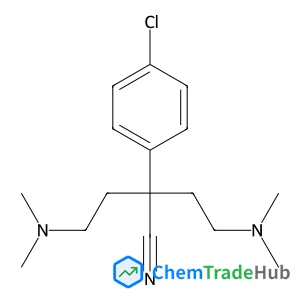
2-(4-Chlorophenyl)-4-(dimethylamino)-2-(2-(dimethylamino)ethyl)butanenitrile
CAS番号:
1246816-57-8
分子式:
C16H24ClN3
![6-Benzyl-4,5,6,7-tetrahydro-1H-pyrazolo[3,4-c]pyridin-3(2H)-one structure](https://static.chemtradehub.com/structs/909/909187-64-0-f54f.webp "6-Benzyl-4,5,6,7-tetrahydro-1H-pyrazolo[3,4-c]pyridin-3(2H)-one structure")
おすすめサプライヤー


免責事項
このページに表示される学術雑誌情報は、参考および研究目的のみを目的としています。当社は雑誌出版社とは提携しておらず、投稿の取り扱いも行っておりません。出版に関するお問い合わせは、各雑誌出版社に直接ご連絡ください。
表示されている情報に誤りがある場合は、support@chemtradehub.com までご連絡ください。迅速に確認し、対応いたします。