












Experimental and theoretical investigation of long-wavelength fluorescence emission in push–pull benzazoles: intramolecular proton transfer or charge transfer in the excited state?
文献情報
出版日
2019-01-28
DOI
10.1039/C8CP05186K
インパクトファクター
3.676
著者
Guilherme Wiethaus, Josene Maria Toldo, Fabiano da Silveira Santos, Rodrigo da Costa Duarte, Paulo Fernando Bruno Gonçalves, Fabiano Severo Rodembusch
原文を見る
要旨
This study presents the synthesis, characterisation and theoretical calculations of compounds that contain electron donor and withdrawing groups connected through a π-conjugated benzazolic structure. The compounds in solution show an absorption maximum in the UV-visible spectrum (380–390 nm) due to spin and symmetry allowed electronic 1ππ* transitions with no clear evidence for charge transfer in either compound in the ground state. A fluorescence emission located in the violet-blue-green region, tailored by solvent polarity, with a large Stokes shift was observed. Taking the long-wavelength emission into account, the Lippert–Mataga plot indicates a positive solvatochromism in the solvent polarity function (Δf) range 0.02–0.20, related to the occurrence of an ICT mechanism in the excited state. At Δf greater than 0.20, the polarity of the medium seems no longer to increase the stabilization of the compounds, reaching a plateau. Time-dependent density functional theory (TD-DFT) and resolution-of-identity second-order approximate coupled-cluster (RI-CC2) calculations were also used to better understand the excited state of these compounds. The results indicated that ESIPT was disfavoured in the compounds, mainly in polar solvents, and the emission wavelengths were primarily associated with ICT. In summary, in these push–pull compounds, the electron donating and withdrawing groups do not favour the ESIPT process.
関連文献
Photocatalytic, modular difunctionalization of alkenes enabled by ligand-to-metal charge transfer and radical ligand transfer
Kang-Jie Bian, David Nemoto, Jr, Xiao-Wei Chen, Shih-Chieh Kao, James Hooson, Julian G. West
2023-11-24
Edge Article
DOI: 10.1039/D3SC05231A
Cooperatively designed aptamer-PROTACs for spatioselective degradation of nucleocytoplasmic shuttling protein for enhanced combinational therapy
Ran Liu, Zheng Liu, Mohan Chen, Hang Xing, Penghui Zhang, Jingjing Zhang
2023-11-29
Edge Article
DOI: 10.1039/D3SC04249A
Group 13 ion coordination to pyridyl breaks the reduction potential vs. hydricity scaling relationship for dihydropyridinates
Leo W. T. Parsons, James C. Fettinger, Louise A. Berben
2023-11-16
Edge Article
DOI: 10.1039/D3SC03806H
(C5H6.16N2Cl0.84)(IO2Cl2): a birefringent crystal featuring unprecedented (IO2Cl2)− anions and π-conjugated organic cations
Chun-Li Hu
2023-11-27
Edge Article
DOI: 10.1039/D3SC05770D
Highly dispersed Pd-based pseudo-single atoms in zeolites for hydrogen generation and pollutant disposal
Kai Zhang, Ning Wang, Yali Meng, Tianjun Zhang, Pu Zhao, Jihong Yu
2023-11-30
Edge Article
DOI: 10.1039/D3SC05851D
A near-infrared light-activated nanoprobe for simultaneous detection of hydrogen polysulfide and sulfur dioxide in myocardial ischemia–reperfusion injury
Xianzhu Luo, Cuiling Zhang, Chenyang Yue, Yuelin Jiang, Fei Yang, Yuezhong Xian
2023-11-24
Edge Article
DOI: 10.1039/D3SC04937J
Convergent synthesis of thiodiazole dioxides from simple ketones and amines through an unusual nitrogen-migration mechanism
Kunlayanee Punjajom, Paul P. Sinclair, Ishika Saha, Mark Seierstad, Michael K. Ameriks, Pablo García-Reynaga, Terry P. Lebold, Richmond Sarpong
2023-11-27
Edge Article
DOI: 10.1039/D3SC04478E
こちらもおすすめ
化合物よくある質問
2-ブロモ-9,9-ジフェニル-9H-フルオレンの主な用途は何ですか?
2-溴-9,9-二苯基芴は、医薬品、工業材料、有機合成の研究分野で応用されます。特に、レーザー材料や機能性ポリマーの合成に使用されることがあります。また、蛍光色...
474918-32-62-Bromo-9,9-diphenyl...
化合物よくある質問
四氯化铱の市場動向や研究トレンドはどうですか?
四氯化铱の市場は研究開発分野で注目されており、特にナノ技術や金属有機框架(MOFs)の分野での需要が増加傾向にあります。価格は安定しており、中国や韓国での生産が...
207399-11-9Tetrachloroiridium h...
882-06-44-Nitrocinnamic acid
化合物よくある質問
1-(4-溴-3-氟苯基)-2-氯乙酮を含む廃棄物はどのように処理すべきですか?
1-(4-溴-3-氟苯基)-2-氯乙酮 (CAS番号: 1260857-14-4) の廃棄物は専門的な廃棄処理が必要です。まず、廃棄物は密閉された容器に収集し、...
1260857-14-41-(4-Bromo-3-fluorop...
化合物よくある質問
苦参酚Kとは何ですか?
苦参酚Kは、CAS番号101236-49-1を持つ化合物で、主に天然由来の生薬から抽出されます。この化合物は、抗炎症作用や抗癌作用を持つことが報告されています。
101236-49-1Kushenol K
化合物よくある質問
POTASSIUM (1-(TERTBUTOXYCARBONYL)AZETIDIN-3-YL)TRIFLUOROBORATE を含む廃棄物はどのように処理すべきですか?
POTASSIUM (1-(TERTBUTOXYCARBONYL)AZETIDIN-3-YL)TRIFLUOROBORATE を含む廃棄物は、まず安全なエント...
1430219-73-0Potassium (1-(tert-b...
化合物よくある質問
4-庚基-4’-联苯羧酸の市場動向や研究トレンドはどうですか?
4-庚基-4’-聯苯羧酸は、特殊化学品や合成化学の分野で用いられる化学物質ですが、市場動向としては、研究開発の進展とともに需要が増加しています。また、環境配慮型...
58573-94-74'-Heptyl-4-biphenyl...
化合物よくある質問
6-ブロモ-3-メトキシ-1-フェニル-1H-インドゾールを含む廃棄物はどのように処理すべきですか?
6-ブロモ-3-メトキシ-1-フェニル-1H-インドゾールを含む廃棄物は、適切な化学廃棄処理が必要です。通常、廃棄物は密閉容器に収集され、専門の廃棄処理業者に引...
1332527-03-36-Bromo-3-methoxy-1-...
化合物よくある質問
4,4-二甲基-2-吡咯烷酮はどの業界で使用されていますか?
4,4-二甲基-2-吡咯烷酮は医薬、ポリマー、センサー、半導体などの業界で広く使用されています。特に溶媒としての性能が高く評価されています。
66899-02-34,4-dimethylpyrrolid...
51312-42-6Sodium Phosphotungst...
掲載誌
Physical Chemistry Chemical Physics

CiteScore:
5.5
自己引用率:
10.3%
年間論文数:
3036
Physical Chemistry Chemical Physics (PCCP) is an international journal co-owned by 19 physical chemistry and physics societies from around the world. This journal publishes original, cutting-edge research in physical chemistry, chemical physics and biophysical chemistry. To be suitable for publication in PCCP, articles must include significant innovation and/or insight into physical chemistry; this is the most important criterion that reviewers and Editors will judge against when evaluating submissions. The journal has a broad scope and welcomes contributions spanning experiment, theory, computation and data science. Topical coverage includes spectroscopy, dynamics, kinetics, statistical mechanics, thermodynamics, electrochemistry, catalysis, surface science, quantum mechanics, quantum computing and machine learning. Interdisciplinary research areas such as polymers and soft matter, materials, nanoscience, energy, surfaces/interfaces, and biophysical chemistry are welcomed if they demonstrate significant innovation and/or insight into physical chemistry. Joined experimental/theoretical studies are particularly appreciated when complementary and based on up-to-date approaches.
おすすめ化合物
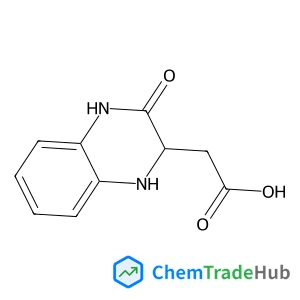

![4-Chloro-3-(trifluoromethyl)-1H-pyrrolo[2,3-b]pyridine structure](https://static.chemtradehub.com/structs/869/869335-75-1-a9d0.webp "4-Chloro-3-(trifluoromethyl)-1H-pyrrolo[2,3-b]pyridine structure")
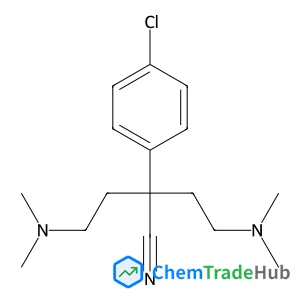
2-(4-Chlorophenyl)-4-(dimethylamino)-2-(2-(dimethylamino)ethyl)butanenitrile
CAS番号:
1246816-57-8
分子式:
C16H24ClN3
おすすめサプライヤー




免責事項
このページに表示される学術雑誌情報は、参考および研究目的のみを目的としています。当社は雑誌出版社とは提携しておらず、投稿の取り扱いも行っておりません。出版に関するお問い合わせは、各雑誌出版社に直接ご連絡ください。
表示されている情報に誤りがある場合は、support@chemtradehub.com までご連絡ください。迅速に確認し、対応いたします。