












Understanding dissolution process of chitin crystal in ionic liquids: theoretical study
文献情報
出版日
2018-07-30
DOI
10.1039/C8CP02749H
インパクトファクター
3.676
著者
Takuya Uto, Satoshi Idenoue, Kazuya Yamamoto, Jun-ichi Kadokawa
原文を見る
要旨
Chitin is a promising biomass resource and has high potential for industrial applications owing to its huge annual production in nature. However, it exhibits poor processability and solubility due to its very stable and crystalline character. Recently, ionic liquids (ILs) have attracted attention as solvents for structural polysaccharides – for example, 1-allyl-3-methylimidazolium bromide (AMIMBr) has been found to dissolve chitin. As few ILs are known to dissolve chitin, little research has been conducted on the dissolution mechanism involved. In this study, we have adopted a molecular dynamics (MD) approach to study the dissolution of chitin crystals in imidazolium-based ILs. The MD simulation in AMIMBr has demonstrated that the dissolution process involved peeling of chitin chains from the crystal surface, with Br− cleaving the chitin hydrogen bonds, and AMIM+ preventing a return to the crystalline phase after the peeling. By contrast, in imidazolium acetates, which has also been reported to dissolve chitin, although the molecular chains are peeled off, the peeled chains occasionally return to the crystalline phase. Furthermore, the MD trajectory analysis has revealed that the solubility of chitin is well correlated with the number of intermolecular hydrogen bonds by acetamido groups in the chitin crystal. It has been experimentally proven that mixing a small amount of 2-bromoethyl acetate, as a bromide generator, with 1-allyl-3-methylimidazolium chloride can enhance chitin solubility, which supports the dissolution mechanism indicated by the above theoretical results.
関連文献
A universal orthogonal imaging platform for living-cell RNA detection using fluorogenic RNA aptamers
Peng Yin, Mingmin Ge, Shiyi Xie, Li Zhang, Shi Kuang, Zhou Nie
2023-12-02
Edge Article
DOI: 10.1039/D3SC04957D
Dimethyl carbonate synthesis from CO2 and methanol over CeO2: elucidating the surface intermediates and oxygen vacancy-assisted reaction mechanism
Toshiyuki Sugiyama, Francisco Medina, Wouter van Beek, Jun-ya Hasegawa
2023-11-21
Edge Article
DOI: 10.1039/D3SC04466A
Dynamic sampling of liquid metal structures for theoretical studies on catalysis
Charlie Ruffman, Krista G. Steenbergen, Anna L. Garden, Nicola Gaston
2023-11-29
Edge Article
DOI: 10.1039/D3SC04416E
Plasmon-mediated dehydrogenation of the aromatic methyl group and benzyl radical formation
Govinda Ghimire, Alexander M. Mebel, Shuai Chang
2023-11-28
Edge Article
DOI: 10.1039/D3SC05847F
A near-infrared light-activated nanoprobe for simultaneous detection of hydrogen polysulfide and sulfur dioxide in myocardial ischemia–reperfusion injury
Xianzhu Luo, Cuiling Zhang, Chenyang Yue, Yuelin Jiang, Fei Yang, Yuezhong Xian
2023-11-24
Edge Article
DOI: 10.1039/D3SC04937J
Triplet dynamic nuclear polarization of pyruvate via supramolecular chemistry
Tomoyuki Hamachi, Koki Nishimura, Keita Sakamoto, Yusuke Kawashima, Hironori Kouno, Shunsuke Sato
2023-11-21
Edge Article
DOI: 10.1039/D3SC04123A
An orbitally adapted push–pull template for N2 activation and reduction to diazene-diide
David Specklin, Marie-Christine Boegli, Anaïs Coffinet, Léon Escomel, Laure Vendier, Mary Grellier, Antoine Simonneau
2023-11-21
Edge Article
DOI: 10.1039/D3SC04390H
Synthetic ramoplanin analogues are accessible by effective incorporation of arylglycines in solid-phase peptide synthesis
James D. Swarbrick, Alasdair I. McKay
2023-09-29
Edge Article
DOI: 10.1039/D3SC01944F
A β-barrel-like tetramer formed by a β-hairpin derived from Aβ
Tuan D. Samdin, Chelsea R. Jones, Gretchen Guaglianone, Adam G. Kreutzer, J. Alfredo Freites, Michał Wierzbicki
2023-11-28
Edge Article
DOI: 10.1039/D3SC05185D
A high affinity pan-PI3K binding module supports selective targeted protein degradation of PI3Kα
Werner Theodor Jauslin, Matthias Schild, Thorsten Schaefer, Chiara Borsari, Clara Orbegozo, Lukas Bissegger, Saule Zhanybekova, Danilo Ritz, Alexander Schmidt, Matthias Wymann, Dennis Gillingham
2023-12-12
Edge Article
DOI: 10.1039/D3SC04629J
こちらもおすすめ
化合物よくある質問
2-ブロモ-9,9-ジフェニル-9H-フルオレンの主な用途は何ですか?
2-溴-9,9-二苯基芴は、医薬品、工業材料、有機合成の研究分野で応用されます。特に、レーザー材料や機能性ポリマーの合成に使用されることがあります。また、蛍光色...
474918-32-62-Bromo-9,9-diphenyl...
化合物よくある質問
四氯化铱の市場動向や研究トレンドはどうですか?
四氯化铱の市場は研究開発分野で注目されており、特にナノ技術や金属有機框架(MOFs)の分野での需要が増加傾向にあります。価格は安定しており、中国や韓国での生産が...
207399-11-9Tetrachloroiridium h...
882-06-44-Nitrocinnamic acid
化合物よくある質問
1-(4-溴-3-氟苯基)-2-氯乙酮を含む廃棄物はどのように処理すべきですか?
1-(4-溴-3-氟苯基)-2-氯乙酮 (CAS番号: 1260857-14-4) の廃棄物は専門的な廃棄処理が必要です。まず、廃棄物は密閉された容器に収集し、...
1260857-14-41-(4-Bromo-3-fluorop...
化合物よくある質問
苦参酚Kとは何ですか?
苦参酚Kは、CAS番号101236-49-1を持つ化合物で、主に天然由来の生薬から抽出されます。この化合物は、抗炎症作用や抗癌作用を持つことが報告されています。
101236-49-1Kushenol K
化合物よくある質問
POTASSIUM (1-(TERTBUTOXYCARBONYL)AZETIDIN-3-YL)TRIFLUOROBORATE を含む廃棄物はどのように処理すべきですか?
POTASSIUM (1-(TERTBUTOXYCARBONYL)AZETIDIN-3-YL)TRIFLUOROBORATE を含む廃棄物は、まず安全なエント...
1430219-73-0Potassium (1-(tert-b...
化合物よくある質問
4-庚基-4’-联苯羧酸の市場動向や研究トレンドはどうですか?
4-庚基-4’-聯苯羧酸は、特殊化学品や合成化学の分野で用いられる化学物質ですが、市場動向としては、研究開発の進展とともに需要が増加しています。また、環境配慮型...
58573-94-74'-Heptyl-4-biphenyl...
化合物よくある質問
6-ブロモ-3-メトキシ-1-フェニル-1H-インドゾールを含む廃棄物はどのように処理すべきですか?
6-ブロモ-3-メトキシ-1-フェニル-1H-インドゾールを含む廃棄物は、適切な化学廃棄処理が必要です。通常、廃棄物は密閉容器に収集され、専門の廃棄処理業者に引...
1332527-03-36-Bromo-3-methoxy-1-...
化合物よくある質問
4,4-二甲基-2-吡咯烷酮はどの業界で使用されていますか?
4,4-二甲基-2-吡咯烷酮は医薬、ポリマー、センサー、半導体などの業界で広く使用されています。特に溶媒としての性能が高く評価されています。
66899-02-34,4-dimethylpyrrolid...
51312-42-6Sodium Phosphotungst...
掲載誌
Physical Chemistry Chemical Physics

CiteScore:
5.5
自己引用率:
10.3%
年間論文数:
3036
Physical Chemistry Chemical Physics (PCCP) is an international journal co-owned by 19 physical chemistry and physics societies from around the world. This journal publishes original, cutting-edge research in physical chemistry, chemical physics and biophysical chemistry. To be suitable for publication in PCCP, articles must include significant innovation and/or insight into physical chemistry; this is the most important criterion that reviewers and Editors will judge against when evaluating submissions. The journal has a broad scope and welcomes contributions spanning experiment, theory, computation and data science. Topical coverage includes spectroscopy, dynamics, kinetics, statistical mechanics, thermodynamics, electrochemistry, catalysis, surface science, quantum mechanics, quantum computing and machine learning. Interdisciplinary research areas such as polymers and soft matter, materials, nanoscience, energy, surfaces/interfaces, and biophysical chemistry are welcomed if they demonstrate significant innovation and/or insight into physical chemistry. Joined experimental/theoretical studies are particularly appreciated when complementary and based on up-to-date approaches.
おすすめ化合物
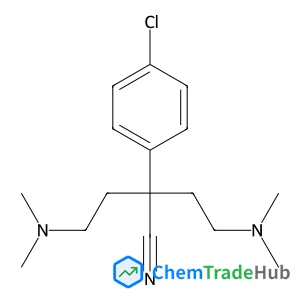
2-(4-Chlorophenyl)-4-(dimethylamino)-2-(2-(dimethylamino)ethyl)butanenitrile
CAS番号:
1246816-57-8
分子式:
C16H24ClN3
おすすめサプライヤー





免責事項
このページに表示される学術雑誌情報は、参考および研究目的のみを目的としています。当社は雑誌出版社とは提携しておらず、投稿の取り扱いも行っておりません。出版に関するお問い合わせは、各雑誌出版社に直接ご連絡ください。
表示されている情報に誤りがある場合は、support@chemtradehub.com までご連絡ください。迅速に確認し、対応いたします。