











![Methyl 4-({[(2-methyl-2-propanyl)oxy]carbonyl}amino)bicyclo[2.2.2]octane-1-carboxylate structure](https://static.chemtradehub.com/structs/943/943845-74-7-b7e5.webp "Methyl 4-({[(2-methyl-2-propanyl)oxy]carbonyl}amino)bicyclo[2.2.2]octane-1-carboxylate structure")
Properties of perhalogenated {closo-B10} and {closo-B11} multiply charged anions and a critical comparison with {closo-B12} in the gas and the condensed phase
文献情報
出版日
2018-11-07
DOI
10.1039/C8CP05313H
インパクトファクター
3.676
著者
Jonas Warneke, Szymon Z. Konieczka, Gao-Lei Hou, Edoardo Aprà, Christoph Kerpen, Fabian Keppner, Thomas C. Schäfer, Michael Deckert, Zheng Yang, Eric J. Bylaska, Grant E. Johnson, Julia Laskin, Xue-Bin Wang, Maik Finze
原文を見る
要旨
closo-Borate anions [closo-BnXn]2− are part of the most famous textbook examples of polyhedral compounds. Substantial differences in their reactivity and interactions with other compounds depending on the substituent X and cluster size n have been recognized, which favor specific closo-borates for different applications in cancer treatment, chemical synthesis, and materials science. Surprisingly, a fundamental understanding of the molecular properties underlying these differences is lacking. Here, we report our study comparing the electronic structure and reactivity of closo-borate anions [closo-BnXn]2− (X = Cl, Br, I, n = 10, 11, 12 in all combinations) in the gas phase and in solution. We investigated the free dianions and the ion pairs [nBu4N]+[closo-BnXn]2− by gas phase anion photoelectron spectroscopy accompanied by theoretical investigations. Strong similarities in electronic structures for n = 10 and 11 were observed, while n = 12 clusters were different. A systematic picture of the development in electronic stability along the dimension X is derived. Collision induced dissociation shows that fragmentation of the free dianions is mainly dependent on the substituent X and gives access to a large variety of boron-rich molecular ions. Fragmentation of the ion pair depends strongly on n. The results reflect the high chemical stability of clusters with n = 10 and 12, while those with n = 11 are much more prone to dissociation. We bridge our study to the condensed phase by performing comparative electrochemistry and reactivity studies on closo-borates in solution. The trends found at the molecular level are also reflected in the condensed-phase properties. We discuss how the gas phase values allow evaluation of the influence of the condensed phase on the electronic stability of closo-borates. A synthetic method via an oxidation/chlorination reaction yielding [closo-B10Cl10]2− from highly chlorinated {closo-B11} clusters is introduced, which underlines the intrinsically high reactivity of the {closo-B11} cage.
関連文献
A library of vinyl phosphonate anions dimerize with cyanostars, form supramolecular polymers and undergo statistical sorting
Yusheng Chen, Anastasia Kuvayskaya, Maren Pink, Amar H. Flood
2023-11-29
Edge Article
DOI: 10.1039/D3SC03685E
Lewis acid catalysed polymerisation of cyclopentenone
Deepamali Dissanayake, Alysia Draper, Neelofur Jaunnoo, Joris J. Haven, Craig Forsyth, Alasdair I. McKay, Tanja Junkers, Dragoslav Vidović
2023-12-02
Edge Article
DOI: 10.1039/D3SC05186B
Towards designer polyolefins: highly tuneable olefin copolymerisation using a single permethylindenyl post-metallocene catalyst
Clement G. Collins Rice, Louis J. Morris, Jean-Charles Buffet, Zoë R. Turner, Dermot O'Hare
2023-12-06
Edge Article
DOI: 10.1039/D3SC04861F
Cobalt-catalyzed decarboxylative difluoroalkylation of nitrophenylacetic acid salts
Ebbin Joseph, Ian Smith, Jon A. Tunge
2023-11-16
Edge Article
DOI: 10.1039/D3SC05583C
Oxidative cleavage of ketoximes to ketones using photoexcited nitroarenes
Lucas T. Göttemann, Stefan Wiesler, Richmond Sarpong
2023-11-24
Edge Article
DOI: 10.1039/D3SC05414D
From non-conductive MOF to proton-conducting metal-HOFs: a new class of reversible transformations induced by solvent-free mechanochemistry
Marcin Oszajca, Dariusz Matoga
2023-11-27
Edge Article
DOI: 10.1039/D3SC04401G
(C5H6.16N2Cl0.84)(IO2Cl2): a birefringent crystal featuring unprecedented (IO2Cl2)− anions and π-conjugated organic cations
Chun-Li Hu
2023-11-27
Edge Article
DOI: 10.1039/D3SC05770D
Advances in CO2 activation by frustrated Lewis pairs: from stoichiometric to catalytic reactions
Yara van Ingen, Tribani Boruah, Adam McLauchlan, Thomas Wirth, Rebecca L. Melen
2023-11-09
Review Article
DOI: 10.1039/D3SC03907B
A high affinity pan-PI3K binding module supports selective targeted protein degradation of PI3Kα
Werner Theodor Jauslin, Matthias Schild, Thorsten Schaefer, Chiara Borsari, Clara Orbegozo, Lukas Bissegger, Saule Zhanybekova, Danilo Ritz, Alexander Schmidt, Matthias Wymann, Dennis Gillingham
2023-12-12
Edge Article
DOI: 10.1039/D3SC04629J
A near-infrared light-activated nanoprobe for simultaneous detection of hydrogen polysulfide and sulfur dioxide in myocardial ischemia–reperfusion injury
Xianzhu Luo, Cuiling Zhang, Chenyang Yue, Yuelin Jiang, Fei Yang, Yuezhong Xian
2023-11-24
Edge Article
DOI: 10.1039/D3SC04937J
こちらもおすすめ
化合物よくある質問
2-ブロモ-9,9-ジフェニル-9H-フルオレンの主な用途は何ですか?
2-溴-9,9-二苯基芴は、医薬品、工業材料、有機合成の研究分野で応用されます。特に、レーザー材料や機能性ポリマーの合成に使用されることがあります。また、蛍光色...
474918-32-62-Bromo-9,9-diphenyl...
化合物よくある質問
四氯化铱の市場動向や研究トレンドはどうですか?
四氯化铱の市場は研究開発分野で注目されており、特にナノ技術や金属有機框架(MOFs)の分野での需要が増加傾向にあります。価格は安定しており、中国や韓国での生産が...
207399-11-9Tetrachloroiridium h...
882-06-44-Nitrocinnamic acid
化合物よくある質問
1-(4-溴-3-氟苯基)-2-氯乙酮を含む廃棄物はどのように処理すべきですか?
1-(4-溴-3-氟苯基)-2-氯乙酮 (CAS番号: 1260857-14-4) の廃棄物は専門的な廃棄処理が必要です。まず、廃棄物は密閉された容器に収集し、...
1260857-14-41-(4-Bromo-3-fluorop...
化合物よくある質問
苦参酚Kとは何ですか?
苦参酚Kは、CAS番号101236-49-1を持つ化合物で、主に天然由来の生薬から抽出されます。この化合物は、抗炎症作用や抗癌作用を持つことが報告されています。
101236-49-1Kushenol K
化合物よくある質問
POTASSIUM (1-(TERTBUTOXYCARBONYL)AZETIDIN-3-YL)TRIFLUOROBORATE を含む廃棄物はどのように処理すべきですか?
POTASSIUM (1-(TERTBUTOXYCARBONYL)AZETIDIN-3-YL)TRIFLUOROBORATE を含む廃棄物は、まず安全なエント...
1430219-73-0Potassium (1-(tert-b...
化合物よくある質問
4-庚基-4’-联苯羧酸の市場動向や研究トレンドはどうですか?
4-庚基-4’-聯苯羧酸は、特殊化学品や合成化学の分野で用いられる化学物質ですが、市場動向としては、研究開発の進展とともに需要が増加しています。また、環境配慮型...
58573-94-74'-Heptyl-4-biphenyl...
化合物よくある質問
6-ブロモ-3-メトキシ-1-フェニル-1H-インドゾールを含む廃棄物はどのように処理すべきですか?
6-ブロモ-3-メトキシ-1-フェニル-1H-インドゾールを含む廃棄物は、適切な化学廃棄処理が必要です。通常、廃棄物は密閉容器に収集され、専門の廃棄処理業者に引...
1332527-03-36-Bromo-3-methoxy-1-...
化合物よくある質問
4,4-二甲基-2-吡咯烷酮はどの業界で使用されていますか?
4,4-二甲基-2-吡咯烷酮は医薬、ポリマー、センサー、半導体などの業界で広く使用されています。特に溶媒としての性能が高く評価されています。
66899-02-34,4-dimethylpyrrolid...
51312-42-6Sodium Phosphotungst...
掲載誌
Physical Chemistry Chemical Physics

CiteScore:
5.5
自己引用率:
10.3%
年間論文数:
3036
Physical Chemistry Chemical Physics (PCCP) is an international journal co-owned by 19 physical chemistry and physics societies from around the world. This journal publishes original, cutting-edge research in physical chemistry, chemical physics and biophysical chemistry. To be suitable for publication in PCCP, articles must include significant innovation and/or insight into physical chemistry; this is the most important criterion that reviewers and Editors will judge against when evaluating submissions. The journal has a broad scope and welcomes contributions spanning experiment, theory, computation and data science. Topical coverage includes spectroscopy, dynamics, kinetics, statistical mechanics, thermodynamics, electrochemistry, catalysis, surface science, quantum mechanics, quantum computing and machine learning. Interdisciplinary research areas such as polymers and soft matter, materials, nanoscience, energy, surfaces/interfaces, and biophysical chemistry are welcomed if they demonstrate significant innovation and/or insight into physical chemistry. Joined experimental/theoretical studies are particularly appreciated when complementary and based on up-to-date approaches.
おすすめ化合物
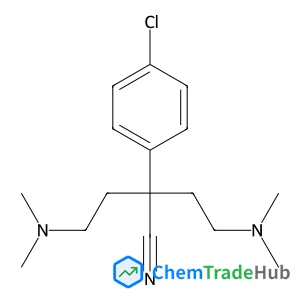
2-(4-Chlorophenyl)-4-(dimethylamino)-2-(2-(dimethylamino)ethyl)butanenitrile
CAS番号:
1246816-57-8
分子式:
C16H24ClN3
おすすめサプライヤー






免責事項
このページに表示される学術雑誌情報は、参考および研究目的のみを目的としています。当社は雑誌出版社とは提携しておらず、投稿の取り扱いも行っておりません。出版に関するお問い合わせは、各雑誌出版社に直接ご連絡ください。
表示されている情報に誤りがある場合は、support@chemtradehub.com までご連絡ください。迅速に確認し、対応いたします。