












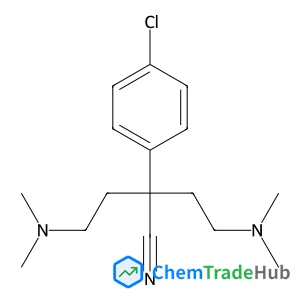
2-(4-Chlorophenyl)-4-(dimethylamino)-2-(2-(dimethylamino)ethyl)butanenitrile
CAS番号:
1246816-57-8
分子式:
C16H24ClN3
Kang-Jie Bian, David Nemoto, Jr, Xiao-Wei Chen, Shih-Chieh Kao, James Hooson, Julian G. West
Ligand-to-metal charge transfer (LMCT) is a mechanistic strategy that provides a powerful tool to access diverse open-shell species using earth abundant elements and has seen tremendous growth in recent years. However, among many reaction manifolds driven by LMCT reactivity, a general and catalytic protocol for modular difunctionalization of alkenes remains unknown. Leveraging the synergistic cooperation of iron-catalyzed ligand-to-metal charge transfer and radical ligand transfer (RLT), here we report a photocatalytic, modular difunctionalization of alkenes using inexpensive iron salts catalytically to function as both radical initiator and terminator. Additionally, strategic use of a fluorine atom transfer reagent allows for general fluorochlorination of alkenes, providing the first example of interhalogen compound formation using earth abundant element photocatalysis. Broad scope, mild conditions and versatility in converting orthogonal nucleophiles (TMSN3 and NaCl) directly into corresponding open-shell radical species are demonstrated in this study, providing a robust means towards accessing vicinal diazides and homo-/hetero-dihalides motifs catalytically. These functionalities are important precursors/intermediates in medicinal and material chemistry. Preliminary mechanistic studies support the radical nature of these transformations, disclosing the tandem LMCT/RLT as a powerful reaction manifold in catalytic olefin difunctionalization.
Youngjo Tak, Hyeyoung Kim, Dongwook Lee, Kijung Yong
DOI: 10.1039/B810388G
Wen-Shuo Kuo, Ching-Ming Wu, Zih-Syuan Yang, Szu-Yu Chen, Cheng-Ying Chen, Chih-Chia Huang, Wei-Ming Li, Chi-Kuang Sun, Chen-Sheng Yeh
DOI: 10.1039/B808871C
Tingyang Dai, Xiujuan Jiang, Shouhu Hua, Xiaoshu Wang, Yun Lu
DOI: 10.1039/B807116K
Gregory W. O’Neil, Alois Fürstner
DOI: 10.1039/B806898D
Aubrey K. Davis, Mark Hildebrand
DOI: 10.1039/B804955F
Anna L. Bowman, Ian M. Grant, Adrian J. Mulholland
DOI: 10.1039/B810099C
Guohua Wu, Caroline Norris, Hamish Stewart, Hazel Cox, Anthony J. Stace
DOI: 10.1039/B806469E
Yangping Liu, Jay L. Zweier
DOI: 10.1039/B807406B
Stuart T. Caldwell, Graeme Cooke, Shanika G. Hewage, Suhil Mabruk, Gouher Rabani, Vincent Rotello, Brian O. Smith, Chandramouleeswaran Subramani, Patrice Woisel
DOI: 10.1039/B809762C
2-溴-9,9-二苯基芴は、医薬品、工業材料、有機合成の研究分野で応用されます。特に、レーザー材料や機能性ポリマーの合成に使用されることがあります。また、蛍光色...
四氯化铱の市場は研究開発分野で注目されており、特にナノ技術や金属有機框架(MOFs)の分野での需要が増加傾向にあります。価格は安定しており、中国や韓国での生産が...
1-(4-溴-3-氟苯基)-2-氯乙酮 (CAS番号: 1260857-14-4) の廃棄物は専門的な廃棄処理が必要です。まず、廃棄物は密閉された容器に収集し、...
苦参酚Kは、CAS番号101236-49-1を持つ化合物で、主に天然由来の生薬から抽出されます。この化合物は、抗炎症作用や抗癌作用を持つことが報告されています。
POTASSIUM (1-(TERTBUTOXYCARBONYL)AZETIDIN-3-YL)TRIFLUOROBORATE を含む廃棄物は、まず安全なエント...
4-庚基-4’-聯苯羧酸は、特殊化学品や合成化学の分野で用いられる化学物質ですが、市場動向としては、研究開発の進展とともに需要が増加しています。また、環境配慮型...
6-ブロモ-3-メトキシ-1-フェニル-1H-インドゾールを含む廃棄物は、適切な化学廃棄処理が必要です。通常、廃棄物は密閉容器に収集され、専門の廃棄処理業者に引...
4,4-二甲基-2-吡咯烷酮は医薬、ポリマー、センサー、半導体などの業界で広く使用されています。特に溶媒としての性能が高く評価されています。
Our journal has a wide-ranging scope which covers the full breadth of the chemical sciences. The research we publish contains the sorts of novel ideas, challenging questions and progressive thinking that bring undiscovered breakthroughs within reach. Your paper could focus on a single area, or cross many. It could be beyond the accepted bounds of the chemical sciences. It might address an immediate challenge, contribute to a future breakthrough or be wholly conceptual. We’re a team from every field of the chemical sciences, and know from experience that breakthroughs that drive the solutions to global challenges can come from anywhere, at any time. You could even start an entirely new area of research. Too bold? Too progressive? No such thing
![2,6-Bis({(2R)-2-[hydroxy(diphenyl)methyl]-1-pyrrolidinyl}methyl)-4-methylphenol structure](https://static.chemtradehub.com/structs/877/877395-58-9-70bf.webp "2,6-Bis({(2R)-2-[hydroxy(diphenyl)methyl]-1-pyrrolidinyl}methyl)-4-methylphenol structure")
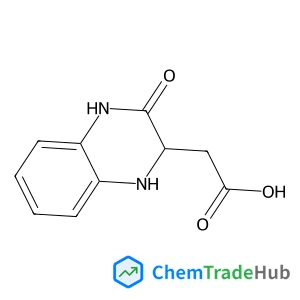
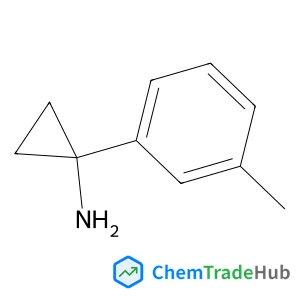
![tert-Butyl N-[(2-chloropyridin-4-yl)methyl]carbamate structure](https://static.chemtradehub.com/structs/916/916210-27-0-9f95.webp "tert-Butyl N-[(2-chloropyridin-4-yl)methyl]carbamate structure")





