












![2,6-Bis({(2R)-2-[hydroxy(diphenyl)methyl]-1-pyrrolidinyl}methyl)-4-methylphenol structure](https://static.chemtradehub.com/structs/877/877395-58-9-70bf.webp "2,6-Bis({(2R)-2-[hydroxy(diphenyl)methyl]-1-pyrrolidinyl}methyl)-4-methylphenol structure")
Extracting multivalent detachment rates from heterogeneous nanoparticle populations
文献情報
出版日
2018-07-30
DOI
10.1039/C8CP03118E
インパクトファクター
3.676
著者
Mingqiu Wang
原文を見る
要旨
Nanoparticles can form multiple bonds with target surfaces, thereby increasing adhesion strength and internalization rate into cells. This property has helped to drive interest in nanoparticles as delivery vehicles for drugs and imaging agents, but significant gaps in our understanding of multivalent adhesion make it difficult to control and optimize binding dynamics. In previous work, we experimentally observed that multivalent nanoparticle adhesion can exhibit a time-dependent detachment rate. However, simulations later indicated that the underlying cause was variability in the number of bonds that formed between individual nanoparticles within the population. Here, we use this insight to develop a simple model to isolate a series of constant detachment rates from such heterogeneous populations. Using simulations of experimental data to train the model, we first classified nanoparticles within a given population based on the most likely equilibrium bond number, which we termed the bond potential. We then assumed that each bond potential category would follow standard first-order kinetics with constant detachment rates. Model results matched the population binding data, but only if we further divided each bond potential category into two sub-components, the second of which did not detach. We then utilized bonding rates from the simulation to estimate detachment rates for the second, slower detaching sub-component. These results confirm our hypothesis that nanoparticle populations can be sub-divided based on bond potential, each of which could be characterized by a constant detachment rate. Finally, we established relationships between the new heterogeneous population detachment model and a time-dependent, empirical detachment model that we developed in previous work. This could make it possible to determine bond potential distributions directly from experimental data without computationally costly simulations, which will be explored in future work.
関連文献
An effective, cost-efficient extraction method of biomass from wet microalgae with a functional polymeric membrane
Gursong Yoo, Youngmin Yoo, Jong-Hee Kwon, Cornelius Darpito, Sanjiv K. Mishra, Kwanyong Pak
2013-10-02
Paper
DOI: 10.1039/C3GC41695J
Cu(i)-catalyzed aerobic cross-dehydrogenative coupling of terminal alkynes with thiols for the construction of alkynyl sulfides
Weibing Dong, Yisong Guo, Robert M. Rioux
2013-08-22
Communication
DOI: 10.1039/C3GC41330F
An extremely stable and highly active periodic mesoporous Lewis acid catalyst in water-medium Mukaiyama-aldol reaction
Fang Zhang, Chao Liang, Mingzheng Chen, Haibing Guo, Huangyong Jiang, Hexing Li
2013-07-16
Paper
DOI: 10.1039/C3GC41020J
Metal-free arylations via photochemical activation of the Ar–OSO2R bond in aryl nonaflates
Carlotta Raviola, Veronica Canevari, Stefano Protti, Angelo Albini, Maurizio Fagnoni
2013-07-22
Communication
DOI: 10.1039/C3GC41009A
Productive sugar isomerization with highly active Sn in dealuminated β zeolites
Jan Dijkmans, Dries Gabriëls, Michiel Dusselier, Filip de Clippel, Pieter Vanelderen, Kristof Houthoofd, Annelies Malfliet, Yiannis Pontikes, Bert F. Sels
2013-08-02
Paper
DOI: 10.1039/C3GC41239C
En route to full implementation: driving the green chemistry agenda in the pharmaceutical industry
2013-09-16
Perspective
DOI: 10.1039/C3GC41629A
Environmentally benign enhanced H2 production from abundant copious waste H2S using size tuneable cubic bismuth (Bi0) quantum dots–GeO2 glass photocatalyst under solar light
Sanjay K. Apte, Sunil N. Garaje, Sonali D. Naik, Rupali P. Waichal, Bharat B. Kale
2013-10-22
Paper
DOI: 10.1039/C3GC41940A
Development of a robust reagent for the two-carbon homologation of aldehydes to (E)-α,β-unsaturated aldehydes in water
James McNulty, Carlos Zepeda-Velázquez, David McLeod
2013-09-09
Communication
DOI: 10.1039/C3GC41383G
A down-scaled fluorimetric determination of the solubility properties of drugs to minimize waste generation
Víctor González-Ruiz, Ana I. Olives, M. Antonia Martín
2013-07-16
Paper
DOI: 10.1039/C3GC40974K
A simple and highly effective water-compatible organocatalytic system for asymmetric direct Michael reactions of linear aldehydes to maleimides
Yupu Qiao, Allan D. Headley
2013-08-06
Communication
DOI: 10.1039/C3GC41024B
こちらもおすすめ
化合物よくある質問
2-ヒドロキシ-5-ニトロベンジンブロモイドの代替品はありますか?
2-ヒドロキシ-5-ニトロベンジンブロモイドは特定の化学反応に適しているため、代替品は限られています。しかし、同様の構造を持つ2-ヒドロキシ-4-ニトロベンジン...
772-33-82-(Bromomethyl)-4-ni...
化合物よくある質問
N-(2-ブロモフェニル)-1-チロール-3-オキソ-3-(ピペリジニル)プロペン-2-イル)ベンゼンアミドを取り扱う際の実験室安全事項は何ですか?
N-(2-ブロモフェニル)-1-チロール-3-オキソ-3-(ピペリジニル)プロペン-2-イル)ベンゼンアミドは有毒で、皮膚や粘膜に刺激を与える可能性があります。...
1800044-77-2N-[(1Z)-1-(2-Bromoph...
化合物よくある質問
1,3プロパンジオール,2-[2-(2アミノ-6クロロ-9Hピリミジン-9-イル)エチル-1,1,2,2-D4]-2,3-ジアセタートの市場動向や研究トレンドはどうですか?
この化合物は、新規治療薬の開発に注目されています。市場では、その有効性と安全性が評価され、研究分野では、分子生物学と医薬化学の新たな発見が期待されています。
1020718-81-31,3-Propanediol, 2-[...
579-44-2Ethanone, 2-hydroxy-...
化合物よくある質問
Succinimidyl-alanyl-phenylalanyl-prolyl-phenylalanine 4-nitroanilide はどの業界で使用されていますか?
Succinimidyl-alanyl-phenylalanyl-prolyl-phenylalanine 4-nitroanilide は主に医薬品開発やポ...
128802-73-3succinimidyl-alanyl-...
化合物よくある質問
メチル6-アミノ-5-クロロピリジン-2-カーボイル酸について、適用される法規ガイドラインは何ですか?
メチル6-アミノ-5-クロロピリジン-2-カーボイル酸(CAS番号: 1256794-05-4)の使用には、GHS( Globally Harmonized S...
1256794-05-4Methyl 6-amino-5-chl...
化合物よくある質問
エチル4-(シクロ Pentagonyl)アミノ-2-メチル硫化基ピリミジン-5-カルボキシレートを取り扱う際の実験室安全事項は何ですか?
取り扱いには、耐薬品性の容器を使用し、通気性の良い場所で操作することを推奨します。漏れ時は、SDS(安全データシート)を参照して適切な措置を取ること。手洗いと洗...
211245-62-4ethyl 4-(cyclopentyl...
化合物よくある質問
(S)-3-ベンZYルピペリジン塩酸塩とは何ですか?
(S)-3-ベンZYルピペリジン塩酸塩は、CAS番号1258940-00-9で表される化合物です。これは、(S)-3-苯基哌啶的盐酸盐であり、主に医薬品の原料と...
1258940-00-9(S)-3-Phenylpiperidi...
化合物よくある質問
3,5-二甲基金剛胺の主な用途は何ですか?
3,5-二甲基金剛胺は、主に医薬品の原料として使用され、また抗うつ薬や抗アルツハイマー薬の開発に利用されます。さらに、化粧品や食品添加物の製造でも重要な役割を果...
19988-45-52-(2,3-Dihydroxyphen...
化合物よくある質問
ビス(4-メチル-2-ペンチル)フェニルカルボン酸エステルの代替品はありますか?
ビス(4-メチル-2-ペンチル)フェニルカルボン酸エステル (CAS番号: 1398066-13-1) の代替品には、ビス(2-エチルヘキシル)フェノールカルボ...
1398066-13-1Bis(4-methyl-2-penty...
掲載誌
Physical Chemistry Chemical Physics

CiteScore:
5.5
自己引用率:
10.3%
年間論文数:
3036
Physical Chemistry Chemical Physics (PCCP) is an international journal co-owned by 19 physical chemistry and physics societies from around the world. This journal publishes original, cutting-edge research in physical chemistry, chemical physics and biophysical chemistry. To be suitable for publication in PCCP, articles must include significant innovation and/or insight into physical chemistry; this is the most important criterion that reviewers and Editors will judge against when evaluating submissions. The journal has a broad scope and welcomes contributions spanning experiment, theory, computation and data science. Topical coverage includes spectroscopy, dynamics, kinetics, statistical mechanics, thermodynamics, electrochemistry, catalysis, surface science, quantum mechanics, quantum computing and machine learning. Interdisciplinary research areas such as polymers and soft matter, materials, nanoscience, energy, surfaces/interfaces, and biophysical chemistry are welcomed if they demonstrate significant innovation and/or insight into physical chemistry. Joined experimental/theoretical studies are particularly appreciated when complementary and based on up-to-date approaches.
おすすめ化合物
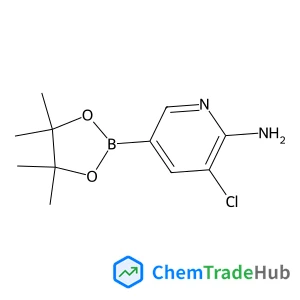
3-Chloro-5-(4,4,5,5-tetramethyl-1,3,2-dioxaborolan-2-yl)-2-pyridinamine
CAS番号:
1032758-99-8
分子式:
C11H16BClN2O2
![1-[3-(4-Morpholinylsulfonyl)phenyl]methanamine structure](https://static.chemtradehub.com/structs/933/933989-32-3-51af.webp "1-[3-(4-Morpholinylsulfonyl)phenyl]methanamine structure")
おすすめサプライヤー






免責事項
このページに表示される学術雑誌情報は、参考および研究目的のみを目的としています。当社は雑誌出版社とは提携しておらず、投稿の取り扱いも行っておりません。出版に関するお問い合わせは、各雑誌出版社に直接ご連絡ください。
表示されている情報に誤りがある場合は、support@chemtradehub.com までご連絡ください。迅速に確認し、対応いたします。