












![2,6-Di(thiophen-2-yl)dithieno[3,2-b:2',3'-d]thiophene structure](https://static.chemtradehub.com/structs/910/910788-24-8-5b70.webp "2,6-Di(thiophen-2-yl)dithieno[3,2-b:2',3'-d]thiophene structure")
A simple and highly effective water-compatible organocatalytic system for asymmetric direct Michael reactions of linear aldehydes to maleimides
文献情報
出版日
2013-08-06
DOI
10.1039/C3GC41024B
インパクトファクター
10.182
著者
Yupu Qiao, Allan D. Headley
原文を見る
要旨
Diarylprolinol silyl ether-based organocatalyst 2, in conjunction with ionic liquid supported (ILS) sulfonic acid 6a as co-catalyst, leads to a novel organocatalyst in aqueous media. The in situ generated catalyst demonstrated high reactivity and stereoselectivity for the Michael reactions of linear aldehydes to maleimides in brine without any organic solvents. For these reactions, up to 76% yield, 9 : 1 dr and 96% ee were obtained for a broad variety of aldehydes and maleimides.
関連文献
A surface plasmon resonance enhanced photoelectrochemical immunoassay based on perovskite metal oxide@gold nanoparticle heterostructures
Lijia Zhang, Zhongbin Luo, Lingshan Su, Dianping Tang
2019-08-14
Paper
DOI: 10.1039/C9AN01395D
SERS monitoring of the Fenton degradation reaction based on microfluidic droplets and alginate microparticles
Shuai Yue, Wenqi Ye, Zhangrun Xu
2019-08-19
Paper
DOI: 10.1039/C9AN01077G
Thermo-responsive polymer aided spheroid culture in cryogel based platform for high throughput drug screening
J. Sarkar, A. Kumar
2016-03-30
Paper
DOI: 10.1039/C6AN00356G
Carbon dot-based inverse opal hydrogels with photoluminescence: dual-mode sensing of solvents and metal ions
Yuhua Zhu, Jianying Wang, Xiang Zhu, Jun Wang, Lijie Zhou, Jinhua Li, Tao Mei, Jingwen Qian, Lai Wei, Xianbao Wang
2019-08-09
Paper
DOI: 10.1039/C9AN01287G
Surface activation of CNT Webs towards layer by layer assembly of biosensors
Mustafa Musameh, Chi P. Huynh, Mark Hickey, Ilias Louis Kyratzis
2016-01-21
Paper
DOI: 10.1039/C5AN02547H
A near-infrared fluorescent aza-bodipy probe for dual-wavelength detection of hydrogen peroxide in living cells
Jingjing Xu, Jingying Zhai, Yanmei Xu, Jingwei Zhu, Yu Qin, Dechen Jiang
2016-03-11
Communication
DOI: 10.1039/C6AN00262E
Electrochemical enzyme-linked immunosorbent assay (e-ELISA) for parasitic nematode Ostertagia ostertagi (brown stomach worm) infections in dairy cattle
Baljit Singh, Evangelia Flampouri, Eithne Dempsey
2019-08-15
Paper
DOI: 10.1039/C9AN00982E
Isotopic variations of copper at the protein fraction level in neuronal human cells exposed in vitro to uranium
Eduardo Paredes, Claude Vidaud, Emilie Avazeri, Anthony Nonell, Hélène Isnard, Frédéric Chartier, Carole Bresson
2019-08-30
Communication
DOI: 10.1039/C9AN01081E
Electrochemical detection of protein glycosylation using lectin and protein–gold affinity interactions
Laura G. Carrascosa, Abu A. I. Sina, Muhammad J. A. Shiddiky
2016-03-11
Communication
DOI: 10.1039/C6AN00528D
こちらもおすすめ
化合物よくある質問
2-ブロモ-9,9-ジフェニル-9H-フルオレンの主な用途は何ですか?
2-溴-9,9-二苯基芴は、医薬品、工業材料、有機合成の研究分野で応用されます。特に、レーザー材料や機能性ポリマーの合成に使用されることがあります。また、蛍光色...
474918-32-62-Bromo-9,9-diphenyl...
化合物よくある質問
四氯化铱の市場動向や研究トレンドはどうですか?
四氯化铱の市場は研究開発分野で注目されており、特にナノ技術や金属有機框架(MOFs)の分野での需要が増加傾向にあります。価格は安定しており、中国や韓国での生産が...
207399-11-9Tetrachloroiridium h...
882-06-44-Nitrocinnamic acid
化合物よくある質問
1-(4-溴-3-氟苯基)-2-氯乙酮を含む廃棄物はどのように処理すべきですか?
1-(4-溴-3-氟苯基)-2-氯乙酮 (CAS番号: 1260857-14-4) の廃棄物は専門的な廃棄処理が必要です。まず、廃棄物は密閉された容器に収集し、...
1260857-14-41-(4-Bromo-3-fluorop...
化合物よくある質問
苦参酚Kとは何ですか?
苦参酚Kは、CAS番号101236-49-1を持つ化合物で、主に天然由来の生薬から抽出されます。この化合物は、抗炎症作用や抗癌作用を持つことが報告されています。
101236-49-1Kushenol K
化合物よくある質問
POTASSIUM (1-(TERTBUTOXYCARBONYL)AZETIDIN-3-YL)TRIFLUOROBORATE を含む廃棄物はどのように処理すべきですか?
POTASSIUM (1-(TERTBUTOXYCARBONYL)AZETIDIN-3-YL)TRIFLUOROBORATE を含む廃棄物は、まず安全なエント...
1430219-73-0Potassium (1-(tert-b...
化合物よくある質問
4-庚基-4’-联苯羧酸の市場動向や研究トレンドはどうですか?
4-庚基-4’-聯苯羧酸は、特殊化学品や合成化学の分野で用いられる化学物質ですが、市場動向としては、研究開発の進展とともに需要が増加しています。また、環境配慮型...
58573-94-74'-Heptyl-4-biphenyl...
化合物よくある質問
6-ブロモ-3-メトキシ-1-フェニル-1H-インドゾールを含む廃棄物はどのように処理すべきですか?
6-ブロモ-3-メトキシ-1-フェニル-1H-インドゾールを含む廃棄物は、適切な化学廃棄処理が必要です。通常、廃棄物は密閉容器に収集され、専門の廃棄処理業者に引...
1332527-03-36-Bromo-3-methoxy-1-...
化合物よくある質問
4,4-二甲基-2-吡咯烷酮はどの業界で使用されていますか?
4,4-二甲基-2-吡咯烷酮は医薬、ポリマー、センサー、半導体などの業界で広く使用されています。特に溶媒としての性能が高く評価されています。
66899-02-34,4-dimethylpyrrolid...
51312-42-6Sodium Phosphotungst...
掲載誌
Green Chemistry

CiteScore:
16.1
自己引用率:
7.5%
年間論文数:
944
Green Chemistry provides a unique forum for the publication of innovative research on the development of alternative green and sustainable technologies. The scope of Green Chemistry is based on, but not limited to, the definition proposed by Anastas and Warner (Green Chemistry: Theory and Practice, P T Anastas and J C Warner, Oxford University Press, Oxford, 1998). Green chemistry is the utilisation of a set of principles that reduces or eliminates the use or generation of hazardous substances in the design, manufacture and application of chemical products. Green Chemistry is at the frontiers of this continuously-evolving interdisciplinary science and publishes research that attempts to reduce the environmental impact of the chemical enterprise by developing a technology base that is inherently non-toxic to living things and the environment. Submissions on all aspects of research relating to the endeavour are welcome. The journal publishes original and significant cutting-edge research that is likely to be of wide general appeal. To be published, work must present a significant advance in green chemistry. Papers must contain a comparison with existing methods and demonstrate advantages over those methods before publication can be considered. For more information please see this Editorial. Coverage includes the following, but is not limited to: Design (e.g. biomimicry, design for degradation/recycling/reduced toxicity…) Reagents & Feedstocks (e.g. renewables, CO2, solvents, auxiliary agents, waste utilization…) Synthesis (e.g. organic, inorganic, synthetic biology…) Catalysis (e.g. homogeneous, heterogeneous, enzyme, whole cell…) Process (e.g. process design, intensification, separations, recycling, efficiency…) Energy (e.g. renewable energy, fuels, photovoltaics, fuel cells, energy storage, energy carriers…) Applications (e.g. electronics, dyes, consumer products, coatings, pharmaceuticals, preservatives, building materials, chemicals for industry/agriculture/mining…) Impact (e.g. safety, metrics, LCA, sustainability, (eco)toxicology…) Green chemistry is, by definition, a continuously-evolving frontier. Therefore, the inclusion of a particular material or technology does not, of itself, guarantee that a paper is suitable for the journal. To be suitable, the novel advance should have the potential for reduced environmental impact relative to the state of the art. Green Chemistry does not normally deal with research associated with 'end-of-pipe' or remediation issues.
おすすめ化合物
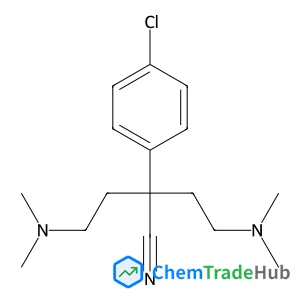
2-(4-Chlorophenyl)-4-(dimethylamino)-2-(2-(dimethylamino)ethyl)butanenitrile
CAS番号:
1246816-57-8
分子式:
C16H24ClN3
![5-Methyl-4,5,6,7-tetrahydropyrazolo[1,5-a]pyrazin-2-amine structure](https://static.chemtradehub.com/structs/122/1227210-33-4-8d64.webp "5-Methyl-4,5,6,7-tetrahydropyrazolo[1,5-a]pyrazin-2-amine structure")
おすすめサプライヤー





免責事項
このページに表示される学術雑誌情報は、参考および研究目的のみを目的としています。当社は雑誌出版社とは提携しておらず、投稿の取り扱いも行っておりません。出版に関するお問い合わせは、各雑誌出版社に直接ご連絡ください。
表示されている情報に誤りがある場合は、support@chemtradehub.com までご連絡ください。迅速に確認し、対応いたします。