












An extremely stable and highly active periodic mesoporous Lewis acid catalyst in water-medium Mukaiyama-aldol reaction
文献情報
出版日
2013-07-16
DOI
10.1039/C3GC41020J
インパクトファクター
10.182
著者
Fang Zhang, Chao Liang, Mingzheng Chen, Haibing Guo, Huangyong Jiang, Hexing Li
原文を見る
要旨
A periodic mesoporous Lewis acid catalyst ((OTf)2Sc-SO3-Ph-PMO) was synthesized through chelating scandium triflate (Sc(OTf)3) with sodium benzenesulfonate-functionalized periodic mesoporous silica (PhSO3Na-Ph-PMO). Compared with homogeneous catalyst Sc(OTf)3 and mesoporous SBA-15-supported scandium triflate catalyst ((OTf)2Sc-SO3-Ph-SBA-15), it exhibited superior catalytic activity and selectivity in water-medium Mukaiyama-aldol reaction. Hydrophobicity tests and substrate adsorption experiments demonstrated that its unique catalytic performance was related to the combined advantage of mesoporosity and hydrophobic microenvironment, which effectively stabilized and concentrated the substances as well as decreased intrinsic mass transfer resistance. Noted that the periodically arranged Lewis acids in the mesoporous silica framework inhibited the active sites leaching, leading to its high catalytic recyclability with almost unchanged catalytic efficiency for more than 10 times in water media.
関連文献
Surface activation of CNT Webs towards layer by layer assembly of biosensors
Mustafa Musameh, Chi P. Huynh, Mark Hickey, Ilias Louis Kyratzis
2016-01-21
Paper
DOI: 10.1039/C5AN02547H
Facile preparation of a cationic COF functionalized magnetic nanoparticle and its use for the determination of nine hydroxylated polycyclic aromatic hydrocarbons in smokers’ urine
Yanhao Zhang, Guangrui Zhang, Jiying Liu, Wuduo Zhao, Wenjing Zhang, Kai Hu, Fuwei Xie, Shusheng Zhang
2019-08-23
Paper
DOI: 10.1039/C9AN01188A
A colourimetric vacuum air-pressure indicator
Dilidaer Yusufu, Andrew Mills
2019-09-18
Paper
DOI: 10.1039/C9AN01507H
Synthesis of “amphiphilic” carbon dots and their application for the analysis of iodine species (I2, I− and IO3−) in highly saline water
Meina Wang, Baozhan Zheng, Feng Yang, Juan Du, Yong Guo, Jianyuan Dai, Lei Yan
2016-03-04
Paper
DOI: 10.1039/C5AN02643A
Electrochemical redox signaling of hemoglobin in human whole blood and its relevance to anemia and thalassemia diagnosis
Khairunnisa Amreen, Annamalai Senthil Kumar
2016-02-15
Communication
DOI: 10.1039/C5AN02646F
A colorimetric and fluorescent dual probe for palladium in aqueous medium and live cell imaging
Jin-wu Yan, Xiao-lin Wang, Qi-feng Tan, Pei-fen Yao, Jia-heng Tan, Lei Zhang
2016-03-11
Communication
DOI: 10.1039/C6AN00204H
Portable paper sensors for the detection of heavy metals based on light transmission-improved quantification of colorimetric assays
Jing Wu, Hua Tang, Minghui He, Guangxue Chen, Junfei Tian
2019-09-06
Paper
DOI: 10.1039/C9AN01131E
Development of a new in situ analysis technique applying luminescence of local coordination sensors: principle and application for monitoring metal-ligand exchange processes
Huayna Terraschke, Laura Ruiz Arana, Patric Lindenberg, Wolfgang Bensch
2016-03-15
Paper
DOI: 10.1039/C6AN00075D
A review on electronic bio-sensing approaches based on non-antibody recognition elements
Alagappan Palaniappan, Mark Platt
2016-03-09
Critical Review
DOI: 10.1039/C5AN02623G
An initial estimation method using cosine similarity for multivariate curve resolution: application to NMR spectra of chemical mixtures
Yuya Nagai, Woon Yong Sohn
2019-09-09
Paper
DOI: 10.1039/C9AN01416K
こちらもおすすめ
化合物よくある質問
2-ブロモ-9,9-ジフェニル-9H-フルオレンの主な用途は何ですか?
2-溴-9,9-二苯基芴は、医薬品、工業材料、有機合成の研究分野で応用されます。特に、レーザー材料や機能性ポリマーの合成に使用されることがあります。また、蛍光色...
474918-32-62-Bromo-9,9-diphenyl...
化合物よくある質問
四氯化铱の市場動向や研究トレンドはどうですか?
四氯化铱の市場は研究開発分野で注目されており、特にナノ技術や金属有機框架(MOFs)の分野での需要が増加傾向にあります。価格は安定しており、中国や韓国での生産が...
207399-11-9Tetrachloroiridium h...
882-06-44-Nitrocinnamic acid
化合物よくある質問
1-(4-溴-3-氟苯基)-2-氯乙酮を含む廃棄物はどのように処理すべきですか?
1-(4-溴-3-氟苯基)-2-氯乙酮 (CAS番号: 1260857-14-4) の廃棄物は専門的な廃棄処理が必要です。まず、廃棄物は密閉された容器に収集し、...
1260857-14-41-(4-Bromo-3-fluorop...
化合物よくある質問
苦参酚Kとは何ですか?
苦参酚Kは、CAS番号101236-49-1を持つ化合物で、主に天然由来の生薬から抽出されます。この化合物は、抗炎症作用や抗癌作用を持つことが報告されています。
101236-49-1Kushenol K
化合物よくある質問
POTASSIUM (1-(TERTBUTOXYCARBONYL)AZETIDIN-3-YL)TRIFLUOROBORATE を含む廃棄物はどのように処理すべきですか?
POTASSIUM (1-(TERTBUTOXYCARBONYL)AZETIDIN-3-YL)TRIFLUOROBORATE を含む廃棄物は、まず安全なエント...
1430219-73-0Potassium (1-(tert-b...
化合物よくある質問
4-庚基-4’-联苯羧酸の市場動向や研究トレンドはどうですか?
4-庚基-4’-聯苯羧酸は、特殊化学品や合成化学の分野で用いられる化学物質ですが、市場動向としては、研究開発の進展とともに需要が増加しています。また、環境配慮型...
58573-94-74'-Heptyl-4-biphenyl...
化合物よくある質問
6-ブロモ-3-メトキシ-1-フェニル-1H-インドゾールを含む廃棄物はどのように処理すべきですか?
6-ブロモ-3-メトキシ-1-フェニル-1H-インドゾールを含む廃棄物は、適切な化学廃棄処理が必要です。通常、廃棄物は密閉容器に収集され、専門の廃棄処理業者に引...
1332527-03-36-Bromo-3-methoxy-1-...
化合物よくある質問
4,4-二甲基-2-吡咯烷酮はどの業界で使用されていますか?
4,4-二甲基-2-吡咯烷酮は医薬、ポリマー、センサー、半導体などの業界で広く使用されています。特に溶媒としての性能が高く評価されています。
66899-02-34,4-dimethylpyrrolid...
51312-42-6Sodium Phosphotungst...
掲載誌
Green Chemistry

CiteScore:
16.1
自己引用率:
7.5%
年間論文数:
944
Green Chemistry provides a unique forum for the publication of innovative research on the development of alternative green and sustainable technologies. The scope of Green Chemistry is based on, but not limited to, the definition proposed by Anastas and Warner (Green Chemistry: Theory and Practice, P T Anastas and J C Warner, Oxford University Press, Oxford, 1998). Green chemistry is the utilisation of a set of principles that reduces or eliminates the use or generation of hazardous substances in the design, manufacture and application of chemical products. Green Chemistry is at the frontiers of this continuously-evolving interdisciplinary science and publishes research that attempts to reduce the environmental impact of the chemical enterprise by developing a technology base that is inherently non-toxic to living things and the environment. Submissions on all aspects of research relating to the endeavour are welcome. The journal publishes original and significant cutting-edge research that is likely to be of wide general appeal. To be published, work must present a significant advance in green chemistry. Papers must contain a comparison with existing methods and demonstrate advantages over those methods before publication can be considered. For more information please see this Editorial. Coverage includes the following, but is not limited to: Design (e.g. biomimicry, design for degradation/recycling/reduced toxicity…) Reagents & Feedstocks (e.g. renewables, CO2, solvents, auxiliary agents, waste utilization…) Synthesis (e.g. organic, inorganic, synthetic biology…) Catalysis (e.g. homogeneous, heterogeneous, enzyme, whole cell…) Process (e.g. process design, intensification, separations, recycling, efficiency…) Energy (e.g. renewable energy, fuels, photovoltaics, fuel cells, energy storage, energy carriers…) Applications (e.g. electronics, dyes, consumer products, coatings, pharmaceuticals, preservatives, building materials, chemicals for industry/agriculture/mining…) Impact (e.g. safety, metrics, LCA, sustainability, (eco)toxicology…) Green chemistry is, by definition, a continuously-evolving frontier. Therefore, the inclusion of a particular material or technology does not, of itself, guarantee that a paper is suitable for the journal. To be suitable, the novel advance should have the potential for reduced environmental impact relative to the state of the art. Green Chemistry does not normally deal with research associated with 'end-of-pipe' or remediation issues.
おすすめ化合物
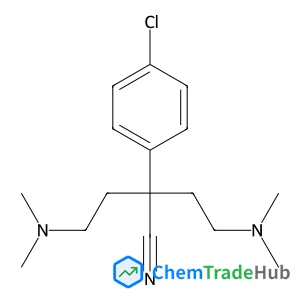
2-(4-Chlorophenyl)-4-(dimethylamino)-2-(2-(dimethylamino)ethyl)butanenitrile
CAS番号:
1246816-57-8
分子式:
C16H24ClN3
![1-[3-(4-Morpholinylsulfonyl)phenyl]methanamine structure](https://static.chemtradehub.com/structs/933/933989-32-3-51af.webp "1-[3-(4-Morpholinylsulfonyl)phenyl]methanamine structure")

おすすめサプライヤー




免責事項
このページに表示される学術雑誌情報は、参考および研究目的のみを目的としています。当社は雑誌出版社とは提携しておらず、投稿の取り扱いも行っておりません。出版に関するお問い合わせは、各雑誌出版社に直接ご連絡ください。
表示されている情報に誤りがある場合は、support@chemtradehub.com までご連絡ください。迅速に確認し、対応いたします。