












![1-[3-(4-Morpholinylsulfonyl)phenyl]methanamine structure](https://static.chemtradehub.com/structs/933/933989-32-3-51af.webp "1-[3-(4-Morpholinylsulfonyl)phenyl]methanamine structure")
Role of cationic groups on structural and dynamical correlations in hydrated quaternary ammonium-functionalized poly(p-phenylene oxide)-based anion exchange membranes
文献情報
出版日
2018-06-26
DOI
10.1039/C8CP02211A
インパクトファクター
3.676
著者
Dengpan Dong, Xiaoyu Wei, Justin B. Hooper, Hongchao Pan, Dmitry Bedrov
原文を見る
要旨
Extensive atomistic molecular dynamics (MD) simulations employing a polarizable force field have been conducted to study hydrated anion exchange membranes comprised of a poly(p-phenylene oxide) (PPO) homopolymer functionalized with quaternary ammonium cationic side groups and hydroxide anions. Representative membranes with different cationic structures have been investigated to study correlations between polymer architecture, morphology and transport properties of hydrated membranes. Specifically, hydrated polymers with five different quaternary ammonium cationic groups (R1: –CH3, R2: –C2H5, R3: –C3H7, R4: –C6H13 and R5: –C4H8OCH3) and degree of functionalization of 50% were investigated at three hydration levels (λ = Nwater/Ncation = 5, 10 and 17). Effects of the polymer structure on the distribution of water-rich domains and dynamic relaxations were systematically investigated to uncover the complex interplay between the degree of hydrophobicity/hydrophilicity of the cationic groups, morphology, connectivity of water domains, and the hydroxide transport mechanisms. Structural and dynamical analysis indicates that the bottlenecks, formed between the water-rich domains, create a substantial free energy barrier for hydroxide transport associated with the partial loss of anion hydration structure. The energy penalty associated with the loss of the hydration structure hinders the vehicular transport of the hydroxide anion. The optimal structure of functionalized homopolymer chains should be sufficiently hydrophobic to create nanophase segregation and form an interconnected network of water channels with a minimal amount of narrow bottlenecks that inhibit the vehicular motion of hydrated anions. We demonstrate that utilization of asymmetrically modified cationic groups is a promising route to achieve the desired water channel morphology at low hydration levels.
関連文献
Designing graphene as a new frustrated Lewis pair catalyst for hydrogen activation by co-doping
Bo Li, TianFu Liu, Jian Song, Dang Sheng Su
2016-03-24
Paper
DOI: 10.1039/C5CP07969A
Life of superoxide in aprotic Li–O2 battery electrolytes: simulated solvent and counter-ion effects
J. Scheers, D. Lidberg, Z. Futera
2016-02-24
Paper
DOI: 10.1039/C5CP08056H
Cyanophenyl vs. pyridine substituent: impact on the adlayer structure and formation on HOPG and Au(111)
B. Eggers, M. Metzler, D. Künzel, A. Groß, T. Jacob, U. Ziener
2016-02-01
Paper
DOI: 10.1039/C5CP07853A
Effect of environment on iodine oxidation state and reactivity with aluminum
Dylan K. Smith, Jena McCollum, Michelle L. Pantoya
2016-03-30
Paper
DOI: 10.1039/C5CP06998J
Spectroscopic properties and location of the Ce3+ energy levels in Y3Al2Ga3O12 and Y3Ga5O12 at ambient and high hydrostatic pressure
S. Mahlik, A. Lazarowska, J. Ueda, S. Tanabe, M. Grinberg
2016-02-01
Paper
DOI: 10.1039/C5CP07732J
Molecular structure and vibrations of NTCDA monolayers on Ag(111) from density-functional theory and infrared absorption spectroscopy
Phil Rosenow
2016-02-03
Paper
DOI: 10.1039/C5CP06619K
Understanding the electromagnetic interaction of metal organic framework reactants in aqueous solution at microwave frequencies
Juliano Katrib, Paula A. Palade, Neil R. Champness, Samuel W. Kingman
2016-01-29
Paper
DOI: 10.1039/C5CP05426E
Electrochemical synthesis of poly(3-aminophenylboronic acid) in ethylene glycol without exogenous protons
Feifan Wang, Feixue Zou, Xinxin Yu, Zhenyu Feng, Na Du, Yaohua Zhong
2016-03-11
Paper
DOI: 10.1039/C6CP00800C
Femtosecond to nanosecond excited state dynamics of vapor deposited copper phthalocyanine thin films
Benjamin W. Caplins, Tyler K. Mullenbach, Russell J. Holmes, David A. Blank
2016-03-29
Paper
DOI: 10.1039/C6CP00958A
こちらもおすすめ
化合物よくある質問
2-ヒドロキシ-5-ニトロベンジンブロモイドの代替品はありますか?
2-ヒドロキシ-5-ニトロベンジンブロモイドは特定の化学反応に適しているため、代替品は限られています。しかし、同様の構造を持つ2-ヒドロキシ-4-ニトロベンジン...
772-33-82-(Bromomethyl)-4-ni...
化合物よくある質問
N-(2-ブロモフェニル)-1-チロール-3-オキソ-3-(ピペリジニル)プロペン-2-イル)ベンゼンアミドを取り扱う際の実験室安全事項は何ですか?
N-(2-ブロモフェニル)-1-チロール-3-オキソ-3-(ピペリジニル)プロペン-2-イル)ベンゼンアミドは有毒で、皮膚や粘膜に刺激を与える可能性があります。...
1800044-77-2N-[(1Z)-1-(2-Bromoph...
化合物よくある質問
1,3プロパンジオール,2-[2-(2アミノ-6クロロ-9Hピリミジン-9-イル)エチル-1,1,2,2-D4]-2,3-ジアセタートの市場動向や研究トレンドはどうですか?
この化合物は、新規治療薬の開発に注目されています。市場では、その有効性と安全性が評価され、研究分野では、分子生物学と医薬化学の新たな発見が期待されています。
1020718-81-31,3-Propanediol, 2-[...
579-44-2Ethanone, 2-hydroxy-...
化合物よくある質問
Succinimidyl-alanyl-phenylalanyl-prolyl-phenylalanine 4-nitroanilide はどの業界で使用されていますか?
Succinimidyl-alanyl-phenylalanyl-prolyl-phenylalanine 4-nitroanilide は主に医薬品開発やポ...
128802-73-3succinimidyl-alanyl-...
化合物よくある質問
メチル6-アミノ-5-クロロピリジン-2-カーボイル酸について、適用される法規ガイドラインは何ですか?
メチル6-アミノ-5-クロロピリジン-2-カーボイル酸(CAS番号: 1256794-05-4)の使用には、GHS( Globally Harmonized S...
1256794-05-4Methyl 6-amino-5-chl...
化合物よくある質問
エチル4-(シクロ Pentagonyl)アミノ-2-メチル硫化基ピリミジン-5-カルボキシレートを取り扱う際の実験室安全事項は何ですか?
取り扱いには、耐薬品性の容器を使用し、通気性の良い場所で操作することを推奨します。漏れ時は、SDS(安全データシート)を参照して適切な措置を取ること。手洗いと洗...
211245-62-4ethyl 4-(cyclopentyl...
化合物よくある質問
(S)-3-ベンZYルピペリジン塩酸塩とは何ですか?
(S)-3-ベンZYルピペリジン塩酸塩は、CAS番号1258940-00-9で表される化合物です。これは、(S)-3-苯基哌啶的盐酸盐であり、主に医薬品の原料と...
1258940-00-9(S)-3-Phenylpiperidi...
化合物よくある質問
3,5-二甲基金剛胺の主な用途は何ですか?
3,5-二甲基金剛胺は、主に医薬品の原料として使用され、また抗うつ薬や抗アルツハイマー薬の開発に利用されます。さらに、化粧品や食品添加物の製造でも重要な役割を果...
19988-45-52-(2,3-Dihydroxyphen...
化合物よくある質問
ビス(4-メチル-2-ペンチル)フェニルカルボン酸エステルの代替品はありますか?
ビス(4-メチル-2-ペンチル)フェニルカルボン酸エステル (CAS番号: 1398066-13-1) の代替品には、ビス(2-エチルヘキシル)フェノールカルボ...
1398066-13-1Bis(4-methyl-2-penty...
掲載誌
Physical Chemistry Chemical Physics

CiteScore:
5.5
自己引用率:
10.3%
年間論文数:
3036
Physical Chemistry Chemical Physics (PCCP) is an international journal co-owned by 19 physical chemistry and physics societies from around the world. This journal publishes original, cutting-edge research in physical chemistry, chemical physics and biophysical chemistry. To be suitable for publication in PCCP, articles must include significant innovation and/or insight into physical chemistry; this is the most important criterion that reviewers and Editors will judge against when evaluating submissions. The journal has a broad scope and welcomes contributions spanning experiment, theory, computation and data science. Topical coverage includes spectroscopy, dynamics, kinetics, statistical mechanics, thermodynamics, electrochemistry, catalysis, surface science, quantum mechanics, quantum computing and machine learning. Interdisciplinary research areas such as polymers and soft matter, materials, nanoscience, energy, surfaces/interfaces, and biophysical chemistry are welcomed if they demonstrate significant innovation and/or insight into physical chemistry. Joined experimental/theoretical studies are particularly appreciated when complementary and based on up-to-date approaches.
おすすめ化合物
![2,6-Di(thiophen-2-yl)dithieno[3,2-b:2',3'-d]thiophene structure](https://static.chemtradehub.com/structs/910/910788-24-8-5b70.webp "2,6-Di(thiophen-2-yl)dithieno[3,2-b:2',3'-d]thiophene structure")
![Pyrazolo[1,5-a]pyridine-3-carbothioamide structure](https://static.chemtradehub.com/structs/885/885275-44-5-aae0.webp "Pyrazolo[1,5-a]pyridine-3-carbothioamide structure")
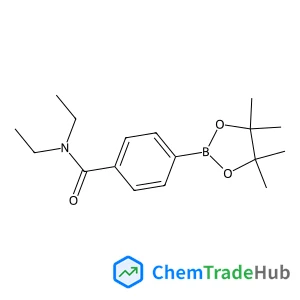
N,N-Diethyl-4-(4,4,5,5-tetramethyl-1,3,2-dioxaborolan-2-yl)benzamide
CAS番号:
325142-99-2
分子式:
C17H26BNO3
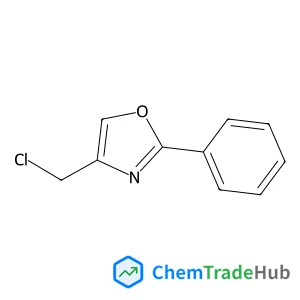
おすすめサプライヤー





免責事項
このページに表示される学術雑誌情報は、参考および研究目的のみを目的としています。当社は雑誌出版社とは提携しておらず、投稿の取り扱いも行っておりません。出版に関するお問い合わせは、各雑誌出版社に直接ご連絡ください。
表示されている情報に誤りがある場合は、support@chemtradehub.com までご連絡ください。迅速に確認し、対応いたします。