











Effect of environment on iodine oxidation state and reactivity with aluminum
文献情報
出版日
2016-03-30
DOI
10.1039/C5CP06998J
インパクトファクター
3.676
著者
Dylan K. Smith, Jena McCollum, Michelle L. Pantoya
原文を見る
要旨
Iodine oxide is a highly reactive solid oxidizer and with its abundant generation of iodine gas during reaction, this oxidizer also shows great potential as a biocidal agent. A problem with using I2O5 in an energetic mixture is its highly variable reactive behavior. This study isolates the variable reactivity associated with I2O5 as a function of its chemical reaction in various environments. Specifically, aluminum fuel and iodine oxide powder are combined using a carrier fluid to aid intermixing. The carrier fluid is shown to significantly affect the oxidation state of iodine oxide, thereby affecting the reactivity of the mixture. Four carrier fluids were investigated ranging in polarity and water miscibility in increasing order from hexane < acetone < isopropanol < water as well as untreated, dry-mixed reactants. Oxidation state and reactivity were examined with experimental techniques including X-ray photoelectric spectroscopy (XPS) and differential scanning calorimetry (DSC). Results are compared with thermal equilibrium simulations. Flame speeds increased with polarity of the fluid used to intermix the powder and ranged from 180 to 1202 m s−1. The I2O5 processed in the polar fluids formed hydrated states of iodine oxide: HIO3 and HI3O8; and, the nonpolar and dry-mixed samples formed: I2O4 and I4O9. During combustion, the hydrated iodine oxides rapidly dehydrated from HIO3 to HI3O8 and from HI3O8 to I2O5. Both steps release 25% of their mass as vapor during combustion. Increased gas generation enhances convective energy transport and accounts for the increase in reactivity seen in the mixtures processed in polar fluids. These results explain the chemical mechanisms underlying the variable reactivity of I2O5 that are a function of the oxide's highly reactive nature with its surrounding environment. These results will significantly impact the selection of carrier fluid in the synthesis approach for iodine containing reactive mixtures.
関連文献
Tandem ionic liquid antimicrobial toxicity and asymmetric catalysis study: carbonyl-ene reactions with trifluoropyruvate
Rohitkumar G. Gore, Thi-Kim-Thu Truong, Milan Pour, Lauren Myles, Stephen J. Connon, Nicholas Gathergood
2013-08-13
Paper
DOI: 10.1039/C3GC40875B
Catalyst-free facile synthesis of 2-substituted benzothiazoles
Siva S. Panda, Alexander A. Oliferenko
2013-08-09
Communication
DOI: 10.1039/C3GC41255E
Nanozeolite clinoptilolite as a highly efficient heterogeneous catalyst for the synthesis of various 2-amino-4H-chromene derivatives in aqueous media
Seyed Meysam Baghbanian, Niloufar Rezaei, Hamed Tashakkorian
2013-09-19
Paper
DOI: 10.1039/C3GC41302K
A self-assembled Pd6L8 nanoball for Suzuki–Miyaura coupling reactions in both homogeneous and heterogeneous formats
Chao-Wei Zhao, Jian-Ping Ma, Qi-Kui Liu, Yang Yu, Peng Wang, Yan-An Li, Kui Wang, Yu-Bin Dong
2013-09-05
Communication
DOI: 10.1039/C3GC41154K
Polymer anchored Cu(ii) complex: an efficient and recyclable catalytic system for the one-pot synthesis of 1,4-disubstituted 1,2,3-triazoles starting from anilines in water
Susmita Roy, Tanmay Chatterjee, Sk. Manirul Islam
2013-07-12
Paper
DOI: 10.1039/C3GC41114A
Visible light enhanced oxidant free dehydrogenation of aromatic alcohols using Au–Pd alloy nanoparticle catalysts
Sarina Sarina, Sagala Bai, Yiming Huang, Chao Chen, Jianfeng Jia, Esa Jaatinen, Godwin A. Ayoko, Zhaorigetu Bao, Huaiyong Zhu
2013-10-17
Paper
DOI: 10.1039/C3GC41866A
Synthesis of acetylenic alcohols with calcium carbide as the acetylene source
Yin Ngai Sum, Dingyi Yu, Yugen Zhang
2013-08-14
Communication
DOI: 10.1039/C3GC41269E
Life cycle assessment of surfactants: the case of an alkyl polyglucoside used as a self emulsifier in cosmetics
Jérôme Guilbot, Sébastien Kerverdo, Alain Milius, Rémi Escola, Fredrik Pomrehn
2013-10-04
Paper
DOI: 10.1039/C3GC41338A
Direct, one-pot synthesis of POCOP-type pincer complexes from metallic nickel
Boris Vabre, Fabien Lindeperg, Davit Zargarian
2013-07-22
Paper
DOI: 10.1039/C3GC40968F
Productive sugar isomerization with highly active Sn in dealuminated β zeolites
Jan Dijkmans, Dries Gabriëls, Michiel Dusselier, Filip de Clippel, Pieter Vanelderen, Kristof Houthoofd, Annelies Malfliet, Yiannis Pontikes, Bert F. Sels
2013-08-02
Paper
DOI: 10.1039/C3GC41239C
こちらもおすすめ
化合物よくある質問
2-ヒドロキシ-5-ニトロベンジンブロモイドの代替品はありますか?
2-ヒドロキシ-5-ニトロベンジンブロモイドは特定の化学反応に適しているため、代替品は限られています。しかし、同様の構造を持つ2-ヒドロキシ-4-ニトロベンジン...
772-33-82-(Bromomethyl)-4-ni...
化合物よくある質問
N-(2-ブロモフェニル)-1-チロール-3-オキソ-3-(ピペリジニル)プロペン-2-イル)ベンゼンアミドを取り扱う際の実験室安全事項は何ですか?
N-(2-ブロモフェニル)-1-チロール-3-オキソ-3-(ピペリジニル)プロペン-2-イル)ベンゼンアミドは有毒で、皮膚や粘膜に刺激を与える可能性があります。...
1800044-77-2N-[(1Z)-1-(2-Bromoph...
化合物よくある質問
1,3プロパンジオール,2-[2-(2アミノ-6クロロ-9Hピリミジン-9-イル)エチル-1,1,2,2-D4]-2,3-ジアセタートの市場動向や研究トレンドはどうですか?
この化合物は、新規治療薬の開発に注目されています。市場では、その有効性と安全性が評価され、研究分野では、分子生物学と医薬化学の新たな発見が期待されています。
1020718-81-31,3-Propanediol, 2-[...
579-44-2Ethanone, 2-hydroxy-...
化合物よくある質問
Succinimidyl-alanyl-phenylalanyl-prolyl-phenylalanine 4-nitroanilide はどの業界で使用されていますか?
Succinimidyl-alanyl-phenylalanyl-prolyl-phenylalanine 4-nitroanilide は主に医薬品開発やポ...
128802-73-3succinimidyl-alanyl-...
化合物よくある質問
メチル6-アミノ-5-クロロピリジン-2-カーボイル酸について、適用される法規ガイドラインは何ですか?
メチル6-アミノ-5-クロロピリジン-2-カーボイル酸(CAS番号: 1256794-05-4)の使用には、GHS( Globally Harmonized S...
1256794-05-4Methyl 6-amino-5-chl...
化合物よくある質問
エチル4-(シクロ Pentagonyl)アミノ-2-メチル硫化基ピリミジン-5-カルボキシレートを取り扱う際の実験室安全事項は何ですか?
取り扱いには、耐薬品性の容器を使用し、通気性の良い場所で操作することを推奨します。漏れ時は、SDS(安全データシート)を参照して適切な措置を取ること。手洗いと洗...
211245-62-4ethyl 4-(cyclopentyl...
化合物よくある質問
(S)-3-ベンZYルピペリジン塩酸塩とは何ですか?
(S)-3-ベンZYルピペリジン塩酸塩は、CAS番号1258940-00-9で表される化合物です。これは、(S)-3-苯基哌啶的盐酸盐であり、主に医薬品の原料と...
1258940-00-9(S)-3-Phenylpiperidi...
化合物よくある質問
3,5-二甲基金剛胺の主な用途は何ですか?
3,5-二甲基金剛胺は、主に医薬品の原料として使用され、また抗うつ薬や抗アルツハイマー薬の開発に利用されます。さらに、化粧品や食品添加物の製造でも重要な役割を果...
19988-45-52-(2,3-Dihydroxyphen...
化合物よくある質問
ビス(4-メチル-2-ペンチル)フェニルカルボン酸エステルの代替品はありますか?
ビス(4-メチル-2-ペンチル)フェニルカルボン酸エステル (CAS番号: 1398066-13-1) の代替品には、ビス(2-エチルヘキシル)フェノールカルボ...
1398066-13-1Bis(4-methyl-2-penty...
掲載誌
Physical Chemistry Chemical Physics

CiteScore:
5.5
自己引用率:
10.3%
年間論文数:
3036
Physical Chemistry Chemical Physics (PCCP) is an international journal co-owned by 19 physical chemistry and physics societies from around the world. This journal publishes original, cutting-edge research in physical chemistry, chemical physics and biophysical chemistry. To be suitable for publication in PCCP, articles must include significant innovation and/or insight into physical chemistry; this is the most important criterion that reviewers and Editors will judge against when evaluating submissions. The journal has a broad scope and welcomes contributions spanning experiment, theory, computation and data science. Topical coverage includes spectroscopy, dynamics, kinetics, statistical mechanics, thermodynamics, electrochemistry, catalysis, surface science, quantum mechanics, quantum computing and machine learning. Interdisciplinary research areas such as polymers and soft matter, materials, nanoscience, energy, surfaces/interfaces, and biophysical chemistry are welcomed if they demonstrate significant innovation and/or insight into physical chemistry. Joined experimental/theoretical studies are particularly appreciated when complementary and based on up-to-date approaches.
おすすめ化合物
![Methyl 4-({[(2-methyl-2-propanyl)oxy]carbonyl}amino)bicyclo[2.2.2]octane-1-carboxylate structure](https://static.chemtradehub.com/structs/943/943845-74-7-b7e5.webp "Methyl 4-({[(2-methyl-2-propanyl)oxy]carbonyl}amino)bicyclo[2.2.2]octane-1-carboxylate structure")
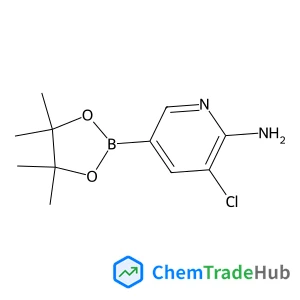
3-Chloro-5-(4,4,5,5-tetramethyl-1,3,2-dioxaborolan-2-yl)-2-pyridinamine
CAS番号:
1032758-99-8
分子式:
C11H16BClN2O2
おすすめサプライヤー






免責事項
このページに表示される学術雑誌情報は、参考および研究目的のみを目的としています。当社は雑誌出版社とは提携しておらず、投稿の取り扱いも行っておりません。出版に関するお問い合わせは、各雑誌出版社に直接ご連絡ください。
表示されている情報に誤りがある場合は、support@chemtradehub.com までご連絡ください。迅速に確認し、対応いたします。