












Life of superoxide in aprotic Li–O2 battery electrolytes: simulated solvent and counter-ion effects
文献情報
出版日
2016-02-24
DOI
10.1039/C5CP08056H
インパクトファクター
3.676
著者
J. Scheers, D. Lidberg, Z. Futera
原文を見る
要旨
Li–air batteries ideally make use of oxygen from the atmosphere and metallic lithium to reversibly drive the reaction 2Li + O2 ↔ Li2O2. Conceptually, energy throughput is high and material use is efficient, but practically many material challenges still remain. It is of particular interest to control the electrolyte environment of superoxide (O2*−) to promote or hinder specific reaction mechanisms. By combining density functional theory based molecular dynamics (DFT-MD) and DFT simulations we probe the bond length and the electronic properties of O2*− in three aprotic solvents – in the presence of Li+ or the much larger cation alternative tetrabutylammonium (TBA+). Contact ion pairs, LiO2*, are favoured over solvent-separated ion pairs in all solvents, but particularly in low permittivity dimethoxyethane (DME), which makes O2*− more prone to further reduction. The Li+–O2*− interactions are dampened in dimethyl sulfoxide (DMSO), in relation to those in DME and propylene carbonate (PC), which is reflected by smaller changes in the electronic properties of O2*− in DMSO. The additive TBA+ offers an alternative, more weakly interacting partner to O2*−, which makes it easier to remove the unpaired electron and oxidation more feasible. In DMSO, TBA+ has close to no effect on O2*−, which behaves as if no cation is present. This is contrasted by a much stronger influence of TBA+ on O2*− in DME – comparable to that of Li+ in DMSO. An important future goal is to compare and rank the effects of different additives beyond TBA+. Here, the results of DFT calculations for small-sized cluster models are in qualitative agreement with those of the DFT-MD simulations, which suggests the cluster approach to be a cost-effective alternative to the DFT-MD simulations for a more extensive comparison of additive effects in future studies.
関連文献
Highly effective tandem hydroformylation–acetalization of olefins using a long-life Brønsted acid–Rh bifunctional catalyst in ionic liquid–alcohol systems
Kun Zhao, Feifei Cui, Fangfang Kong, Qiangqiang Liu
2013-08-28
Paper
DOI: 10.1039/C3GC41231H
Sodium salt effect on hydrothermal carbonization of biomass: a catalyst for carbon-based nanostructured materials for lithium-ion battery applications
Jin-Bum Park
2013-08-14
Communication
DOI: 10.1039/C3GC40480C
High activity and switchable selectivity in the synthesis of cyclic and polymeric cyclohexene carbonates with iron amino triphenolate catalysts
Masoumeh Taherimehr, Syed M. Al-Amsyar, Christopher J. Whiteoak, Paolo P. Pescarmona
2013-08-27
Paper
DOI: 10.1039/C3GC41303A
Productive sugar isomerization with highly active Sn in dealuminated β zeolites
Jan Dijkmans, Dries Gabriëls, Michiel Dusselier, Filip de Clippel, Pieter Vanelderen, Kristof Houthoofd, Annelies Malfliet, Yiannis Pontikes, Bert F. Sels
2013-08-02
Paper
DOI: 10.1039/C3GC41239C
GAP chemistry for pyrrolyl coumarin derivatives: a highly efficient one-pot synthesis under catalyst-free conditions
Xuecheng Liu, Xian Feng, Zhibin Huang, Daqing Shi
2013-09-25
Communication
DOI: 10.1039/C3GC41799A
Lewis acid–surfactant-combined catalyzed synthesis of 4-aminocyclopentenones from glycals in water
Siming Wang, Ronny William, Kim Kui Georgina Estelle Seah, Xue-Wei Liu
2013-08-27
Communication
DOI: 10.1039/C3GC41032C
Bio-inspired fabrication of silver nanoparticles on nanostructured silica: characterization and application as a highly efficient hydrogenation catalyst
Sujoy K. Das, Md. Motiar R. Khan, Arun K. Guha, Nityananda Naskar
2013-06-27
Paper
DOI: 10.1039/C3GC40310F
Metal-free arylations via photochemical activation of the Ar–OSO2R bond in aryl nonaflates
Carlotta Raviola, Veronica Canevari, Stefano Protti, Angelo Albini, Maurizio Fagnoni
2013-07-22
Communication
DOI: 10.1039/C3GC41009A
Direct synthesis of hydrogen peroxide in water in a continuous trickle bed reactor optimized to maximize productivity
Pierdomenico Biasi, Juan García-Serna, Alice Bittante, Tapio Salmi
2013-07-01
Paper
DOI: 10.1039/C3GC40811F
こちらもおすすめ
化合物よくある質問
2-ヒドロキシ-5-ニトロベンジンブロモイドの代替品はありますか?
2-ヒドロキシ-5-ニトロベンジンブロモイドは特定の化学反応に適しているため、代替品は限られています。しかし、同様の構造を持つ2-ヒドロキシ-4-ニトロベンジン...
772-33-82-(Bromomethyl)-4-ni...
化合物よくある質問
N-(2-ブロモフェニル)-1-チロール-3-オキソ-3-(ピペリジニル)プロペン-2-イル)ベンゼンアミドを取り扱う際の実験室安全事項は何ですか?
N-(2-ブロモフェニル)-1-チロール-3-オキソ-3-(ピペリジニル)プロペン-2-イル)ベンゼンアミドは有毒で、皮膚や粘膜に刺激を与える可能性があります。...
1800044-77-2N-[(1Z)-1-(2-Bromoph...
化合物よくある質問
1,3プロパンジオール,2-[2-(2アミノ-6クロロ-9Hピリミジン-9-イル)エチル-1,1,2,2-D4]-2,3-ジアセタートの市場動向や研究トレンドはどうですか?
この化合物は、新規治療薬の開発に注目されています。市場では、その有効性と安全性が評価され、研究分野では、分子生物学と医薬化学の新たな発見が期待されています。
1020718-81-31,3-Propanediol, 2-[...
579-44-2Ethanone, 2-hydroxy-...
化合物よくある質問
Succinimidyl-alanyl-phenylalanyl-prolyl-phenylalanine 4-nitroanilide はどの業界で使用されていますか?
Succinimidyl-alanyl-phenylalanyl-prolyl-phenylalanine 4-nitroanilide は主に医薬品開発やポ...
128802-73-3succinimidyl-alanyl-...
化合物よくある質問
メチル6-アミノ-5-クロロピリジン-2-カーボイル酸について、適用される法規ガイドラインは何ですか?
メチル6-アミノ-5-クロロピリジン-2-カーボイル酸(CAS番号: 1256794-05-4)の使用には、GHS( Globally Harmonized S...
1256794-05-4Methyl 6-amino-5-chl...
化合物よくある質問
エチル4-(シクロ Pentagonyl)アミノ-2-メチル硫化基ピリミジン-5-カルボキシレートを取り扱う際の実験室安全事項は何ですか?
取り扱いには、耐薬品性の容器を使用し、通気性の良い場所で操作することを推奨します。漏れ時は、SDS(安全データシート)を参照して適切な措置を取ること。手洗いと洗...
211245-62-4ethyl 4-(cyclopentyl...
化合物よくある質問
(S)-3-ベンZYルピペリジン塩酸塩とは何ですか?
(S)-3-ベンZYルピペリジン塩酸塩は、CAS番号1258940-00-9で表される化合物です。これは、(S)-3-苯基哌啶的盐酸盐であり、主に医薬品の原料と...
1258940-00-9(S)-3-Phenylpiperidi...
化合物よくある質問
3,5-二甲基金剛胺の主な用途は何ですか?
3,5-二甲基金剛胺は、主に医薬品の原料として使用され、また抗うつ薬や抗アルツハイマー薬の開発に利用されます。さらに、化粧品や食品添加物の製造でも重要な役割を果...
19988-45-52-(2,3-Dihydroxyphen...
化合物よくある質問
ビス(4-メチル-2-ペンチル)フェニルカルボン酸エステルの代替品はありますか?
ビス(4-メチル-2-ペンチル)フェニルカルボン酸エステル (CAS番号: 1398066-13-1) の代替品には、ビス(2-エチルヘキシル)フェノールカルボ...
1398066-13-1Bis(4-methyl-2-penty...
掲載誌
Physical Chemistry Chemical Physics

CiteScore:
5.5
自己引用率:
10.3%
年間論文数:
3036
Physical Chemistry Chemical Physics (PCCP) is an international journal co-owned by 19 physical chemistry and physics societies from around the world. This journal publishes original, cutting-edge research in physical chemistry, chemical physics and biophysical chemistry. To be suitable for publication in PCCP, articles must include significant innovation and/or insight into physical chemistry; this is the most important criterion that reviewers and Editors will judge against when evaluating submissions. The journal has a broad scope and welcomes contributions spanning experiment, theory, computation and data science. Topical coverage includes spectroscopy, dynamics, kinetics, statistical mechanics, thermodynamics, electrochemistry, catalysis, surface science, quantum mechanics, quantum computing and machine learning. Interdisciplinary research areas such as polymers and soft matter, materials, nanoscience, energy, surfaces/interfaces, and biophysical chemistry are welcomed if they demonstrate significant innovation and/or insight into physical chemistry. Joined experimental/theoretical studies are particularly appreciated when complementary and based on up-to-date approaches.
おすすめ化合物
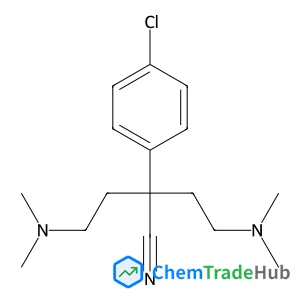
2-(4-Chlorophenyl)-4-(dimethylamino)-2-(2-(dimethylamino)ethyl)butanenitrile
CAS番号:
1246816-57-8
分子式:
C16H24ClN3
おすすめサプライヤー




免責事項
このページに表示される学術雑誌情報は、参考および研究目的のみを目的としています。当社は雑誌出版社とは提携しておらず、投稿の取り扱いも行っておりません。出版に関するお問い合わせは、各雑誌出版社に直接ご連絡ください。
表示されている情報に誤りがある場合は、support@chemtradehub.com までご連絡ください。迅速に確認し、対応いたします。