












Tunable polaron-induced coloration of tungsten oxide via a multi-step control of the physicochemical property for the detection of gaseous F
文献情報
出版日
2018-04-04
DOI
10.1039/C8CP00158H
インパクトファクター
3.676
著者
Sang Yeon Lee, Gowoon Shim, Jucheol Park
原文を見る
要旨
The tunable polaron effect of amorphous tungsten oxide on FTO substrates has been used to detect fluorine in the gas phase via photochemical and gasochromic reactions. By combining photochemical (UV exposure under an H2 atomsphere) and gasochromic (XeF2 exposure) reactions, the detection of gaseous fluorine using amorphous tungsten oxide is described. The effective hydrogenation of WO3 was achieved using UV/H2 exposure to prepare hydrogenated tungsten oxide (H-WO3−x) upon activating the strong polaron-coupling to infrared (IR) light to decrease IR transmission from 70 to 20% at 1000 nm wavelength. This is explained by creation of W 5d unpaired electrons excited by band-edge defect states or W5+ states. The H-WO3−x lattice structure was maintained as an amorphous structure and found to have hydrogen-associated shallow- and oxygen vacancy-associated deep-trap levels with a moderate enhancement of the n-type characteristic. The gasochromic reaction takes place within tens of seconds at room temperature upon exposure to XeF2 gas leading to atomic F insertion. Fluorine, which is one of the most electronegative materials, is combined with the W5+ and W6+ in H-WO3−x to remove H to form volatile HF vapor and the formation of W–F bonds. The global incorporation of fluorine effectively turns H-WO3−x into F-WO3−x structures and deactivates the polaron-IR coupling (IR transmission change from 20 to 70%) since all the band-edge defect states are passivated upon F insertion with a strong n-doping effect. Therefore, this approach, entirely processed at room temperature, is highly applicable to fluorine detecting sensors and devices utilizing the polaron-IR coupling effect.
関連文献
Novel N,O-Cu(OAc)2 complex catalysed diastereo- and enantioselective 1,4-addition of glycine derivatives to alkylidene malonates
Ming Wang, Yu-Hua Shi, Jun-Fei Luo, Wenting Du, Xiao-Xin Shi, Wei-Ping Deng
2011-02-04
Paper
DOI: 10.1039/C0CY00001A
Acyl hydrazides as peptoid sub-monomers
Bani Kanta Sarma, Muhammed Yousufuddin, Thomas Kodadek
2011-09-05
Communication
DOI: 10.1039/C1CC12750K
A molecular bowl sumanene
Toru Amaya, Toshikazu Hirao
2011-07-08
Feature Article
DOI: 10.1039/C1CC12532J
One-pot synthesis of hybrid TiO2–polyaniline nanoparticles by self-catalyzed hydroamination and oxidative polymerization from TiO2–methacrylic acid nanoparticles
Woo Jin Bae, Andrew R. Davis, Jaewoong Jung, Won Ho Jo, Kenneth R. Carter, E. Bryan Coughlin
2011-09-05
Communication
DOI: 10.1039/C1CC13137K
An organogel formed from a cyclic β-aminoalcohol
Chuanqing Kang, Zheng Bian, Yabing He, Fushe Han, Xuepeng Qiu, Lianxun Gao
2011-08-24
Communication
DOI: 10.1039/C1CC13179F
Oxidative, photo-activated TiO2nanoparticles in the catalytic acetylation of primary alcohols
Chien-Tien Chen, Jun-Qi Kao, Cheng-Yuan Liu, Ling-Yu Jiang
2011-01-31
Communication
DOI: 10.1039/C0CY00005A
Direct C–H bond arylations and alkenylations with phenol-derived fluorine-free electrophiles
Sergei I. Kozhushkov, Harish Kumar Potukuchi, Lutz Ackermann
2012-10-24
Minireview
DOI: 10.1039/C2CY20505J
A Zn2GeO4–ethylenediamine hybrid nanoribbon membrane as a recyclable adsorbent for the highly efficient removal of heavy metals from contaminated water
Li Yu, Rujia Zou, Zhenyu Zhang, Guosheng Song, Zhigang Chen, Jianmao Yang, Junqing Hu
2011-08-30
Communication
DOI: 10.1039/C1CC14159G
Palladium nanoparticles in carbon thin film-lined SBA-15 nanoreactors: efficient heterogeneous catalysts for Suzuki–Miyaura cross coupling reaction in aqueous media
Jian Zhi, Depeng Song, Zhiwen Li, Xia Lei, Aiguo Hu
2011-09-05
Communication
DOI: 10.1039/C1CC14169D
Breaking the Fischer–Tropsch synthesis selectivity: direct conversion of syngas to gasoline over hierarchical Co/H-ZSM-5 catalysts
Sina Sartipi, Kshitij Parashar, Michiel Makkee, Jorge Gascon, Freek Kapteijn
2012-12-06
Communication
DOI: 10.1039/C2CY20744C
こちらもおすすめ
化合物よくある質問
環戊烷-1,3-二甲酸甲酯はどのように合成されますか?
環戊烷-1,3-二甲酸甲酯は、環戊烷と塩酸によるヒンデンブルク反応を経由して合成されます。この反応では、環戊烷が塩酸と作用し、1,3-ジカルボキシ基が導入されま...
2435-36-1Dimethyl 1,3-cyclope...
化合物よくある質問
4-メトキシ-1,2,3-スチアゼ-3,5-ジオンとは何ですか?
4-メトキシ-1,2,3-スチアゼ-3,5-ジオンは、CAS番号107843-77-6の化合物で、(E)-ベンジル3-(3,4-ジヒドロキシフェニル) acry...
107843-77-6(E)-Benzyl 3-(3,4-di...
化合物よくある質問
プロスタグランジンA2について「に適用される法規ガイドラインは何ですか?'
プロスタグランジンA2 (CAS番号: 41691-92-3) は、化学物質の安全管理に関する規制として、GHS (危険物質の国際的ハザード分類・ラベル付けシス...
41691-92-316,16-DIMETHYL PROST...
化合物よくある質問
4-アミノ-1-ナフタレン sulfonic 酸についての物理化学的性質は何ですか?
4-アミノ-1-ナフタレン sulfonic 酸のCAS番号は84-86-6です。この化合物は結晶性で、分子量は212.15 g/molです。アルコールや水など...
84-86-64-Amino-1-naphthalen...
化合物よくある質問
N-GlcNAc-生物素を取り扱う際の実験室安全事項は何ですか?
N-GlcNAc-生物素は吸収性があり、皮膚や目への接触を避けることが重要です。PPE(個体保護具)は使用し、ドラフトチャンバーは必要に応じて使用します。漏洩時...
1272755-69-72-Acetamido-2-deoxy-...
化合物よくある質問
3-アミノメチルフローラノピペリジン-1-カルボニル酸テルブチルエステルとは何ですか?
CAS番号1209781-11-2の3-アミノメチルフローラノピペリジン-1-カルボニル酸テルブチルエステルは、有機化合物の一種で、化学式はC10H17FNO3...
1209781-11-22-Methyl-2-propanyl ...
化合物よくある質問
6-溴-1-甲基-1H-ベンゾ[d][1,2,3]三氮唑はどのように合成されますか?
6- bromo-1-methyl-1H-benzotriazoleは、ブロモフリオリンと1-メチル-1H-ベンゾ[d][1,2,3]三氮唑の反応により合成され...
944718-32-56-Bromo-1-methyl-1H-...
化合物よくある質問
4-硫代尿苷はどのように合成されますか?
4-硫代尿苷は、尿素とD-リボシルヒドロキシアルデヒドを用いてスルホン化反応を経て合成されます。通常は塩酸ヒドロキシチオニルスルホン酸などの触媒を使用し、選択性...
6741-73-71-(4-thio-beta-D-rib...
化合物よくある質問
ブレインナトリユリックペプチド32ラットとは何ですか?
ブレインナトリユリックペプチド32ラット(CAS番号: 133448-20-1)は、心臓で作られるホルモンの一つで、心不全の診断や予後評価に使用されます。
133448-20-1Brain Natriuretic Pe...
化合物よくある質問
1-(3-氮杂啶)-4-羟基哌啶双盐酸盐の物理化学的性質は何ですか?
CAS番号810680-60-5の1-(3-氮杂啶)-4-羟基哌啶双盐酸盐は、白色の結晶性粉末である。分子量は360.84 g/molで、水に溶けやすい。反応活...
810680-60-51-(3-Azetidinyl)-4-p...
掲載誌
Physical Chemistry Chemical Physics

CiteScore:
5.5
自己引用率:
10.3%
年間論文数:
3036
Physical Chemistry Chemical Physics (PCCP) is an international journal co-owned by 19 physical chemistry and physics societies from around the world. This journal publishes original, cutting-edge research in physical chemistry, chemical physics and biophysical chemistry. To be suitable for publication in PCCP, articles must include significant innovation and/or insight into physical chemistry; this is the most important criterion that reviewers and Editors will judge against when evaluating submissions. The journal has a broad scope and welcomes contributions spanning experiment, theory, computation and data science. Topical coverage includes spectroscopy, dynamics, kinetics, statistical mechanics, thermodynamics, electrochemistry, catalysis, surface science, quantum mechanics, quantum computing and machine learning. Interdisciplinary research areas such as polymers and soft matter, materials, nanoscience, energy, surfaces/interfaces, and biophysical chemistry are welcomed if they demonstrate significant innovation and/or insight into physical chemistry. Joined experimental/theoretical studies are particularly appreciated when complementary and based on up-to-date approaches.
おすすめ化合物
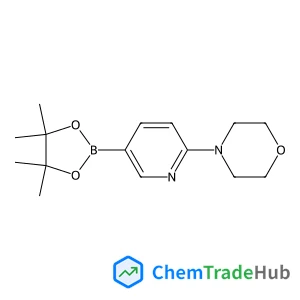
4-(5-(4,4,5,5-tetramethyl-1,3,2-dioxaborolan-2-yl)pyridin-2-yl)morpholine
CAS番号:
485799-04-0
分子式:
C15H23BN2O3
![N-[(9H-Fluoren-9-ylmethoxy)carbonyl]-beta-phenyl-L-phenylalanine structure](https://static.chemtradehub.com/structs/201/201484-50-6-c2fc.webp "N-[(9H-Fluoren-9-ylmethoxy)carbonyl]-beta-phenyl-L-phenylalanine structure")
おすすめサプライヤー




免責事項
このページに表示される学術雑誌情報は、参考および研究目的のみを目的としています。当社は雑誌出版社とは提携しておらず、投稿の取り扱いも行っておりません。出版に関するお問い合わせは、各雑誌出版社に直接ご連絡ください。
表示されている情報に誤りがある場合は、support@chemtradehub.com までご連絡ください。迅速に確認し、対応いたします。