












![(2E)-4-[(1R,2S,8R,19S,21R)-14-Hydroxy-11-isopropenyl-8,23,23-trimethyl-5-(3-methyl-2-buten-1-yl)-16,20-dioxo-3,7,22-trioxaheptacyclo[17.4.1.1~8,12~.0~2,17~.0~2,21~.0~4,15~.0~6,13~]pentacosa-4(15),5,13
,17-tetraen-21-yl]-2-methyl-2-butenoic acid structure](https://static.chemtradehub.com/structs/173/173867-04-4-d2d3.webp "(2E)-4-[(1R,2S,8R,19S,21R)-14-Hydroxy-11-isopropenyl-8,23,23-trimethyl-5-(3-methyl-2-buten-1-yl)-16,20-dioxo-3,7,22-trioxaheptacyclo[17.4.1.1~8,12~.0~2,17~.0~2,21~.0~4,15~.0~6,13~]pentacosa-4(15),5,13
,17-tetraen-21-yl]-2-methyl-2-butenoic acid structure")
Quantitative correlation of the effects of crystallinity and additives on nanomorphology and solar cell performance of isoindigo-based copolymers
文献情報
出版日
2017-08-08
DOI
10.1039/C7CP04238H
インパクトファクター
3.676
著者
Chun-Yu Chang, Yu-Ching Huang, Chien-An Chen, Chun-Jen Su
原文を見る
要旨
The high power conversion efficiency of bulk heterojunction (BHJ) polymer solar cells can be achieved from either low crystallinity (P3TI) or high crystallinity (P6TI) of isoindigo-based donor–acceptor alternating copolymers blended with PC71BM by controlling nanophase separation using additives. P3TI shows similar device performance regardless of the type of additives, while P6TI is significantly affected by whether the additive is aliphatic or aromatic. To understand the interplays of crystallinity of polymers and the type of additive on the formation of nanomorphology of BHJ, we employed the simultaneous grazing-incidence small- and wide-angle X-ray scattering (GISAXS and GIWAXS) technique to perform the quantitative investigation. By incorporating additives, the PC71BM molecules can be easily intercalated into the P3TI polymer-rich domain and the size of the PC71BM clusters is reduced from about 24 nm to about 5 nm by either aliphatic 1,8-diiodooctane (DIO) or aromatic 1-chloronaphthalene (CN). On comparison, it is found to be more difficult for PC71BM molecules to be intercalated into the highly crystalline P6TI dense domain, and the PC71BM molecules have a higher tendency to be self-aggregated, which results in a larger size of PC71BM clusters of about 58 nm. The clusters can be reduced to about 7 nm by DIO and 13 nm by CN. The presence of crystallites in the P6TI domain can interact with the additive to tailor the crystallization of PC71BM clusters to a size similar to that of P6TI crystallites (∼12 nm) and form a connected network for efficient charge transportation. Thus, the power conversion efficiency of P6TI:PC71BM reaches its maximum of 7.04% using aromatic CN additives. This is a new finding of the effect of crystallinity, which is not observed in the common low crystalline donor–acceptor alternating copolymers such as PTB7. Our results provide a useful guideline to manipulate the desired morphology of BHJ films constructed from alternating copolymer with different crystallinity, which is critical for achieving high power conversion efficiency of solar cells.
関連文献
Novel polymer coupling chemistry based upon latent cysteine-like residues and thiazolidine chemistry
Joseph S. Carlson, Megan R. Hill, Taiga Young, Philip J. Costanzo
2010-08-24
Communication
DOI: 10.1039/C0PY00191K
Assessment of SET-LRP in DMSO using online monitoring and Rapid GPC
Martin E. Levere, Ian Willoughby, Stephen O'Donohue, Anne de Cuendias, Anthony J. Grice, Christopher Fidge, C. Remzi Becer, David M. Haddleton
2010-06-01
Paper
DOI: 10.1039/C0PY00113A
Synthesis and characterization of polythiophenes with alkenyl substituents
Nadia Hundt, Kumaranand Palaniappan, Prakash Sista, John W. Murphy, Jing Hao, Hien Nguyen, Eugene Stein, Michael C. Biewer, Bruce E. Gnade, Mihaela C. Stefan
2010-08-31
Paper
DOI: 10.1039/C0PY00176G
Recent advances in sunlight induced polymerization: role of new photoinitiating systems based on the silyl radical chemistry
Jacques Lalevée, Jean Pierre Fouassier
2011-03-24
Paper
DOI: 10.1039/C1PY00073J
Synergistic temperature and pH effects on glass (Tg) and stimuli-responsive (TSR) transitions in poly(N-acryloyl-N′-propylpiperazine-co-2-ethoxyethyl methacrylate) copolymers
Fang Liu, William L. Jarrett, Marek W. Urban
2011-02-01
Paper
DOI: 10.1039/C0PY00366B
Solvent-driven swelling and shrinking of poly(NIPAM) gels crosslinked by tris-methacrylated phloroglucinol derivatives
Toshio Itahara, Takahiro Tsuchida, Mayumi Morimoto
2010-05-20
Paper
DOI: 10.1039/C0PY00068J
Optimised ‘click’ synthesis of glycopolymers with mono/di- and trisaccharides
Nicola Vinson, Yanzi Gou, C. Remzi Becer, David M. Haddleton, Matthew I. Gibson
2010-10-04
Paper
DOI: 10.1039/C0PY00260G
New thioxanthone and xanthone photoinitiators based on silyl radical chemistry
Jacques Lalevée, Nicolas Blanchard, Mohamad Ali Tehfe, Cédric Fries, Fabrice Morlet-Savary, Didier Gigmes, Jean Pierre Fouassier
2011-02-28
Paper
DOI: 10.1039/C0PY00392A
こちらもおすすめ
化合物よくある質問
3-(2-オキサプロピル)ベンzoic酸はどのように合成されますか?
3-(2-オキサプロピル)ベンzoic酸は、ベンzoic酸とプロパノ酸をヒドロキシム化合物として反応させて生成します。具体的には、ベンzoic酸とプロパノ酸を反...
205927-63-53-(2-Oxopropyl)benzo...
114873-01-73-Fluoro-N-{[(2-meth...
化合物よくある質問
4-メチル-4-ピペリジニル-1-ピロリドイン甲酸の主な用途は何ですか?
4-メチル-4-ピペリジニル-1-ピロリドイン甲酸は、主に医薬品の合成材料や研究用物質として使用されます。さらに、一部の薬理学的研究にも応用されています。
885523-47-7(4-Methyl-4-piperidi...
化合物よくある質問
Biotin-PEG3-oxyamine HCl塩について、適切な化合物名称に適用される法規ガイドラインは何ですか?
Biotin-PEG3-oxyamine HCl塩は、GHS( Globally Harmonized System of Classification and...
1786206-22-1Biotin-PEG3-oxyamine...
化合物よくある質問
N-(4-イソチオシアネートフェニル)-2-メトキシアリニンはどのように合成されますか?
N-(4-イソチオシアネートフェニル)-2-メトキシアリニンは、4-イソチオシアノフェノールと2-メトキシアリニルアミンのアミニド反応を用いて合成されます。この...
915919-57-2N-(4-Isothiocyanatop...
化合物よくある質問
金粉蕨亭2'-O-葡萄糖甙の主な用途は何ですか?
金粉蕨亭2'-O-葡萄糖甙は主に薬理研究や医薬品製造に使用され、抗炎症作用や抗がん作用などがあります。また、その構造や性質から、合成化学や化学生理学の研究にも用...
76947-60-92-(7-Hydroxy-2,2,4,6...
化合物よくある質問
2-(2-ニトロフェニル)酢酸ヒドライドの物理化学的性質は何ですか?
2-(2-ニトロフェニル)酢酸ヒドライドのCAS番号は114953-81-0です。この化合物は白色結晶性粉末で、分子量は244.12です。水溶性は限られており、...
114953-81-02-(2-Nitrophenyl)ace...
化合物よくある質問
5-(ヒドロキシメチル)-2-チオキソ-2,3-ジヒドロピリミジン-4(1H)-オンを取り扱う際の実験室安全事項は何ですか?
この化合物は高活性のため、取り扱いには注意が必要です。PPE(個人保護具)としてゴーグル、ガントリー、および防滴シールドを着用することが推奨されます。ドラフトチ...
93185-31-05-(Hydroxymethyl)-2-...
化合物よくある質問
11-脱氢血栓烷 b2の市場動向や研究トレンドはどうですか?
11-脱氢血栓烷 b2は、血栓溶解・抗凝固作用に関する研究で注目を集めています。特に心血管疾患の治療法開発において、市場の需要が高まっています。研究トレンドとし...
67910-12-77-{(2R,3S,4S)-4-Hydr...
化合物よくある質問
3,3-二甲基哌啶-4-酮はどのように保存すればよいですか?
3,3-二甲基哌啶-4-酮は避光、常温、乾燥した場所で保存してください。容器は密閉し、遠くから火源を離して保管することを確認してください。
150668-82-93,3-Dimethyl-4-piper...
掲載誌
Physical Chemistry Chemical Physics

CiteScore:
5.5
自己引用率:
10.3%
年間論文数:
3036
Physical Chemistry Chemical Physics (PCCP) is an international journal co-owned by 19 physical chemistry and physics societies from around the world. This journal publishes original, cutting-edge research in physical chemistry, chemical physics and biophysical chemistry. To be suitable for publication in PCCP, articles must include significant innovation and/or insight into physical chemistry; this is the most important criterion that reviewers and Editors will judge against when evaluating submissions. The journal has a broad scope and welcomes contributions spanning experiment, theory, computation and data science. Topical coverage includes spectroscopy, dynamics, kinetics, statistical mechanics, thermodynamics, electrochemistry, catalysis, surface science, quantum mechanics, quantum computing and machine learning. Interdisciplinary research areas such as polymers and soft matter, materials, nanoscience, energy, surfaces/interfaces, and biophysical chemistry are welcomed if they demonstrate significant innovation and/or insight into physical chemistry. Joined experimental/theoretical studies are particularly appreciated when complementary and based on up-to-date approaches.
おすすめ化合物
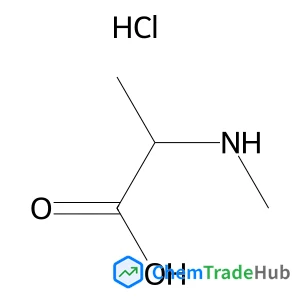
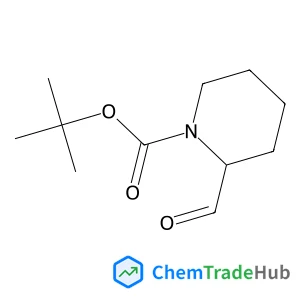

![Benzyl spiro[indole-3,4'-piperidine]-1(2H)-carboxylate hydrochloride (1:1) structure](https://static.chemtradehub.com/structs/159/159635-46-8-8de0.webp "Benzyl spiro[indole-3,4'-piperidine]-1(2H)-carboxylate hydrochloride (1:1) structure")
Benzyl spiro[indole-3,4'-piperidine]-1(2H)-carboxylate hydrochloride (1:1)
CAS番号:
159635-46-8
分子式:
C20H23ClN2O2
おすすめサプライヤー



免責事項
このページに表示される学術雑誌情報は、参考および研究目的のみを目的としています。当社は雑誌出版社とは提携しておらず、投稿の取り扱いも行っておりません。出版に関するお問い合わせは、各雑誌出版社に直接ご連絡ください。
表示されている情報に誤りがある場合は、support@chemtradehub.com までご連絡ください。迅速に確認し、対応いたします。