












Synergistic temperature and pH effects on glass (Tg) and stimuli-responsive (TSR) transitions in poly(N-acryloyl-N′-propylpiperazine-co-2-ethoxyethyl methacrylate) copolymers
文献情報
出版日
2011-02-01
DOI
10.1039/C0PY00366B
インパクトファクター
5.582
著者
Fang Liu, William L. Jarrett, Marek W. Urban
原文を見る
要旨
N-Acryloyl-N′-propylpiperazine (AcrNPP) and 2-ethoxyethyl methacrylate (EEMA) monomers were copolymerized to form random stimuli-responsive p(AcrNPP/EEMA) copolymers in a form of colloidal dispersions which upon coalesce form uniform films. The presence of AcrNPP units facilitates temperature and pH responsiveness, thus resulting in composition-dependent and pH–temperature sensitive endothermic transitions: the glass (Tg) and stimuli-responsive (TSR) transitions. These studies show that the relationship between the newly discovered TSR and known Tg relaxations can be predicted by the following formula: 1/TSR = [Tg1 × Tg2 × (Tbinary − T)]/[Tbinary × T × (Tg1 − Tg2) × Tg] + (Tg1 × T − Tbinary × Tg2)/[Tbinary × T × (Tg1 − Tg2)], where TSR is the stimuli-responsive transition temperature, Tg is the glass transition temperature of the copolymer; Tbinary is the temperature of stimuli-responsive homopolymer in a binary polymer–water equilibrium, Tg1 and Tg2 are the glass transition temperatures of stimuli-responsive and non-stimuli-responsive homopolymers, respectively, and T is the film formation temperature. Experimental spectroscopic and differential scanning calorimetry (DSC) evidence showed that dipole–dipole interactions are responsible for the molecular changes at the TSR for a non-protonated state, and the shift of the TSR under protonated conditions is attributed to the synergistic pH and temperature effects associated with H-bonding and conformational backbone and side chain rearrangements. Computer simulations also showed that the buckling of the copolymer backbone and collapse of propylpiperazine groups occur above TSR. The total energies (ΔEtotal) of the TSR transitions for protonated and non-protonated states are 159 and 132 kcal mol−1, respectively, and are in good agreement with the energy values determined experimentally (DSC).
関連文献
Dissociative electron attachment induced ring opening in five-membered heterocyclic compounds
Ian Carmichael
2018-06-19
Paper
DOI: 10.1039/C8CP02718H
Liquid–liquid phase separation and evaporation of a laser-trapped organic–organic airborne droplet using temporal spatial-resolved Raman spectroscopy
Aimable Kalume, Chuji Wang, Joshua Santarpia, Yong-Le Pan
2018-06-14
Paper
DOI: 10.1039/C8CP02372G
Effective modulation of intramolecular ferromagnetic interaction of diradicals by functionalization of cross-conjugated coupler
Francis Kirby B. Burnea, Kyoung Chul Ko
2018-07-20
Paper
DOI: 10.1039/C8CP03689F
Enhancing the electrocatalytic activity of 2H-WS2 for hydrogen evolution via defect engineering
Longfei Wu, Arno J. F. van Hoof, Nelson Y. Dzade, Lu Gao, Heiner Friedrich, Nora H. De Leeuw, Emiel J. M. Hensen, Jan P. Hofmann
2019-02-21
Paper
DOI: 10.1039/C9CP00722A
Coarse-grained molecular dynamics simulation of the interface behaviour and self-assembly of CTAB cationic surfactants
Sílvia Illa-Tuset, David C. Malaspina, Jordi Faraudo
2018-09-25
Paper
DOI: 10.1039/C8CP04505D
Raising glass transition temperature of polymer nanofilms as a function of negative interface energy
Xue Yao, Yaru Wang, Xingyou Lang, Yongfu Zhu, Qing Jiang
2019-02-07
Paper
DOI: 10.1039/C8CP07267A
Understanding dissolution process of chitin crystal in ionic liquids: theoretical study
Takuya Uto, Satoshi Idenoue, Kazuya Yamamoto, Jun-ichi Kadokawa
2018-07-30
Paper
DOI: 10.1039/C8CP02749H
Towards high-level theoretical studies of large biodiesel molecules: an ONIOM/RRKM/Master-equation approach to the isomerization and dissociation kinetics of methyl decanoate radicals
Yicheng Chi, Lidong Zhang, Peng Zhang, Liusi Sheng
2019-02-06
Paper
DOI: 10.1039/C8CP05593A
Insights on magnesium and sulfate ions’ adsorption on the surface of sodium alumino-silicate hydrate (NASH) gel: a molecular dynamics study
Yu Zhang, Tao Li, Dongshuai Hou, Jinglin Zhang, Jinyang Jiang
2018-06-19
Paper
DOI: 10.1039/C8CP02469C
Interaction of liquid water with the p-GaInP2(100) surface covered with submonolayer oxide
Andreas Hajduk, Mikhail V. Lebedev, Bernhard Kaiser, Wolfram Jaegermann
2018-07-31
Paper
DOI: 10.1039/C8CP03337D
こちらもおすすめ
化合物よくある質問
3-(2-オキサプロピル)ベンzoic酸はどのように合成されますか?
3-(2-オキサプロピル)ベンzoic酸は、ベンzoic酸とプロパノ酸をヒドロキシム化合物として反応させて生成します。具体的には、ベンzoic酸とプロパノ酸を反...
205927-63-53-(2-Oxopropyl)benzo...
114873-01-73-Fluoro-N-{[(2-meth...
化合物よくある質問
4-メチル-4-ピペリジニル-1-ピロリドイン甲酸の主な用途は何ですか?
4-メチル-4-ピペリジニル-1-ピロリドイン甲酸は、主に医薬品の合成材料や研究用物質として使用されます。さらに、一部の薬理学的研究にも応用されています。
885523-47-7(4-Methyl-4-piperidi...
化合物よくある質問
Biotin-PEG3-oxyamine HCl塩について、適切な化合物名称に適用される法規ガイドラインは何ですか?
Biotin-PEG3-oxyamine HCl塩は、GHS( Globally Harmonized System of Classification and...
1786206-22-1Biotin-PEG3-oxyamine...
化合物よくある質問
N-(4-イソチオシアネートフェニル)-2-メトキシアリニンはどのように合成されますか?
N-(4-イソチオシアネートフェニル)-2-メトキシアリニンは、4-イソチオシアノフェノールと2-メトキシアリニルアミンのアミニド反応を用いて合成されます。この...
915919-57-2N-(4-Isothiocyanatop...
化合物よくある質問
金粉蕨亭2'-O-葡萄糖甙の主な用途は何ですか?
金粉蕨亭2'-O-葡萄糖甙は主に薬理研究や医薬品製造に使用され、抗炎症作用や抗がん作用などがあります。また、その構造や性質から、合成化学や化学生理学の研究にも用...
76947-60-92-(7-Hydroxy-2,2,4,6...
化合物よくある質問
2-(2-ニトロフェニル)酢酸ヒドライドの物理化学的性質は何ですか?
2-(2-ニトロフェニル)酢酸ヒドライドのCAS番号は114953-81-0です。この化合物は白色結晶性粉末で、分子量は244.12です。水溶性は限られており、...
114953-81-02-(2-Nitrophenyl)ace...
化合物よくある質問
5-(ヒドロキシメチル)-2-チオキソ-2,3-ジヒドロピリミジン-4(1H)-オンを取り扱う際の実験室安全事項は何ですか?
この化合物は高活性のため、取り扱いには注意が必要です。PPE(個人保護具)としてゴーグル、ガントリー、および防滴シールドを着用することが推奨されます。ドラフトチ...
93185-31-05-(Hydroxymethyl)-2-...
化合物よくある質問
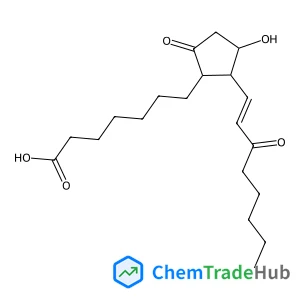
11-脱氢血栓烷 b2の市場動向や研究トレンドはどうですか?
11-脱氢血栓烷 b2は、血栓溶解・抗凝固作用に関する研究で注目を集めています。特に心血管疾患の治療法開発において、市場の需要が高まっています。研究トレンドとし...
67910-12-77-{(2R,3S,4S)-4-Hydr...
化合物よくある質問
3,3-二甲基哌啶-4-酮はどのように保存すればよいですか?
3,3-二甲基哌啶-4-酮は避光、常温、乾燥した場所で保存してください。容器は密閉し、遠くから火源を離して保管することを確認してください。
150668-82-93,3-Dimethyl-4-piper...
掲載誌
Polymer Chemistry

CiteScore:
8.6
自己引用率:
7.3%
年間論文数:
457
Polymer Chemistry welcomes submissions in all areas of polymer science that have a strong focus on macromolecular chemistry. Manuscripts may cover a broad range of fields, yet no direct application focus is required.
おすすめ化合物
![[4-Chloro-3-(diethylcarbamoyl)phenyl]boronic acid structure](https://static.chemtradehub.com/structs/871/871332-68-2-0e3b.webp "[4-Chloro-3-(diethylcarbamoyl)phenyl]boronic acid structure")
おすすめサプライヤー


免責事項
このページに表示される学術雑誌情報は、参考および研究目的のみを目的としています。当社は雑誌出版社とは提携しておらず、投稿の取り扱いも行っておりません。出版に関するお問い合わせは、各雑誌出版社に直接ご連絡ください。
表示されている情報に誤りがある場合は、support@chemtradehub.com までご連絡ください。迅速に確認し、対応いたします。