


Influence of the alkyl side-chain length on the ultrafast vibrational dynamics of 1-alkyl-3-methylimidazolium bis(trifluoromethylsulfonyl)amide (CnmimNTf2) ionic liquids
文献情報
出版日
2017-05-31
DOI
10.1039/C7CP02686B
インパクトファクター
3.676
著者
Mehdi Mohammad Kazemi, Mahesh Namboodiri, Patrice Donfack, Arnulf Materny, Bernd Rathke
原文を見る
要旨
Probing the vibrational dynamics of 1-alkyl-3-methylimidazolium bis(trifluoromethylsulfonyl)amide (CnmimNTf2) ionic liquids (ILs) using femtosecond time-resolved coherent anti-Stokes Raman scattering (fs-CARS) has indicated the ultrafast vibrational energy transfer between counter ions which is governed by interionic interactions and facilitated by hydrogen bonds. In this study, fs-CARS is used to investigate the ultrafast dynamics of the vibrational modes of the CnmimNTf2 ILs with n = 6, 8, 10, and 12 in a spectral region, which involves the imidazolium ring and the alkyl side-chain vibrations. The vibrational Raman modes with wavenumbers around 1418 cm−1 are excited through the CARS process and the ultrafast time evolution of the consequently excited vibrational modes is monitored. The investigation of the life times of the fs-CARS transient signals indicates that the time scale of the dynamics becomes much faster when the alkyl side-chain length of the CnmimNTf2 is longer than n = 8. This observation suggests an increase in the hydrogen bonding interactions due to the nano-structuring of the ionic liquids, which became evident with an increasing length of the alkyl side-chain. This behavior is also found in molecular dynamics simulations. There, an increase of the oxygen density around the C(2)–H moiety of the imidazolium ring, which is the predominant site for hydrogen bond formation, is observed. In other words, the longer the alkyl side-chain, the more reorganization of the ionic liquid into polar and non-polar domains occurs and the higher the probability of finding interionic hydrogen bonds at the C(2)–H position becomes.
おすすめジャーナル

Chemistry Education Research and Practice

Russian Journal of General Chemistry

Current Opinion in Colloid & Interface Science

Nature Medicine

Journal of Natural Medicines

Current Opinion in Solid State & Materials Science

Organic Process Research & Development

Russian Journal of Bioorganic Chemistry

Journal of Saudi Chemical Society

Saudi Pharmaceutical Journal
関連文献
Block copolymers based on 2-methyl- and 2-phenyl-oxazoline by metallocene-mediated cationic ring-opening polymerization: synthesis and characterization
Maria-Evgenia Kourti, Eirini Fega, Marinos Pitsikalis
2016-03-28
Paper
DOI: 10.1039/C6PY00405A
Endothelial mimetic multifunctional surfaces fabricated via polydopamine mediated copper immobilization
Xin Li, Fangyu Shen, Kebing Wang, Shuang Lin, Lei Zhou, Si Chen, Jin Wang, Nan Huang
2018-11-07
Paper
DOI: 10.1039/C8TB01976B
Measuring oxygen surface exchange kinetics on mixed-conducting composites by electrical conductivity relaxation
Bobing Hu, Yunlong Wang, Zhuoying Zhu, Changrong Xia
2015-04-15
Paper
DOI: 10.1039/C5TA00510H
Facile preparation of long-chain aliphatic polycarbonates containing block copolycarbonates via one-pot sequential organic catalyzed polymerization of macrocyclic carbonates and trimethylene carbonates
Bingkun Yan, Jiaqian Hou, Chao Wei, Yan Xiao, Meidong Lang, Farong Huang
2020-02-12
Paper
DOI: 10.1039/D0PY00031K
Fibrous polyaniline@manganese oxide nanocomposites as supercapacitor electrode materials and cathode catalysts for improved power production in microbial fuel cells
Sajid Ali Ansari, Nazish Parveen, Thi Hiep Han, Mohammad Omaish Ansari, Moo Hwan Cho
2016-03-11
Paper
DOI: 10.1039/C6CP00159A
Application of tailored silica microspheres in coatings: synthesis, characterization, thermal and hydrophobic properties
Meng Wang, Qiqi Zeng, Bin Zhao
2013-07-29
Paper
DOI: 10.1039/C3TA12024D
Simultaneous and controlled release of two different bioactive small molecules from nature inspired single material
Adil M. Rather, Arpita Shome, Bibhas K. Bhunia, Aparna Panuganti, Biman B. Mandal, Uttam Manna
2018-10-22
Paper
DOI: 10.1039/C8TB02406E
Superparamagnetic γ-Fe2O3 nanoparticles as an easily recoverable catalyst for the chemical recycling of PET
Leian Bartolome, Muhammad Imran, Kyoung G. Lee, Arvin Sangalang, Jeong Keun Ahn, Do Hyun Kim
2013-10-07
Paper
DOI: 10.1039/C3GC41834K
Macromolecular structure evolution toward giant molecules of complex structure: tandem synthesis of asymmetric giant gemini surfactants
Hao Su, Yiwen Li, Kan Yue, Zhao Wang, Pengtao Lu, Xueyan Feng, Xue-Hui Dong, Shuo Zhang, Stephen Z. D. Cheng
2014-03-24
Paper
DOI: 10.1039/C4PY00107A
Thiourea modified polyethylenimine for efficient gene delivery mediated by the combination of electrostatic interactions and hydrogen bonds
Huayu Tian, Jianxun Ding, Jie Chen, Xuesi Chen
2014-01-29
Paper
DOI: 10.1039/C3PY01781H
こちらもおすすめ
化合物よくある質問
6- bromo-1-cyclopropyl-1H-benzimidazoleの市場動向や研究トレンドはどうですか?
6- bromo-1-cyclopropyl-1H-benzimidazoleは、抗炎症、抗ウイルス作用を持つことが報告されており、新薬開発の研究対象として注目...
1416713-53-56-Bromo-1-cyclopropy...
化合物よくある質問
環氧プロpanol-d5を取り扱う際の実験室安全事項は何ですか?
取り扱う際には、防護眼鏡と手袋を使用し、ドラフトチャンバー内で操作することを推奨します。漏洩時には適切な手順で処理し、安全データシートを常に参照してください。
1246819-20-4Glycidol-d5
化合物よくある質問
2,2’-ジメチル-3,3’-ビピリジンはどのように合成されますか?
2,2’-ジメチル-3,3’-ビピリジンは、ピリジンと2-メチルアクリルアミドを有機合成反応で合成します。この反応では、ピリジンと2-メチルアクリルアミドを含有...
86156-55-02,2’-Dimethyl-3,3’-b...
化合物よくある質問
6-甲基ピリジン-2-ボリック酸の主な用途は何ですか?
6-甲基ピリジン-2-ボリック酸は、合成化学、医薬品合成、以及研究用途などに広く使用され、特に組換えDNA技術や分子生物学の研究において重要な役割を果たします。
372963-50-3(6-Methyl-2-pyridiny...
化合物よくある質問
(R)-3-(1-甲基-2-氧環己基)プロpano酸メチルは安全ですか?
(R)-3-(1-甲基-2-氧環己基)プロpano酸メチルは一定の安全性がありますが、直接的な皮膚接触や吸入は避けるべきです。使用する際は適切な個々の安全データ...
94089-47-1methyl 3-[(1R)-1-met...
化合物よくある質問
ketorolacはどのように保存すればよいですか?
ketorolacは、密封して遮光容器に保管し、直射日光や高温を避けて保存してください。温度は常温で保存し、湿度をなるべく低く保つことが推奨されます。
74103-06-3rac Ketorolac
化合物よくある質問
L-2,3-二氨基丙酸二盐酸盐を取り扱う際の実験室安全事項は何ですか?
L-2,3-二氨基丙酸二盐酸盐は腐食性が強く、皮膚や粘膜に刺激を与える可能性があります。取り扱う際は、防塵マスク、ゴーグル、手袋を使用し、適切な排気設備を使用し...
19777-68-5(S)-2,3-Diaminopropa...
化合物よくある質問
2-(4-溴ピリジン-2-基)乙腈の物理化学的性質は何ですか?
2-(4-溴ピリジン-2-基)乙腈のCAS番号は312325-73-8です。主に結晶形態で存在し、分子量は159.01 g/molです。この化合物は水に溶けやす...
312325-73-8(4-Bromo-2-pyridinyl...
化合物よくある質問
3-フローロ-[1,1-ベンジレン]-3,4-ジカルボン酸を取り扱う際の実験室安全事項は何ですか?
この化合物は毒性は低いですが、直接的な接触や吸入に注意が必要です。PPE(個人防護具)を着用し、ドラフトチャンバーを使用して操作することを推奨します。また、漏洩...
1261915-32-53'-Fluoro-[1,1'-biph...
化合物よくある質問
3-(1-氧代-1,3-二氢-2H-2-异吲哚)丙酸の主な用途は何ですか?
3-(1-氧代-1,3-二氢-2H-2-异吲哚)丙酸は、薬理学研究や医薬品製造において広く用いられる化合物です。また、工業的な用途でも一部の化学反応の触媒や助剤...
83747-30-23-(1-Oxo-1,3-dihydro...
掲載誌
Physical Chemistry Chemical Physics

CiteScore:
5.5
自己引用率:
10.3%
年間論文数:
3036
Physical Chemistry Chemical Physics (PCCP) is an international journal co-owned by 19 physical chemistry and physics societies from around the world. This journal publishes original, cutting-edge research in physical chemistry, chemical physics and biophysical chemistry. To be suitable for publication in PCCP, articles must include significant innovation and/or insight into physical chemistry; this is the most important criterion that reviewers and Editors will judge against when evaluating submissions. The journal has a broad scope and welcomes contributions spanning experiment, theory, computation and data science. Topical coverage includes spectroscopy, dynamics, kinetics, statistical mechanics, thermodynamics, electrochemistry, catalysis, surface science, quantum mechanics, quantum computing and machine learning. Interdisciplinary research areas such as polymers and soft matter, materials, nanoscience, energy, surfaces/interfaces, and biophysical chemistry are welcomed if they demonstrate significant innovation and/or insight into physical chemistry. Joined experimental/theoretical studies are particularly appreciated when complementary and based on up-to-date approaches.
おすすめ化合物
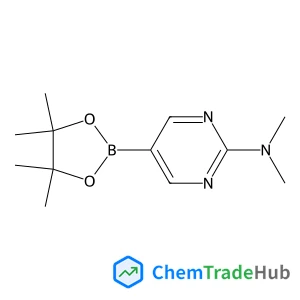
N,N-Dimethyl-5-(4,4,5,5-tetramethyl-1,3,2-dioxaborolan-2-yl)-2-pyrimidinamine
CAS番号:
1032759-30-0
分子式:
C12H20BN3O2
おすすめサプライヤー





免責事項
このページに表示される学術雑誌情報は、参考および研究目的のみを目的としています。当社は雑誌出版社とは提携しておらず、投稿の取り扱いも行っておりません。出版に関するお問い合わせは、各雑誌出版社に直接ご連絡ください。
表示されている情報に誤りがある場合は、support@chemtradehub.com までご連絡ください。迅速に確認し、対応いたします。