












Endothelial mimetic multifunctional surfaces fabricated via polydopamine mediated copper immobilization
文献情報
出版日
2018-11-07
DOI
10.1039/C8TB01976B
インパクトファクター
6.331
著者
Xin Li, Fangyu Shen, Kebing Wang, Shuang Lin, Lei Zhou, Si Chen, Jin Wang, Nan Huang
原文を見る
要旨
Nitric oxide (NO), which is continuously released from the normal healthy endodermis cell layer of the vascular system, plays a crucial role in the stability and health maintenance of blood vessels. It is one of the most important gaseous signaling molecules and regulates cardiovascular homeostasis, inhibits blood clotting and intimal hyperplasia, and prevents atherosclerosis. Insufficient NO production is often observed in atherosclerosis lesions. In this work, a NO-generating bioactive coating built by a polydopamine film (PDA) and a copper ion was fabricated. The coating (Cu/PDA) had glutathione peroxidase (GPx)-like activity and was able to catalyze NO release from S-nitrosothiols (RSNOs) due to the catalytic activity of the copper ion. It was also capable of catalyzing RSNO decomposition and NO production. The copper ion was embedded in the PDA coating to ensure the effectiveness of long-term NO-catalytic activity. The surface exhibited a favorable suppression of vascular smooth muscle cell (VSMC) proliferation and also efficiently reduced thrombosis formation. Additionally, the NO catalytic surface had a positive influence on endothelial cell (EC) growth behavior. The in vivo study verified that the modified surface promoted healthy endothelium formation and suppressed intimal hyperplasia, which is conducive to re-endothelialization and for reducing restenosis of vascular stents. This work provides a potential strategy for the development of novel cardiovascular implants.
おすすめジャーナル
関連文献
Rapidly thiol-responsive degradable block copolymer nanocarriers with facile bioconjugation
Samuel Aleksanian, Behnoush Khorsand, Rolf Schmidt, Jung Kwon Oh
2012-04-18
Paper
DOI: 10.1039/C2PY20154B
From one-pot stabilisation to in situ functionalisation in nitroxide mediated polymerisation: an efficient extension towards atom transfer radical polymerisation
Lionel Petton, Andrés E. Ciolino, Bart Dervaux, Filip E. Du Prez
2012-02-03
Paper
DOI: 10.1039/C2PY00444E
The scope for synthesis of macro-RAFT agents by sequential insertion of single monomer units
Shadi Houshyar, Daniel J. Keddie, Graeme Moad, Roger J. Mulder, Simon Saubern, John Tsanaktsidis
2012-01-17
Paper
DOI: 10.1039/C2PY00529H
Interaction energy and polymer density profile in nanocomposites: a coarse grain simulation based on interaction stress
Meysam Rahmat, Hossein Ghiasi, Pascal Hubert
2012-02-21
Paper
DOI: 10.1039/C2PY00532H
Thermally reversible Diels–Alder-based polymerization: an experimental and theoretical assessment
Jiawen Zhou, Nathalie K. Guimard, Andrew J. Inglis, Mansoor Namazian, Ching Y. Lin, Michelle L. Coote, Emmanouil Spyrou, Stefan Hilf, Friedrich Georg Schmidt, Christopher Barner-Kowollik
2011-10-26
Paper
DOI: 10.1039/C1PY00356A
Spectroscopic study of side-chain melting and crystallization of regioregular poly(3-dodecylthiophene)
Yan Guo, Ying Jin, Zhaohui Su
2012-02-03
Communication
DOI: 10.1039/C2PY00582D
Degradable graft copolymers by ring-opening and reverse addition–fragmentation chain transfer polymerization
Rebecca J. Williams, Rachel K. O'Reilly, Andrew P. Dove
2012-05-24
Paper
DOI: 10.1039/C2PY20213A
Formation of spherical nanoparticles in poly(amic acid) films
Tomohito Ogura, Yuta Saito, Tomoya Higashihara, Mitsuru Ueda
2012-05-25
Paper
DOI: 10.1039/C2PY20093G
こちらもおすすめ
化合物よくある質問
6- bromo-1-cyclopropyl-1H-benzimidazoleの市場動向や研究トレンドはどうですか?
6- bromo-1-cyclopropyl-1H-benzimidazoleは、抗炎症、抗ウイルス作用を持つことが報告されており、新薬開発の研究対象として注目...
1416713-53-56-Bromo-1-cyclopropy...
化合物よくある質問
環氧プロpanol-d5を取り扱う際の実験室安全事項は何ですか?
取り扱う際には、防護眼鏡と手袋を使用し、ドラフトチャンバー内で操作することを推奨します。漏洩時には適切な手順で処理し、安全データシートを常に参照してください。
1246819-20-4Glycidol-d5
化合物よくある質問
2,2’-ジメチル-3,3’-ビピリジンはどのように合成されますか?
2,2’-ジメチル-3,3’-ビピリジンは、ピリジンと2-メチルアクリルアミドを有機合成反応で合成します。この反応では、ピリジンと2-メチルアクリルアミドを含有...
86156-55-02,2’-Dimethyl-3,3’-b...
化合物よくある質問
6-甲基ピリジン-2-ボリック酸の主な用途は何ですか?
6-甲基ピリジン-2-ボリック酸は、合成化学、医薬品合成、以及研究用途などに広く使用され、特に組換えDNA技術や分子生物学の研究において重要な役割を果たします。
372963-50-3(6-Methyl-2-pyridiny...
化合物よくある質問
(R)-3-(1-甲基-2-氧環己基)プロpano酸メチルは安全ですか?
(R)-3-(1-甲基-2-氧環己基)プロpano酸メチルは一定の安全性がありますが、直接的な皮膚接触や吸入は避けるべきです。使用する際は適切な個々の安全データ...
94089-47-1methyl 3-[(1R)-1-met...
化合物よくある質問
ketorolacはどのように保存すればよいですか?
ketorolacは、密封して遮光容器に保管し、直射日光や高温を避けて保存してください。温度は常温で保存し、湿度をなるべく低く保つことが推奨されます。
74103-06-3rac Ketorolac
化合物よくある質問
L-2,3-二氨基丙酸二盐酸盐を取り扱う際の実験室安全事項は何ですか?
L-2,3-二氨基丙酸二盐酸盐は腐食性が強く、皮膚や粘膜に刺激を与える可能性があります。取り扱う際は、防塵マスク、ゴーグル、手袋を使用し、適切な排気設備を使用し...
19777-68-5(S)-2,3-Diaminopropa...
化合物よくある質問
2-(4-溴ピリジン-2-基)乙腈の物理化学的性質は何ですか?
2-(4-溴ピリジン-2-基)乙腈のCAS番号は312325-73-8です。主に結晶形態で存在し、分子量は159.01 g/molです。この化合物は水に溶けやす...
312325-73-8(4-Bromo-2-pyridinyl...
化合物よくある質問
3-フローロ-[1,1-ベンジレン]-3,4-ジカルボン酸を取り扱う際の実験室安全事項は何ですか?
この化合物は毒性は低いですが、直接的な接触や吸入に注意が必要です。PPE(個人防護具)を着用し、ドラフトチャンバーを使用して操作することを推奨します。また、漏洩...
1261915-32-53'-Fluoro-[1,1'-biph...
化合物よくある質問
3-(1-氧代-1,3-二氢-2H-2-异吲哚)丙酸の主な用途は何ですか?
3-(1-氧代-1,3-二氢-2H-2-异吲哚)丙酸は、薬理学研究や医薬品製造において広く用いられる化合物です。また、工業的な用途でも一部の化学反応の触媒や助剤...
83747-30-23-(1-Oxo-1,3-dihydro...
掲載誌
Journal of Materials Chemistry B
CiteScore:
12
自己引用率:
4.9%
年間論文数:
831
Journal of Materials Chemistry A, B & C cover high quality studies across all fields of materials chemistry. The journals focus on those theoretical or experimental studies that report new understanding, applications, properties and synthesis of materials. The journals have a strong history of publishing quality reports of interest to interdisciplinary communities and providing an efficient and rigorous service through peer review and publication. The journals are led by an international team of Editors-in-Chief and Associate Editors who are all active researchers in their fields. Journal of Materials Chemistry A, B & C are separated by the intended application of the material studied. Broadly, applications in energy and sustainability are of interest to Journal of Materials Chemistry A, applications in biology and medicine are of interest to Journal of Materials Chemistry B, and applications in optical, magnetic and electronic devices are of interest to Journal of Materials Chemistry C. More than one Journal of Materials Chemistry journal may be suitable for certain fields and researchers are encouraged to submit their paper to the journal that they feel best fits for their particular article. Example topic areas within the scope of Journal of Materials Chemistry B are listed below. This list is neither exhaustive nor exclusive. Antifouling coatings Biocompatible materials Bioelectronics Bioimaging Biomimetics Biomineralisation Bionics Biosensors Diagnostics Drug delivery Gene delivery Immunobiology Nanomedicine Regenerative medicine & Tissue engineering Scaffolds Soft robotics Stem cells Therapeutic devices image block All articles published in Journal of Materials Chemistry B from 2019 onwards will be indexed in MEDLINE®. Articles that primarily focus on providing insight into the underlying science and performance of biomaterials within a biological environment are more suited to our companion journal, Biomaterials Science.
おすすめ化合物
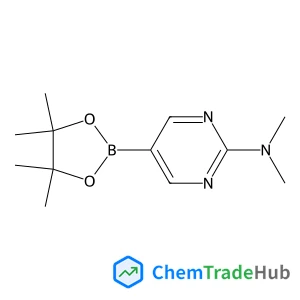
N,N-Dimethyl-5-(4,4,5,5-tetramethyl-1,3,2-dioxaborolan-2-yl)-2-pyrimidinamine
CAS番号:
1032759-30-0
分子式:
C12H20BN3O2
おすすめサプライヤー



免責事項
このページに表示される学術雑誌情報は、参考および研究目的のみを目的としています。当社は雑誌出版社とは提携しておらず、投稿の取り扱いも行っておりません。出版に関するお問い合わせは、各雑誌出版社に直接ご連絡ください。
表示されている情報に誤りがある場合は、support@chemtradehub.com までご連絡ください。迅速に確認し、対応いたします。