


Facile preparation of long-chain aliphatic polycarbonates containing block copolycarbonates via one-pot sequential organic catalyzed polymerization of macrocyclic carbonates and trimethylene carbonates
文献情報
出版日
2020-02-12
DOI
10.1039/D0PY00031K
インパクトファクター
5.582
著者
Bingkun Yan, Jiaqian Hou, Chao Wei, Yan Xiao, Meidong Lang, Farong Huang
原文を見る
要旨
The synthesis of block copolycarbonates is still a challenge because of the fast occurrence of intra- and intermolecular transesterification reactions during ring-opening polymerization. In this context, we report the synthesis of block copolycarbonates by delicately designing and taking advantage of the differences in polymerization between macrocyclic carbonates and small cyclic carbonates. Firstly, four macrocyclic carbonates containing different numbers of methylenes are prepared and subsequently polymerized by using a TBD/alcohol system, which shows an efficient activity at elevated temperatures and inefficient performance at room temperature. Inspired by this result, block copolycarbonates can be easily prepared by the sequential addition of monomers, polymerizing macrocyclic carbonates at 70 °C and subsequently polymerizing TMC at room temperature, as evidenced by 1H NMR and 13C NMR spectroscopy and DSC characterization. In particular, changing the polymerization temperature or monomer addition methods, such as polymerizing two monomers at 70 °C by sequential addition or polymerizing TMC at room temperature and subsequently polymerizing macrocyclic carbonates at 70 °C, only leads to the formation of random copolymers. Besides, the block copolycarbonates would gradually transform into random structures with an increase in reaction time due to the significantly increased rate of transesterification. These results highlight the key role of reaction conditions such as reaction temperature, monomer addition sequence and reaction time in the formation of block copolycarbonates.
おすすめジャーナル

Journal of Organometallic Chemistry

Israel Journal of Chemistry

Pharmacological Reviews

Russian Chemical Reviews

Journal of Catalysis

Proceedings of the National Academy of Sciences of the United States of America

European Journal of Wood and Wood Products

Helvetica Chimica Acta

Planta Medica

Science Progress
関連文献
A pore-expanded supramolecular organic framework and its enrichment of photosensitizers and catalysts for visible-light-induced hydrogen production
Meng Yan, Xu-Bo Liu, Zhong-Zheng Gao, Yi-Peng Wu, Jun-Li Hou, Hui Wang, Dan-Wei Zhang, Yi Liu, Zhan-Ting Li
2019-04-16
Research Article
DOI: 10.1039/C9QO00382G
Endo/exo binding of alkyl and aryl diammonium ions by cyclopentanocucurbit[6]uril
Yun-Xia Qu, Rui-Lian Lin, Yun-Qian Zhang, Kai-Zhi Zhou, Qing-Di Zhou, Qian-Jiang Zhu, Zhu Tao, Pei-Hua Ma, Jing-Xin Liu, Gang Wei
2017-06-12
Research Article
DOI: 10.1039/C7QO00376E
Correction: Copper-catalyzed direct C–H phosphorylation of N-imino isoquinolinium ylides with H-phosphonates
Xin-Chen Zhan, Yu-Yuan Hei, Jian-Lan Song, Peng-Cheng Qian, Xing-Guo Zhang, Chen-Liang Deng
2019-05-15
Correction
DOI: 10.1039/C9QO90046B
Outstanding Reviewers for Organic Chemistry Frontiers in 2018
2019-04-12
Editorial
DOI: 10.1039/C9QO90039J
Correction: Functionalisable acyclic cucurbiturils
Daniel Bauer, Beatrice Andrae, Patrick Gaß, Danjano Trenz, Sabine Becker, Stefan Kubik
2019-03-18
Correction
DOI: 10.1039/C9QO90027F
Visible light driven, nickel-catalyzed aryl esterification using a triplet photosensitiser thioxanthen-9-one
Da-Liang Zhu, Hong-Xi Li, Ze-Ming Xu, Hai-Yan Li, David J. Young, Jian-Ping Lang
2019-05-16
Research Article
DOI: 10.1039/C9QO00536F
A facile approach to ketones via Pd-catalyzed sequential carbonylation of olefins with formic acid
Wenju Chang, Jie Dai, Jingfu Li, Yuan Shi, Wenlong Ren
2017-02-22
Research Article
DOI: 10.1039/C7QO00111H
こちらもおすすめ
化合物よくある質問
6- bromo-1-cyclopropyl-1H-benzimidazoleの市場動向や研究トレンドはどうですか?
6- bromo-1-cyclopropyl-1H-benzimidazoleは、抗炎症、抗ウイルス作用を持つことが報告されており、新薬開発の研究対象として注目...
1416713-53-56-Bromo-1-cyclopropy...
化合物よくある質問
環氧プロpanol-d5を取り扱う際の実験室安全事項は何ですか?
取り扱う際には、防護眼鏡と手袋を使用し、ドラフトチャンバー内で操作することを推奨します。漏洩時には適切な手順で処理し、安全データシートを常に参照してください。
1246819-20-4Glycidol-d5
化合物よくある質問
2,2’-ジメチル-3,3’-ビピリジンはどのように合成されますか?
2,2’-ジメチル-3,3’-ビピリジンは、ピリジンと2-メチルアクリルアミドを有機合成反応で合成します。この反応では、ピリジンと2-メチルアクリルアミドを含有...
86156-55-02,2’-Dimethyl-3,3’-b...
化合物よくある質問
6-甲基ピリジン-2-ボリック酸の主な用途は何ですか?
6-甲基ピリジン-2-ボリック酸は、合成化学、医薬品合成、以及研究用途などに広く使用され、特に組換えDNA技術や分子生物学の研究において重要な役割を果たします。
372963-50-3(6-Methyl-2-pyridiny...
化合物よくある質問
(R)-3-(1-甲基-2-氧環己基)プロpano酸メチルは安全ですか?
(R)-3-(1-甲基-2-氧環己基)プロpano酸メチルは一定の安全性がありますが、直接的な皮膚接触や吸入は避けるべきです。使用する際は適切な個々の安全データ...
94089-47-1methyl 3-[(1R)-1-met...
化合物よくある質問
ketorolacはどのように保存すればよいですか?
ketorolacは、密封して遮光容器に保管し、直射日光や高温を避けて保存してください。温度は常温で保存し、湿度をなるべく低く保つことが推奨されます。
74103-06-3rac Ketorolac
化合物よくある質問
L-2,3-二氨基丙酸二盐酸盐を取り扱う際の実験室安全事項は何ですか?
L-2,3-二氨基丙酸二盐酸盐は腐食性が強く、皮膚や粘膜に刺激を与える可能性があります。取り扱う際は、防塵マスク、ゴーグル、手袋を使用し、適切な排気設備を使用し...
19777-68-5(S)-2,3-Diaminopropa...
化合物よくある質問
2-(4-溴ピリジン-2-基)乙腈の物理化学的性質は何ですか?
2-(4-溴ピリジン-2-基)乙腈のCAS番号は312325-73-8です。主に結晶形態で存在し、分子量は159.01 g/molです。この化合物は水に溶けやす...
312325-73-8(4-Bromo-2-pyridinyl...
化合物よくある質問
3-フローロ-[1,1-ベンジレン]-3,4-ジカルボン酸を取り扱う際の実験室安全事項は何ですか?
この化合物は毒性は低いですが、直接的な接触や吸入に注意が必要です。PPE(個人防護具)を着用し、ドラフトチャンバーを使用して操作することを推奨します。また、漏洩...
1261915-32-53'-Fluoro-[1,1'-biph...
化合物よくある質問
3-(1-氧代-1,3-二氢-2H-2-异吲哚)丙酸の主な用途は何ですか?
3-(1-氧代-1,3-二氢-2H-2-异吲哚)丙酸は、薬理学研究や医薬品製造において広く用いられる化合物です。また、工業的な用途でも一部の化学反応の触媒や助剤...
83747-30-23-(1-Oxo-1,3-dihydro...
掲載誌
Polymer Chemistry

CiteScore:
8.6
自己引用率:
7.3%
年間論文数:
457
Polymer Chemistry welcomes submissions in all areas of polymer science that have a strong focus on macromolecular chemistry. Manuscripts may cover a broad range of fields, yet no direct application focus is required.
おすすめ化合物
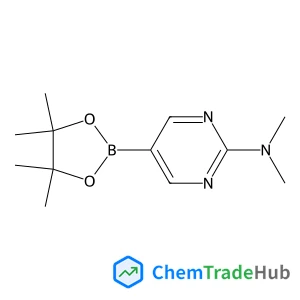
N,N-Dimethyl-5-(4,4,5,5-tetramethyl-1,3,2-dioxaborolan-2-yl)-2-pyrimidinamine
CAS番号:
1032759-30-0
分子式:
C12H20BN3O2
おすすめサプライヤー




免責事項
このページに表示される学術雑誌情報は、参考および研究目的のみを目的としています。当社は雑誌出版社とは提携しておらず、投稿の取り扱いも行っておりません。出版に関するお問い合わせは、各雑誌出版社に直接ご連絡ください。
表示されている情報に誤りがある場合は、support@chemtradehub.com までご連絡ください。迅速に確認し、対応いたします。