












Surface cleaning of artworks: structure and dynamics of nanostructured fluids confined in polymeric hydrogel networks
文献情報
出版日
2017-06-05
DOI
10.1039/C7CP02662E
インパクトファクター
3.676
著者
Rosangela Mastrangelo, Costanza Montis, Nicole Bonelli, Paolo Tempesti, Piero Baglioni
原文を見る
要旨
Nanosystems and confinement tools for the controlled release of a cleaning agent, e.g., hydrogels and microemulsions, have been used for several years for the treatment of delicate surfaces in art restoration interventions. However, notwithstanding the unprecedented achievements from an application point of view, a fundamental comprehension of their interaction mechanism is still lacking. In this study PVA hydrogels, obtained via freeze–thaw processes, are prepared as scaffolds for water-based nanostructured fluids for application in the cleaning of artworks: rheological, thermal, microscopic and scattering techniques showed that, depending on the number of freeze–thaw cycles, the hydrogels exhibit different physicochemical and viscoelastic properties, making them suitable for application in a broad range of cleaning issues. The gels have been loaded with an oil-in-water microemulsion and the diffusion of the microemulsion droplets inside the polymeric network has been investigated through Fluorescence Correlation Spectroscopy (FCS), demonstrating that the microemulsion is permanently kept inside the matrix and can freely diffuse in the network. In addition, we show that when the gel-microemulsion system is put in contact with a layer of hydrophobic grime, a dynamic interaction between the microemulsion droplets and the underlying layer is established, leading to the solubilization of the hydrophobic molecules inside the droplets in the gel matrix. Thus, for the first time, through FCS, insights into the removal mechanism of hydrophobic grime upon interaction with a cleaning agent embedded in the polymeric matrix are obtained.
関連文献
Testing gold nanostructures fabricated by hole-mask colloidal lithography as potential substrates for SERS sensors: sensitivity, signal variability, and the aspect of adsorbate deposition
Vlastimil Peksa, Petra Lebrušková, Hana Šípová, Josef Štěpánek, Jiří Bok, Jiří Homola, Marek Procházka
2016-06-22
Paper
DOI: 10.1039/C6CP02752K
Polarization-driven catalysis via ferroelectric oxide surfaces
2016-06-29
Paper
DOI: 10.1039/C6CP03170F
Direct planting of ultrafine MoO2+δ nanoparticles in carbon nanofibers by electrospinning: self-supported mats as binder-free and long-life anodes for lithium-ion batteries
Xiaoxiao Liu, Henghui Xu, Yunhui Huang, Xianluo Hu
2016-06-27
Paper
DOI: 10.1039/C6CP01806H
Ab initio studies on the spin-forbidden cooling transitions of the LiRb molecule
Yang You, Chuan-Lu Yang, Qing-Qing Zhang, Mei-Shan Wang, Xiao-Guang Ma, Wen-Wang Liu
2016-05-26
Paper
DOI: 10.1039/C6CP01618A
Distribution and self-assisted diffusion of Be and Mg impurities in ZnO
Dingyu Yong, Haiyan He, Bicai Pan
2016-06-29
Paper
DOI: 10.1039/C6CP03256G
Non-linear photoelectron effect contributes to the formation of negative matrix ions in UV-MALDI
E. Alonso, R. Zenobi
2016-04-26
Paper
DOI: 10.1039/C6CP00649C
Liquid self-diffusion of H2O and DMF molecules in Co-MOF-74: molecular dynamics simulations and dielectric spectroscopy studies
J. M. Bermúdez-García, J. M. Vicent-Luna, S. Yáñez-Vilar, S. Hamad, M. Sánchez-Andújar, S. Castro-García, S. Calero, M. A. Señarís-Rodríguez
2016-06-08
Paper
DOI: 10.1039/C6CP02477G
Homogeneity and elemental distribution in self-assembled bimetallic Pd–Pt aerogels prepared by a spontaneous one-step gelation process
W. Liu, M. Nachtegaal, A. I. Frenkel, B. Rutkowski, M. Werheid, A.-K. Herrmann, C. Laugier-Bonnaud, H.-C. Yilmaz, N. Gaponik, A. Czyrska-Filemonowicz, A. Eychmüller
2016-07-01
Paper
DOI: 10.1039/C6CP03527B
Hydrogen bond cooperativity and anticooperativity within the water hexamer
José Manuel Guevara-Vela, Eduardo Romero-Montalvo, Víctor Arturo Mora Gómez, Rodrigo Chávez-Calvillo, Marco García-Revilla, Evelio Francisco, Ángel Martín Pendás, Tomás Rocha-Rinza
2016-04-22
Paper
DOI: 10.1039/C6CP00763E
The effects of cation–anion clustering on defect migration in MgAl2O4
Richard J. Zamora, Arthur F. Voter, Danny Perez, Romain Perriot, Blas P. Uberuaga
2016-06-28
Paper
DOI: 10.1039/C6CP03931F
こちらもおすすめ
化合物よくある質問
間溴苯甲酰腈の市場動向や研究トレンドはどうですか?
間 brom 苯甲酰腈は、合成化学や薬物化学において重要な Intermediate として使用されています。市場動向としては、その合成性と機能性により、研究開...
24999-51-7(3-Bromophenyl)(oxo)...
287966-62-5Desulfo Glucoraphani...
化合物よくある質問
Methyl 2-amino-5-(trifluoromethyl)benzoateに適用される法規ガイドラインは何ですか?
CAS番号117324-58-0の塩酸メチル2アミノ-5-トリフルオロメチルベンゼートは、GHS分類により腐食性物質と判定されます。REACH規則では、製造、販...
117324-58-0Methyl 2-amino-5-(tr...
化合物よくある質問
3-ブロモ-1,3,4,5-四水化-2H-1-ベンザアゼピン-2-オンは安全ですか?
毒性があるため、適切な安全対策が必須です。皮膚や粘膜への刺激性が強く、吸入や誤飲により健康被害を引き起こす可能性があります。取扱時にはガスマスクや手袋、眼鏡を使...
86499-96-93-Bromo-1,3,4,5-tetr...
化合物よくある質問
三氟甲基ピリジン-2-甲アミン塩酸塩は安全ですか?
三氟甲基ピリジン-2-甲アミン塩酸塩は安全性に注意が必要です。毒性は低レベルですが、直接的接触や吸入は避けるべきです。適切な手袋や防塵マスクを着用し、密閉された...
871826-12-9(5-(Trifluoromethyl)...
化合物よくある質問
1-エチル-4-(4-硝基フェニル)ピペリジンは安全ですか?
1-エチル-4-(4-硝基フェニル)ピペリジンは有毒であり、取扱には注意が必要です。保管や作業中に手袋を着用し、目や皮膚に接触しないように注意する必要があります...
115619-00-61-Ethyl-4-(4-nitroph...
化合物よくある質問
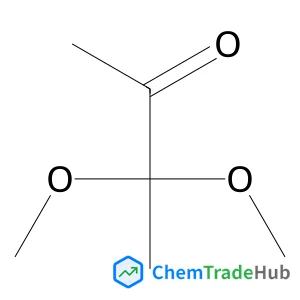
1,1-ジメトキシプロパン-2-オンは安全ですか?
1,1-ジメトキシプロパン-2-オンは一般的に低毒性ですが、皮膚や目への刺激性があるため、取扱いには注意が必要です。蒸気や液体の吸入には有害な可能性があり、適切...
6342-56-91,1-dimethoxypropan-...
化合物よくある質問
コバルト(II) 3,3'-{[(1S,2S)-1,2-ジメチルフENCYCLICALE-1,2-エチエンジイル]ビス[ニトロリルメチルイリデン]}ビス[4-オキソ-2-ペンテン-2-olate]について「に適用される法規ガイドラインは何ですか?
この化合物はCAS番号259259-80-8に対応しています。GHS分類では、毒性、燃焼性、反応性、炎症性を考慮に入れ、適切な危険性分類が行われます。REACH...
259259-80-8Cobalt(2+) (2E,2'E)-...
化合物よくある質問
「カーバミル酸, N-[8-[[2-[[2-(2,6-ジオキソ-3-ピペリジニル)-2,3-ジオキソ-1,3-ジヒドロ-1H-イソイソインドール-4-イルオキシ]アセチル]アミノ]オクチル]-1,1-ジメチレチルエステル」はどのように保存すればよいですか?
この化合物は、冷却庫で-20℃の温度、乾燥した容器に保管し、直日光から保護する必要があります。湿度の高い環境や高温は避けてください。
1950635-34-32-Methyl-2-propanyl ...
1433975-21-3FMoc-D-4-Aph(tBu-CbM...
掲載誌
Physical Chemistry Chemical Physics

CiteScore:
5.5
自己引用率:
10.3%
年間論文数:
3036
Physical Chemistry Chemical Physics (PCCP) is an international journal co-owned by 19 physical chemistry and physics societies from around the world. This journal publishes original, cutting-edge research in physical chemistry, chemical physics and biophysical chemistry. To be suitable for publication in PCCP, articles must include significant innovation and/or insight into physical chemistry; this is the most important criterion that reviewers and Editors will judge against when evaluating submissions. The journal has a broad scope and welcomes contributions spanning experiment, theory, computation and data science. Topical coverage includes spectroscopy, dynamics, kinetics, statistical mechanics, thermodynamics, electrochemistry, catalysis, surface science, quantum mechanics, quantum computing and machine learning. Interdisciplinary research areas such as polymers and soft matter, materials, nanoscience, energy, surfaces/interfaces, and biophysical chemistry are welcomed if they demonstrate significant innovation and/or insight into physical chemistry. Joined experimental/theoretical studies are particularly appreciated when complementary and based on up-to-date approaches.
おすすめ化合物
![(1R,3S,5R)-2-{[(2-Methyl-2-propanyl)oxy]carbonyl}-2-azabicyclo[3.1.0]hexane-3-carboxylic acid structure](https://static.chemtradehub.com/structs/197/197142-34-0-6a44.webp "(1R,3S,5R)-2-{[(2-Methyl-2-propanyl)oxy]carbonyl}-2-azabicyclo[3.1.0]hexane-3-carboxylic acid structure")
おすすめサプライヤー







免責事項
このページに表示される学術雑誌情報は、参考および研究目的のみを目的としています。当社は雑誌出版社とは提携しておらず、投稿の取り扱いも行っておりません。出版に関するお問い合わせは、各雑誌出版社に直接ご連絡ください。
表示されている情報に誤りがある場合は、support@chemtradehub.com までご連絡ください。迅速に確認し、対応いたします。