


Homogeneity and elemental distribution in self-assembled bimetallic Pd–Pt aerogels prepared by a spontaneous one-step gelation process
文献情報
出版日
2016-07-01
DOI
10.1039/C6CP03527B
インパクトファクター
3.676
著者
W. Liu, M. Nachtegaal, A. I. Frenkel, B. Rutkowski, M. Werheid, A.-K. Herrmann, C. Laugier-Bonnaud, H.-C. Yilmaz, N. Gaponik, A. Czyrska-Filemonowicz, A. Eychmüller
原文を見る
要旨
Multi-metallic aerogels have recently emerged as a novel and promising class of unsupported electrocatalyst materials due to their high catalytic activity and improved durability for various electrochemical reactions. Aerogels can be prepared by a spontaneous one-step gelation process, where the chemical co-reduction of metal precursors and the prompt formation of nanochain-containing hydrogels, as a preliminary stage for the preparation of aerogels, take place. However, detailed knowledge about the homogeneity and chemical distribution of these three-dimensional Pd–Pt aerogels at the nano-scale as well as at the macro-scale is still unclear. Therefore, we used a combination of spectroscopic and microscopic techniques to obtain a better insight into the structure and elemental distribution of the various Pd-rich Pd–Pt aerogels prepared by the spontaneous one-step gelation process. Synchrotron-based extended X-ray absorption fine structure (EXAFS) spectroscopy and high-angle annular dark-field (HAADF) scanning transmission electron microscopy (STEM) in combination with energy-dispersive X-ray spectroscopy (EDX) were employed in this work to uncover the structural architecture and chemical composition of the various Pd-rich Pd–Pt aerogels over a broad length range. The Pd80Pt20, Pd60Pt40 and Pd50Pt50 aerogels showed heterogeneity in the chemical distribution of the Pt and Pd atoms inside the macroscopic nanochain-network. The features of mono-metallic clusters were not detected by EXAFS or STEM-EDX, indicating alloyed nanoparticles. However, the local chemical composition of the Pd–Pt alloys strongly varied along the nanochains and thus within a single aerogel. To determine the electrochemically active surface area (ECSA) of the Pd–Pt aerogels for application in electrocatalysis, we used the electrochemical CO stripping method. Due to their high porosity and extended network structure, the resulting values of the ECSA for the Pd–Pt aerogels were higher than that for a commercially available unsupported Pt black catalyst. We show that the Pd–Pt aerogels possess a high utilization of catalytically active centers for electrocatalytic applications based on the nanostructured bimetallic framework. Knowledge about the homogeneity and chemical distribution of the bimetallic aerogels can help to further optimize their preparation by the spontaneous one-step gelation process and to tune their electrocatalytic reactivity.
おすすめジャーナル

Bioorganic & Medicinal Chemistry

Heteroatom Chemistry

NDT & E International

Herald of the Russian Academy of Sciences

Journal of the Indian Institute of Science

Cellulose

Electroanalysis

Critical Reviews in Solid State and Materials Sciences

Journal of Chemical Sciences

Journal of Asian Natural Products Research
関連文献
Two mixed-valence copper(i,ii) imidazolate coordination polymers: metal-valence tuning approach for new topological structures
Jie-Peng Zhang, Yan-Yong Lin, Xiao-Lan Yu, Xiao-Ming Chen
2004-04-01
Communication
DOI: 10.1039/B401691B
Dye-sensitized solar cells based on composite solid polymer electrolytes
Moon-Sung Kang, Jong Hak Kim, Young Jin Kim, Jongok Won, Nam-Gyu Park, Yong Soo Kang
2004-12-20
Communication
DOI: 10.1039/B412129P
Hydrogenation of olefins using ligand-stabilized palladium nanoparticles in an ionic liquid
Jun Huang, Tao Jiang, Buxing Han, Haixiang Gao, Yanhong Chang, Guoying Zhao, Weize Wu
2003-06-06
Communication
DOI: 10.1039/B302750C
Mechanism of ruthenium-catalyzed hydrogen transfer reactions. Evidence for a stepwise transfer of CH and NH hydrogens from an amine to a (cyclopentadienone)ruthenium complex
Alida H. Éll, Jeffrey B. Johnson, Jan-E. Bäckvall
2003-06-10
Communication
DOI: 10.1039/B303258B
Solvent-free, direct synthesis of supramolecular nano-capsules
Jochen Antesberger, Gareth W. V. Cave, Matthew C. Ferrarelli, Michael W. Heaven, Colin L. Raston, Jerry L. Atwood
2005-01-21
Communication
DOI: 10.1039/B412251H
Electrodeposition of ferrocenoyl peptide disulfides
Grzegorz A. Orlowski, Somenath Chowdhury, Yi-Tao Long, Todd C. Sutherland, Heinz-Bernhard Kraatz
2005-01-20
Communication
DOI: 10.1039/B415278F
Conformational effects in enzyme catalysis: QM/MM free energy calculation of the ‘NAC’ contribution in chorismate mutase
Kara E. Ranaghan, Adrian J. Mulholland
2004-04-27
Communication
DOI: 10.1039/B402388A
Using ring strain to inhibit a decomposition path: first synthesis of an Alkyl-BIAN ligand (Alkyl-BIAN = bis(alkyl)acenaphthenequinonediimine)
Fabio Ragaini, Michela Gasperini, Emma Gallo, Piero Macchi
2005-01-10
Communication
DOI: 10.1039/B415767B
“Uncorking” of liposomes by matrix metalloproteinase-9
Nihar R. Sarkar, Theresa Rosendahl, Aaron B. Krueger, Abir L. Banerjee, Keith Benton, Sanku Mallik, D. K. Srivastava
2005-01-10
Communication
DOI: 10.1039/B416827E
Enantioselective total synthesis of pteridic acid A
Takashi Nakahata, Shigefumi Kuwahara
2005-01-05
Communication
DOI: 10.1039/B416309E
こちらもおすすめ
化合物よくある質問
2-メトキシ-4-(メチルスルフィニル)アミンの主な用途は何ですか?
2-メトキシ-4-(メチルスルフィニル)アミンは、主に医薬品および農薬の製造に使用されます。また、合成化学の一部として研究用材料としても利用されます。
41608-73-52-Methoxy-4-(methyls...
118684-13-24-(Bromomethyl)-3-me...
化合物よくある質問
4,6-二氯-N-甲基ピラミジンアミンの代替品はありますか?
代替品としては、4,6-二クロロピラミジンアミンや他のピラミジン系化合物が考えられます。ただし、目的と用途によって最適な代替品は異なります。
10397-15-64,6-Dichloro-N-methy...
化合物よくある質問
6-氯-4-甲基-1H-吲哚を含む廃棄物はどのように処理すべきですか?
6-氯-4-甲基-1H-吲哚の廃棄物は、適切な容器に収集し、密閉して保管します。温度は常温、湿度は低く、直射日光を避けて保管することを推奨します。廃棄処理は専門...
885520-84-36-chloro-4-methyl-1H...
化合物よくある質問
2-フローユロ-4-(トリフルオロメチル)ベンゾイドについて「に適用される法規ガイドラインは何ですか」
2-フローユロ-4-(トリフルオロメチル)ベンゾイドのCAS番号は207974-08-1です。この化合物はGHS分類で毒性物質と有害な反応物質として分類されます...
207974-08-1[2-Fluoro-4-(trifluo...
化合物よくある質問
4-ニトロフェニルN-[(ベンゼルオキシルカーボンイル]グリシングリシングリシン酸はどのように保存すればよいですか?
4-ニトロフェニルN-[(ベンゼルオキシルカーボンイル]グリシングリシングリシン酸は、室温で暗所に保管し、乾燥した環境で保存することを推奨します。容器は密閉性の...
19811-64-44-Nitrophenyl N-[(be...
化合物よくある質問
イソデスロラタドリンの代替品はありますか?
イソデスロラタドリンの代替品としては、デスロラタドリンや他の抗ヒスタミン薬が挙げられます。具体的には、デスロラタドリン、ラセカミド、フェルタドリンなどが、症状や...
183198-49-4Iso Desloratadine
化合物よくある質問
5-甲氧基-1,2,3,4-四氢异喹啉盐酸盐はどのように合成されますか?
5-甲氧基-1,2,3,4-四氢异喹啉盐酸盐の一般的な合成方法は、メタノール中で5-メトキシ-1,2,3,4-四ヒュドロイソキシンを塩酸で塩化します。この反応で...
103030-69-95-Methoxy-1,2,3,4-te...
化合物よくある質問
4-アミノ-5-メトキシ-2-トルエンサルホニック酸についての法規ガイドラインは何ですか?
CAS番号6471-78-9の4-アミノ-5-メトキシ-2-トルエンサルホニック酸は、GHS分類では corrosive(腐食性)と識別されます。EUのREAC...
6471-78-94-Amino-5-Methoxy-2-...
化合物よくある質問
甲基孕酮を取り扱う際の実験室安全事項は何ですか?
甲基孕酮の取り扱いは、PPE(個人保護具)の使用が必要な重要な安全事項を伴います。防塵マスク、ゴーグル、手袋を着用することが推奨されます。ドラフトチャンバーを使...
204063-33-22-[(Diphenylmethyl)a...
掲載誌
Physical Chemistry Chemical Physics

CiteScore:
5.5
自己引用率:
10.3%
年間論文数:
3036
Physical Chemistry Chemical Physics (PCCP) is an international journal co-owned by 19 physical chemistry and physics societies from around the world. This journal publishes original, cutting-edge research in physical chemistry, chemical physics and biophysical chemistry. To be suitable for publication in PCCP, articles must include significant innovation and/or insight into physical chemistry; this is the most important criterion that reviewers and Editors will judge against when evaluating submissions. The journal has a broad scope and welcomes contributions spanning experiment, theory, computation and data science. Topical coverage includes spectroscopy, dynamics, kinetics, statistical mechanics, thermodynamics, electrochemistry, catalysis, surface science, quantum mechanics, quantum computing and machine learning. Interdisciplinary research areas such as polymers and soft matter, materials, nanoscience, energy, surfaces/interfaces, and biophysical chemistry are welcomed if they demonstrate significant innovation and/or insight into physical chemistry. Joined experimental/theoretical studies are particularly appreciated when complementary and based on up-to-date approaches.
おすすめ化合物
![4-[(2-{2-[2-(2-Aminoethoxy)ethoxy]ethoxy}ethyl)amino]-2-(2,6-dioxo-3-piperidinyl)-1H-isoindole-1,3(2H)-dione structure](https://static.chemtradehub.com/structs/209/2093416-31-8-3162.webp "4-[(2-{2-[2-(2-Aminoethoxy)ethoxy]ethoxy}ethyl)amino]-2-(2,6-dioxo-3-piperidinyl)-1H-isoindole-1,3(2H)-dione structure")
![tert-Butyl 6-chloro-4-oxospiro[chroman-2,4'-piperidine]-1'-carboxylate structure](https://static.chemtradehub.com/structs/101/1011482-37-3-88a5.webp "tert-Butyl 6-chloro-4-oxospiro[chroman-2,4'-piperidine]-1'-carboxylate structure")
tert-Butyl 6-chloro-4-oxospiro[chroman-2,4'-piperidine]-1'-carboxylate
CAS番号:
1011482-37-3
分子式:
C18H22ClNO4
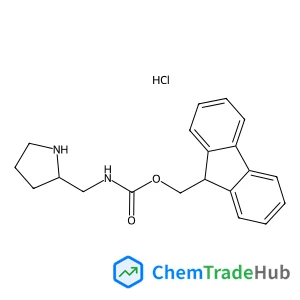
(S)-(9H-Fluoren-9-yl)methyl (pyrrolidin-2-ylmethyl)carbamate hydrochloride
CAS番号:
1217813-15-4
分子式:
C20H23ClN2O2
おすすめサプライヤー





免責事項
このページに表示される学術雑誌情報は、参考および研究目的のみを目的としています。当社は雑誌出版社とは提携しておらず、投稿の取り扱いも行っておりません。出版に関するお問い合わせは、各雑誌出版社に直接ご連絡ください。
表示されている情報に誤りがある場合は、support@chemtradehub.com までご連絡ください。迅速に確認し、対応いたします。