












Liquid self-diffusion of H2O and DMF molecules in Co-MOF-74: molecular dynamics simulations and dielectric spectroscopy studies
文献情報
出版日
2016-06-08
DOI
10.1039/C6CP02477G
インパクトファクター
3.676
著者
J. M. Bermúdez-García, J. M. Vicent-Luna, S. Yáñez-Vilar, S. Hamad, M. Sánchez-Andújar, S. Castro-García, S. Calero, M. A. Señarís-Rodríguez
原文を見る
要旨
In this work we use molecular dynamics simulations to study the diffusion of N,N-dimethylformamide (DMF) and H2O as a function of temperature within the well-known metal–organic framework Co2(dobdc)·[G] (G = 2DMF·1H2O), also known as Co-MOF-74. The molecular dynamics simulations show that the diffusivity of guest molecules, which is almost negligible at low temperatures (T < 200 K), increases in the range of 200 < T (K) < 400 up to 3 and 4 orders of magnitude for DMF and H2O, respectively. This molecular diffusion can be easily detected by dielectric spectroscopy as it gives rise to extrinsic interfacial polarization effects that result in an apparent “colossal” dielectric constant at room temperature, εr′ ∼ 42 000 (T = 300 K, ν = 10 Hz). Furthermore, the measured dielectric constant exhibits a thermal dependence similar to that of the diffusion coefficient, revealing the parallelism of the dielectric response and the molecular diffusion as a function of temperature. These results highlight: (a) the great utility of the fast and non-destructive dielectric and impedance spectroscopy techniques for the study and detection of the molecular transport of small polar molecules within porous metal-organic frameworks and related materials; (b) the peculiarity and uniqueness of MOF materials with “medium” size nanopores containing guest molecules as they are solid materials in which the guest molecules display a liquid state-like behaviour close to room temperature; and (c) the potential of these materials for molecular transport applications.
関連文献
Synthesis of silver nanotubes by electroless deposition in porous anodic aluminium oxide templates
Shu-Hong Zhang, Zhao-Xiong Xie, Zhi-Yuan Jiang, Xin Xu, Juan Xiang, Rong-Bin Huang, Lan-Sun Zheng
2004-04-05
Communication
DOI: 10.1039/B315931K
Using ring strain to inhibit a decomposition path: first synthesis of an Alkyl-BIAN ligand (Alkyl-BIAN = bis(alkyl)acenaphthenequinonediimine)
Fabio Ragaini, Michela Gasperini, Emma Gallo, Piero Macchi
2005-01-10
Communication
DOI: 10.1039/B415767B
Heck arylation of cyclic enol ethers with aryldiazonium salts: regio- and stereoselective synthesis of arylated oxacycles
2003-06-05
Communication
DOI: 10.1039/B305142K
Primary charge separation in photoinduced multielectron storage systems. A dinuclear ruthenium(ii) species featuring a charge-separated state with a lifetime of 1.3 µs
Sandro Fracasso, Sebastiano Campagna, Scolastica Serroni, Rama Konduri, Frederick M. MacDonnell
2003-06-06
Communication
DOI: 10.1039/B302962J
A concise synthesis of a rigid isomannide-based diphosphine ligand and structural characterisation of an alkoxyphosphonium intermediate
Cristina Carcedo, Athanasia Dervisi, Ian A. Fallis, Liling Ooi, K. M. Abdul Malik
2004-04-27
Communication
DOI: 10.1039/B401301H
Electrodeposition of ferrocenoyl peptide disulfides
Grzegorz A. Orlowski, Somenath Chowdhury, Yi-Tao Long, Todd C. Sutherland, Heinz-Bernhard Kraatz
2005-01-20
Communication
DOI: 10.1039/B415278F
Two mixed-valence copper(i,ii) imidazolate coordination polymers: metal-valence tuning approach for new topological structures
Jie-Peng Zhang, Yan-Yong Lin, Xiao-Lan Yu, Xiao-Ming Chen
2004-04-01
Communication
DOI: 10.1039/B401691B
Computational screening of combinatorial catalyst libraries
James L. Melville, Benjamin I. Andrews, Barry Lygo, Jonathan D. Hirst
2004-05-17
Communication
DOI: 10.1039/B402378A
Spontaneous free-standing nanostructured film growth in polyelectrolyte-surfactant systems
Karen J. Edler, Arach Goldar, Tessa Brennan, Stephen J. Roser
2003-06-16
Communication
DOI: 10.1039/B304202B
Asymmetric alkylation of dimethoxyphosphoryl-N-[1-(S)-α-methylbenzyl]acetamide enolates. Synthesis of both stereoisomers from the same source of chirality by changing the equivalents of LDA
Mario Ordóñez, Eugenio Hernández-Fernández, Janet Xahuentitla, Carlos Cativiela
2005-01-18
Communication
DOI: 10.1039/B416616G
こちらもおすすめ
化合物よくある質問
2-メトキシ-4-(メチルスルフィニル)アミンの主な用途は何ですか?
2-メトキシ-4-(メチルスルフィニル)アミンは、主に医薬品および農薬の製造に使用されます。また、合成化学の一部として研究用材料としても利用されます。
41608-73-52-Methoxy-4-(methyls...
118684-13-24-(Bromomethyl)-3-me...
化合物よくある質問
4,6-二氯-N-甲基ピラミジンアミンの代替品はありますか?
代替品としては、4,6-二クロロピラミジンアミンや他のピラミジン系化合物が考えられます。ただし、目的と用途によって最適な代替品は異なります。
10397-15-64,6-Dichloro-N-methy...
化合物よくある質問
6-氯-4-甲基-1H-吲哚を含む廃棄物はどのように処理すべきですか?
6-氯-4-甲基-1H-吲哚の廃棄物は、適切な容器に収集し、密閉して保管します。温度は常温、湿度は低く、直射日光を避けて保管することを推奨します。廃棄処理は専門...
885520-84-36-chloro-4-methyl-1H...
化合物よくある質問
2-フローユロ-4-(トリフルオロメチル)ベンゾイドについて「に適用される法規ガイドラインは何ですか」
2-フローユロ-4-(トリフルオロメチル)ベンゾイドのCAS番号は207974-08-1です。この化合物はGHS分類で毒性物質と有害な反応物質として分類されます...
207974-08-1[2-Fluoro-4-(trifluo...
化合物よくある質問
4-ニトロフェニルN-[(ベンゼルオキシルカーボンイル]グリシングリシングリシン酸はどのように保存すればよいですか?
4-ニトロフェニルN-[(ベンゼルオキシルカーボンイル]グリシングリシングリシン酸は、室温で暗所に保管し、乾燥した環境で保存することを推奨します。容器は密閉性の...
19811-64-44-Nitrophenyl N-[(be...
化合物よくある質問
イソデスロラタドリンの代替品はありますか?
イソデスロラタドリンの代替品としては、デスロラタドリンや他の抗ヒスタミン薬が挙げられます。具体的には、デスロラタドリン、ラセカミド、フェルタドリンなどが、症状や...
183198-49-4Iso Desloratadine
化合物よくある質問
5-甲氧基-1,2,3,4-四氢异喹啉盐酸盐はどのように合成されますか?
5-甲氧基-1,2,3,4-四氢异喹啉盐酸盐の一般的な合成方法は、メタノール中で5-メトキシ-1,2,3,4-四ヒュドロイソキシンを塩酸で塩化します。この反応で...
103030-69-95-Methoxy-1,2,3,4-te...
化合物よくある質問
4-アミノ-5-メトキシ-2-トルエンサルホニック酸についての法規ガイドラインは何ですか?
CAS番号6471-78-9の4-アミノ-5-メトキシ-2-トルエンサルホニック酸は、GHS分類では corrosive(腐食性)と識別されます。EUのREAC...
6471-78-94-Amino-5-Methoxy-2-...
化合物よくある質問
甲基孕酮を取り扱う際の実験室安全事項は何ですか?
甲基孕酮の取り扱いは、PPE(個人保護具)の使用が必要な重要な安全事項を伴います。防塵マスク、ゴーグル、手袋を着用することが推奨されます。ドラフトチャンバーを使...
204063-33-22-[(Diphenylmethyl)a...
掲載誌
Physical Chemistry Chemical Physics

CiteScore:
5.5
自己引用率:
10.3%
年間論文数:
3036
Physical Chemistry Chemical Physics (PCCP) is an international journal co-owned by 19 physical chemistry and physics societies from around the world. This journal publishes original, cutting-edge research in physical chemistry, chemical physics and biophysical chemistry. To be suitable for publication in PCCP, articles must include significant innovation and/or insight into physical chemistry; this is the most important criterion that reviewers and Editors will judge against when evaluating submissions. The journal has a broad scope and welcomes contributions spanning experiment, theory, computation and data science. Topical coverage includes spectroscopy, dynamics, kinetics, statistical mechanics, thermodynamics, electrochemistry, catalysis, surface science, quantum mechanics, quantum computing and machine learning. Interdisciplinary research areas such as polymers and soft matter, materials, nanoscience, energy, surfaces/interfaces, and biophysical chemistry are welcomed if they demonstrate significant innovation and/or insight into physical chemistry. Joined experimental/theoretical studies are particularly appreciated when complementary and based on up-to-date approaches.
おすすめ化合物
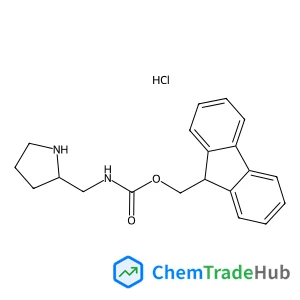
(S)-(9H-Fluoren-9-yl)methyl (pyrrolidin-2-ylmethyl)carbamate hydrochloride
CAS番号:
1217813-15-4
分子式:
C20H23ClN2O2
おすすめサプライヤー





免責事項
このページに表示される学術雑誌情報は、参考および研究目的のみを目的としています。当社は雑誌出版社とは提携しておらず、投稿の取り扱いも行っておりません。出版に関するお問い合わせは、各雑誌出版社に直接ご連絡ください。
表示されている情報に誤りがある場合は、support@chemtradehub.com までご連絡ください。迅速に確認し、対応いたします。