












Markedly different adsorption behaviors of gas molecules on defective monolayer MoS2: a first-principles study
文献情報
出版日
2016-05-03
DOI
10.1039/C6CP01362G
インパクトファクター
3.676
著者
Min Huang, Gengyu Cao
原文を見る
要旨
Sulfur vacancy (SV) is one of the most typical defects in two-dimensional monolayer MoS2, leading to reactive sites. We presented a systematic study of the adsorption behaviors of gas molecules, CO2, N2, H2O, CO, NH3, NO, O2, H2 and NO2, on monolayer MoS2 with single SV by first-principles calculations. It was found that CO2, N2 and H2O molecules physisorbed at the proximity of single SV. Our adsorption energy calculations and charge transfer analysis showed that the interactions between CO2, N2 and H2O molecules and defective MoS2 are stronger than the cases of CO2, N2 and H2O molecules adsorbed on pristine MoS2, respectively. The defective MoS2 based gas sensors may be more sensitive to CO2, N2 and H2O molecules than pristine MoS2 based ones. CO, NO, O2 and NH3 molecules were found to chemisorb at the S vacancy site and thus modify the electronic properties of defective monolayer MoS2. Magnetism was induced upon adsorption of NO molecules and the defective states induced by S vacancy can be completely removed upon adsorption of O2 molecules, which may provide some helpful information for designing new MoS2 based nanoelectronic devices in future. The H2 and NO2 molecules were found to dissociate at S vacancy. The dissociation of NO2 molecules resulted in O atoms located at the S vacancy site and NO molecules physisorbed on O-doped MoS2. The calculated results showed that NO2 molecules can help heal the S vacancy of the MoS2 monolayer.
関連文献
Phosphine-catalyzed regiospecific (3 + 2) cyclization of 3-nitroindoles with allene esters
Li-Wen Jin, Fei Jiang, Ke-Wei Chen, Bai-Xiang Du, Guang-Jian Mei, Feng Shi
2019-03-23
Paper
DOI: 10.1039/C9OB00432G
External-photocatalyst-free visible-light-mediated aerobic oxidation and 1,4-bisfunctionalization of N-alkyl isoquinolinium salts
Youkang Zhou, Zhiming Xing, Jiali Guan, Zhibin Song, Yiyuan Peng
2020-07-21
Research Article
DOI: 10.1039/D0QO00663G
A facile one pot synthesis of thiazolo[3,2-a]benzimidazole and pyran fused polyheterocyclic scaffolds
Arumugam Mariappan, Kandasamy Rajaguru, Shanmugam Muthusubramanian, Nattamai Bhuvanesh
2019-03-25
Communication
DOI: 10.1039/C9OB00300B
An enzymatic acetal/hemiacetal conversion for the physiological temperature activation of the alkoxyamine C–ON bond homolysis
Muriel Albalat, Gérard Audran, Maxence Holzritter, Sylvain R. A. Marque, Nicolas Vanthuyne, Pierre Voisin
2020-07-30
Research Article
DOI: 10.1039/D0QO00559B
Recent advances in the asymmetric synthesis of pharmacology-relevant nitrogen heterocycles via stereoselective aza-Michael reactions
Maxim G. Vinogradov, Olga V. Turova, Sergei G. Zlotin
2019-02-28
Review Article
DOI: 10.1039/C8OB03034K
The preparation of (4H)-imidazol-4-ones and their application in the total synthesis of natural products
Katarina L. Keel, Jetze J. Tepe
2020-08-26
Review Article
DOI: 10.1039/D0QO00764A
An improved synthesis of the [5.6.7]-tricyclic core of cyrneine B and glaucopine C
Guo-Jie Wu, Xiu Han
2020-08-25
Research Article
DOI: 10.1039/D0QO00758G
Synthesis and application of α-carbonyl nitrile oxides
Li Zhou, Huating Yan, Xin-Qi Hao
2020-07-20
Research Article
DOI: 10.1039/D0QO00780C
Discovery and characterization of four glycosyltransferases involved in anthraquinone glycoside biosynthesis in Rubia yunnanensis
Shanyong Yi, Tongdong Kuang, Yuanyuan Miao, Yanqing Xu, Zhe Wang, Liao-Bin Dong, Ninghua Tan
2020-07-14
Research Article
DOI: 10.1039/D0QO00579G
Electrochemical trifluoromethylation/semipinacol rearrangement sequences of alkenyl alcohols: synthesis of β-CF3-substituted ketones
Hye Im Jung, Yubin Kim, Dae Young Kim
2019-03-07
Communication
DOI: 10.1039/C9OB00373H
こちらもおすすめ
化合物よくある質問
4'-ブロモビフェニル-3-メトークシーディ.ActionBarはどのように保存すればよいですか?
4'-ブロモビフェニル-3-メトークシーディ.ActionBarは、冷暗所で、直射日光を避け、密栓の容器に保存し、遠隔場所に保管してください。温度は常温(0〜2...
149506-25-24'-Bromo-biphenyl-3-...
2947-60-6(3-Methylphenyl)acet...
化合物よくある質問
2-異丙基フェニルヒドラジン塩酸塩とは何ですか?
2-異丙基フェニルヒドラジン塩酸塩は、CAS番号58928-82-8を有する化合物で、構造式はC11H14N2HClです。これは塩基性化合物であり、水に溶けやす...
58928-82-8(2-Isopropylphenyl)h...
化合物よくある質問
5-(4-クロロフェニル)-4H-1,2,4-三氮唑-3-アミンを取り扱う際の実験室安全事項は何ですか?
5-(4-クロロフェニル)-4H-1,2,4-三氮唑-3-アミンは取り扱いに注意が必要です。PPEとして防塵マスク、ゴーグル、手袋を使用し、ドラフトチャンバーを...
98554-00-85-(4-Chlorophenyl)-1...
化合物よくある質問
去甲基雷贝拉唑硫醚はどのように合成されますか?
去甲基雷贝拉唑硫醚は、ベンジミダゾール硫化物と3-メチル-4-ピリジノールの反応によって合成されます。具体的には、2-チオキシドベンジミダゾールと3-メチル-4...
117976-91-73-({2-[(1H-Benzimida...
化合物よくある質問
2-ブロモ-5-フロロ-N-(2-フェノールメチル)ベンゼンウレアは安全ですか?
2-ブロモ-5-フロロ-N-(2-フェノールメチル)ベンゼンウレアは、毒性や刺激性の実験データに基づき、適切な取扱いと防護措置を講じることで安全に使用できます。...
923722-86-52-Bromo-5-fluoro-N-(...
化合物よくある質問
対甲苯磺酸酯-四聚乙二醇-四氢吡喃醚の物理化学的性質は何ですか?
対甲苯磺酸酯-四聚乙二醇-四氢吡喃醚のCAS番号は86259-89-4です。この化合物は無色の液体で、分子量は約724.8です。高濃度では溶血性が報告されており...
86259-89-42-(2-{2-[2-(Tetrahyd...
化合物よくある質問
2-(3-(二氟甲基)-4-氟苯基)-4,4,5,5-四甲基-1,3,2-二噁硼戊環はどのように保存すればよいですか?
2-(3-(二氟甲基)-4-氟苯基)-4,4,5,5-四甲基-1,3,2-二噁硼戊環は、室温で暗い場所に保管し、直射日光から遠ざけ、容器は密閉状態で保存してくだ...
445303-65-12-[3-(difluoromethyl...
化合物よくある質問
6-アミノ-5-クロロ-2-シクロプロピルピリミジンカルボン酸の代替品はありますか?
この化合物の代替品には、ピロリミジン酸やその類似物、またピロリミジンカルボン酸の他の異性体があります。これらの代替品は、特定の化学反応や目的に応じて選択すること...
858956-08-86-Amino-5-chloro-2-c...
化合物よくある質問
5-クロロベンゾ[1,3]二オキセイン-4-アミンに適用される法規ガイドラインは何ですか?
5-クロロベンゾ[1,3]二オキセイン-4-アミンはCAS番号379228-45-2に該当します。この化合物はGHS分類でH314(接触により急性毒性がある)と...
379228-45-25-Chloro-1,3-benzodi...
掲載誌
Physical Chemistry Chemical Physics

CiteScore:
5.5
自己引用率:
10.3%
年間論文数:
3036
Physical Chemistry Chemical Physics (PCCP) is an international journal co-owned by 19 physical chemistry and physics societies from around the world. This journal publishes original, cutting-edge research in physical chemistry, chemical physics and biophysical chemistry. To be suitable for publication in PCCP, articles must include significant innovation and/or insight into physical chemistry; this is the most important criterion that reviewers and Editors will judge against when evaluating submissions. The journal has a broad scope and welcomes contributions spanning experiment, theory, computation and data science. Topical coverage includes spectroscopy, dynamics, kinetics, statistical mechanics, thermodynamics, electrochemistry, catalysis, surface science, quantum mechanics, quantum computing and machine learning. Interdisciplinary research areas such as polymers and soft matter, materials, nanoscience, energy, surfaces/interfaces, and biophysical chemistry are welcomed if they demonstrate significant innovation and/or insight into physical chemistry. Joined experimental/theoretical studies are particularly appreciated when complementary and based on up-to-date approaches.
おすすめ化合物
![Ethyl thieno[3,2-f]quinoline-2-carboxylate structure](https://static.chemtradehub.com/structs/299/29948-26-3-f62b.webp "Ethyl thieno[3,2-f]quinoline-2-carboxylate structure")
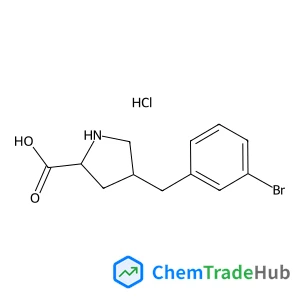
(2S,4R)-4-(3-Bromobenzyl)pyrrolidine-2-carboxylic acid hydrochloride
CAS番号:
1049734-10-2
分子式:
C12H15BrClNO2
おすすめサプライヤー







免責事項
このページに表示される学術雑誌情報は、参考および研究目的のみを目的としています。当社は雑誌出版社とは提携しておらず、投稿の取り扱いも行っておりません。出版に関するお問い合わせは、各雑誌出版社に直接ご連絡ください。
表示されている情報に誤りがある場合は、support@chemtradehub.com までご連絡ください。迅速に確認し、対応いたします。