













5-(2-Methyl-3-furyl)-4-phenyl-2,4-dihydro-3H-1,2,4-triazole-3-thione
CAS番号:
346464-59-3
分子式:
C13H11N3OS
Jingying Zhai, Eric Bakker
Chelators and end point indicators are the most important parts of complexometric titrations. The most widely used universal chelator ethylenediamine tetraacetic acid (EDTA) and its derivatives can strongly coordinate with different metal ions. Their limited selectivity often requires the use of masking agents, and the multiple pKa values of the chelators necessitate a careful adjustment of pH during the procedure. Real world requirements for pH independent, selective and sensitive chelators and indicators call for a new design of these reagents. New concepts and structures of chelators and indicators have indeed recently emerged. We present here recent developments on chelators and indicators for complexometric titrations. Many of these advances were made possible only recently by moving the titration from a homogeneous to a heterogeneous phase using a new class of chelators and indicators based on highly selective ionophores embedded in ion-selective nanosphere emulsions. In view of achieving titrations in situ by complete instrumental control, thin layer electrochemistry has recently been shown to be an attractive concept that replaces the traditional cumbersome titration protocol with a direct reagent free sensing tool.
Haifei Wan, Mengyao Li, Li Wang, Yonghai Song
DOI: 10.1039/D3TA04781D
Risa Ichihashi, Yuta Yamamoto, Kyoichi Sawabe
DOI: 10.1039/D3TA05078E
Aratikumari Suresh Prasad
DOI: 10.1039/D3NJ04852G
Guixiang Xu, Kai Liu, Xiangwu Chen, Yang Lin, Cancan Yu, Xinxin Nie, Wenxiu He, Nathan Karin, Yuxia Luan
DOI: 10.1039/D3NH00401E
Cesare Roncaglia, Diana Nelli, El Yakout El Koraychy, Riccardo Ferrando, Thomas J. A. Slater, Richard E. Palmer
DOI: 10.1039/D3NH00291H
Debika Gogoi, Rajeshvari Samatbhai Karmur, Narendra Nath Ghosh
DOI: 10.1039/D3TA05104H
M. Alejandra Hermosilla-Palacios, Marissa Martinez, Evan A. Doud, Tobias Hertel, Alexander M. Spokoyny, Sofie Cambré, Wim Wenseleers, Yong-Hyun Kim, Andrew J. Ferguson, Jeffrey L. Blackburn
DOI: 10.1039/D3NH00480E
Tianlun Ren, Huizhen Wang, Shan Xu, Hongjie Yu, Kai Deng, Ziqiang Wang, Hongjing Wang, Liang Wang, You Xu
DOI: 10.1039/D3TA04629J
Yecheol Rho, Soonyong So
DOI: 10.1039/D3TA04760A
取り扱いにはPPE(プロテクティブ・パーソナル・エイド)が必要で、防ぐ手袋と保護眼鏡を着用してください。ドラフトチャンバーの使用を推奨します。漏洩した場合は、適...
この化合物の代替品としては、BOC保護基を有さないアミノ酸やその他の保護基化合物が考えられます。また、メチオキシ基を有しない他の芳香族アミノ酸も代替品として挙げ...
Methyl 2-(chloromethyl)-3-nitrobenzoate(1218910-61-2)の代替品としては、化学組成を変えることで効果を達成する...
(2R)-2-アミノ-N-ベンジル-3-ヒドロキシプロパナミドを含む廃棄物は、適切な廃棄物管理ガイドラインに基づき処理する必要があります。まず、廃棄物を適切に収...
6,7-二氢-咪唑並[1,2-a]ピリドイン-8(5h)-酮は、2-ブロモフェニルアセトインとリン酸ハロゲン化物を反応させることで合成できます。この反応は高温で...
エチル(3R)-3-ピロリジニル酢酸水和塩は、CAS番号1332459-32-1の化合物で、(R)-乙基2-(ピロリジン-3-基)酢酸塩水和塩と呼ばれます。この...
(2S)-{[(2-メチルエチルオキシ]カルボニル}アミノ)[2-(トリアフルオロメチルフェニル]エチカシック酸のCAS番号は1203454-45-8です。この...
2-ブロモ-1-(2-メチル-2-プロパニル)-4-ニトロベンゼンは、直射日光を避けて暗所で、室温(約15℃〜25℃)、乾燥した場所に保存する必要があります。ま...
市場動向としては、1-[(4-硝基フェニル)スルホニル]-1H-1,2,4-三唑は主に農業用除草剤や合成化学製品の原料として利用されています。研究トレンドとして...

Analyst publishes analytical and bioanalytical research that reports premier fundamental discoveries and inventions, and the applications of those discoveries, unconfined by traditional discipline barriers.


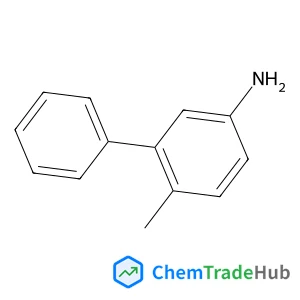
![[(2R)-6,6-Dimethyl-2-morpholinyl]methanol hydrochloride (1:1) structure](https://static.chemtradehub.com/structs/141/1416444-88-6-e06a.webp "[(2R)-6,6-Dimethyl-2-morpholinyl]methanol hydrochloride (1:1) structure")



