












High-performance ultrathin perfluorinated sulfonic acid membranes with thermo-morphology control for a vanadium redox flow battery
文献情報
出版日
2023-10-23
DOI
10.1039/D3TA04760A
インパクトファクター
12.732
著者
Yecheol Rho, Soonyong So
原文を見る
要旨
A proton exchange membrane (PEM) is a crucial component for the effective and stable operation of energy conversion and storage devices, such as fuel cells, water electrolyzers, and redox flow batteries. However, perfluorinated sulfonic acid (PFSA) membranes—the most widely used PEM—have ultimate limitations of low proton selectivity to other active species because of their wide and randomly connected proton channels. Many attempts have been made to enhance the ion selectivity through morphology control, but it is still necessary to achieve significant improvement to overcome the permeability–selectivity trade-off. In this study, we demonstrate an ultrathin (∼30 nm) PFSA membrane with highly ordered hydrophilic domains. The well-controlled nanostructures are generated from the pre-aligned PFSA ionomers on the aqueous substrate, and further morphology development in the size and orientation of domains, and crystallinity, is finely adjusted via thermal annealing. Through this bottom-up morphology control, the ultrathin membrane has highly aligned ion channels with 55% crystallinity, resulting in about 800 times higher proton selectivity and 2 orders of magnitude lower areal resistance compared to 25 μm-thick PFSA membranes (Nafion 211). Furthermore, when the ultrathin membrane is applied to a vanadium redox flow battery (VRFB), the cell shows higher energy efficiency (∼76%) than a cell with a commercial Nafion membrane at the current density of 200 mA cm−2.
おすすめジャーナル
関連文献
The role of aromatic interactions in the structure and energetics of benzyl ketones
Carlos F. R. A. C. Lima, Carlos A. D. Sousa, José E. Rodriguez-Borges, André Melo, John N. Low, Luís M. N. B. F. Santos
2010-07-28
Paper
DOI: 10.1039/C003941A
Full-dimensional quantum dynamics study of vinylidene–acetylene isomerization: a scheme using the normal mode Hamiltonian
Wensheng Bian
2010-12-24
Paper
DOI: 10.1039/C0CP01186J
Influence of phosphate anion adsorption on the kinetics of oxygen electroreduction on low index Pt(hkl) single crystals
Qinggang He, Xiaofang Yang, Wei Chen, Sanjeev Mukerjee, Bruce Koel, Shaowei Chen
2010-08-20
Paper
DOI: 10.1039/C0CP00433B
Dynamics study of the atmospheric reaction involving vibrationally excited O3 with OH
Pingya Luo, Rong Zeng, Pedro J. S. B. Caridade, António J. C. Varandas
2010-08-02
Paper
DOI: 10.1039/B927542H
Single molecule charge transport: from a quantum mechanical to a classical description
Aleksey A. Kocherzhenko, Ferdinand C. Grozema, Laurens D. A. Siebbeles
2010-12-13
Perspective
DOI: 10.1039/C0CP01432J
Tip-enhanced Raman scattering (TERS) and high-resolution bio nano-analysis—a comparison
Tanja Deckert-Gaudig
2010-08-23
Perspective
DOI: 10.1039/C003316B
Product pair correlation in CH3OH photodissociation at 157 nm: the OH + CH3 channel
Andre T. J. B. Eppink, Bo Jiang, Gerrit C. Groenenboom, Xueming Yang, David H. Parker
2010-11-26
Paper
DOI: 10.1039/C0CP01794A
Room-temperature metal-activator-free phosphorescence from mesoporous silica
Lei Zhao, Tian Ming, Huanjun Chen, Li Gong, Jian Chen, Jianfang Wang
2010-11-26
Paper
DOI: 10.1039/C0CP01981J
Should negative electron affinities be used for evaluating the chemical hardness?
Carlos Cárdenas, Paul Ayers, Frank De Proft, David J. Tozer, Paul Geerlings
2010-11-26
Paper
DOI: 10.1039/C0CP01785J
こちらもおすすめ
化合物よくある質問
2,3-スチオエポキシマドルを取り扱う際の実験室安全事項は何ですか?
取り扱いにはPPE(プロテクティブ・パーソナル・エイド)が必要で、防ぐ手袋と保護眼鏡を着用してください。ドラフトチャンバーの使用を推奨します。漏洩した場合は、適...
4267-80-52,3-Thioepoxy Madol
53981-25-22-Amino-6-fluorophen...
化合物よくある質問
BOC-S-3-アミニ-4-(4-メチオキシベンチル)-ブタン酸の代替品はありますか?
この化合物の代替品としては、BOC保護基を有さないアミノ酸やその他の保護基化合物が考えられます。また、メチオキシ基を有しない他の芳香族アミノ酸も代替品として挙げ...
126800-59-7(3S)-4-(4-Methoxyphe...
化合物よくある質問
Methyl 2-(chloromethyl)-3-nitrobenzoate(1218910-61-2)の代替品はありますか?
Methyl 2-(chloromethyl)-3-nitrobenzoate(1218910-61-2)の代替品としては、化学組成を変えることで効果を達成する...
1218910-61-2Methyl 2-(chlorometh...
化合物よくある質問
(2R)-2-アミノ-N-ベンジル-3-ヒドロキシプロパナミドを含む廃棄物はどのように処理すべきですか?
(2R)-2-アミノ-N-ベンジル-3-ヒドロキシプロパナミドを含む廃棄物は、適切な廃棄物管理ガイドラインに基づき処理する必要があります。まず、廃棄物を適切に収...
175481-39-7(2R)-2-amino-N-benzy...
化合物よくある質問
6,7-二氢-咪唑並[1,2-a]ピリドイン-8(5h)-酮はどのように合成されますか?
6,7-二氢-咪唑並[1,2-a]ピリドイン-8(5h)-酮は、2-ブロモフェニルアセトインとリン酸ハロゲン化物を反応させることで合成できます。この反応は高温で...
457949-09-66,7-Dihydroimidazo[1...
化合物よくある質問
エチル(3R)-3-ピロリジニル酢酸水和塩とは何ですか?
エチル(3R)-3-ピロリジニル酢酸水和塩は、CAS番号1332459-32-1の化合物で、(R)-乙基2-(ピロリジン-3-基)酢酸塩水和塩と呼ばれます。この...
1332459-32-1Ethyl (3R)-3-pyrroli...
化合物よくある質問
(2S)-{[(2-メチルエチルオキシ]カルボニル}アミノ)[2-(トリアフルオロメチルフェニル]エチカシック酸の物理化学的性質は何ですか?
(2S)-{[(2-メチルエチルオキシ]カルボニル}アミノ)[2-(トリアフルオロメチルフェニル]エチカシック酸のCAS番号は1203454-45-8です。この...
1203454-45-8(2S)-({[(2-Methyl-2-...
化合物よくある質問
2-ブロモ-1-(2-メチル-2-プロパニル)-4-ニトロベンゼンはどのように保存すればよいですか?
2-ブロモ-1-(2-メチル-2-プロパニル)-4-ニトロベンゼンは、直射日光を避けて暗所で、室温(約15℃〜25℃)、乾燥した場所に保存する必要があります。ま...
6310-17-42-Bromo-1-(2-methyl-...
化合物よくある質問
1-[(4-硝基フェニル)スルホニル]-1H-1,2,4-三唑の市場動向や研究トレンドはどうですか?
市場動向としては、1-[(4-硝基フェニル)スルホニル]-1H-1,2,4-三唑は主に農業用除草剤や合成化学製品の原料として利用されています。研究トレンドとして...
57777-84-11-[(4-Nitrophenyl)su...
掲載誌
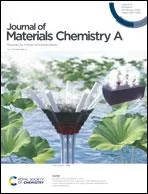
Journal of Materials Chemistry A
CiteScore:
19.5
自己引用率:
4.7%
年間論文数:
2211
Journal of Materials Chemistry A, B & C cover high quality studies across all fields of materials chemistry. The journals focus on those theoretical or experimental studies that report new understanding, applications, properties and synthesis of materials. The journals have a strong history of publishing quality reports of interest to interdisciplinary communities and providing an efficient and rigorous service through peer review and publication. The journals are led by an international team of Editors-in-Chief and Associate Editors who are all active researchers in their fields. Journal of Materials Chemistry A, B & C are separated by the intended application of the material studied. Broadly, applications in energy and sustainability are of interest to Journal of Materials Chemistry A, applications in biology and medicine are of interest to Journal of Materials Chemistry B, and applications in optical, magnetic and electronic devices are of interest to Journal of Materials Chemistry C. More than one Journal of Materials Chemistry journal may be suitable for certain fields and researchers are encouraged to submit their paper to the journal that they feel best fits for their particular article. Example topic areas within the scope of Journal of Materials Chemistry A are listed below. This list is neither exhaustive nor exclusive. Artificial photosynthesis Batteries Carbon dioxide conversion Catalysis Fuel cells Gas capture/separation/storage Green/sustainable materials Hydrogen generation Hydrogen storage Photocatalysis Photovoltaics Self-cleaning materials Self-healing materials Sensors Supercapacitors Thermoelectrics Water splitting Water treatment
おすすめ化合物
![(1R,5R)-3-{[(2-Methyl-2-propanyl)oxy]carbonyl}-3-azabicyclo[3.1.0]hexane-1-carboxylic acid structure](https://static.chemtradehub.com/structs/116/1165450-63-4-bfe1.webp "(1R,5R)-3-{[(2-Methyl-2-propanyl)oxy]carbonyl}-3-azabicyclo[3.1.0]hexane-1-carboxylic acid structure")
おすすめサプライヤー






免責事項
このページに表示される学術雑誌情報は、参考および研究目的のみを目的としています。当社は雑誌出版社とは提携しておらず、投稿の取り扱いも行っておりません。出版に関するお問い合わせは、各雑誌出版社に直接ご連絡ください。
表示されている情報に誤りがある場合は、support@chemtradehub.com までご連絡ください。迅速に確認し、対応いたします。