


Self-assembly of SnO2 quantum dots into hierarchically ordered structures assisted by oriented attachment
文献情報
出版日
2014-12-18
DOI
10.1039/C4CP05057F
インパクトファクター
3.676
著者
Zanyong Zhuang, Xiaogang Xue
原文を見る
要旨
Taking SnO2 quantum dots with random orientation as a precursor, NaOH induces self-assembly of SnO2 dots to form the nanowires, side-by-side attachment of which generates hierarchically ordered structures. The multistep oriented attachment mechanism can help to describe the oriented assembly of big nanocrystals.
おすすめジャーナル

Journal of Chemical Sciences

Biocatalysis and Biotransformation

Topics in Catalysis

Medicinal Chemistry Research

Bioorganic & Medicinal Chemistry

Critical Reviews in Solid State and Materials Sciences

Herald of the Russian Academy of Sciences

Cellulose

Bioorganic & Medicinal Chemistry Letters

Polycyclic Aromatic Compounds
関連文献
Recent advances in organocatalytic asymmetric multicomponent cascade reactions for enantioselective synthesis of spirooxindoles
Yongchao Wang, Angel A. Cobo, Annaliese K. Franz
2021-05-07
Review Article
DOI: 10.1039/D1QO00220A
In vivo and in vitro identification of Z-BOX C – a new bilirubin oxidation end product
Marcel Ritter, Sandesh Neupane, Christoph Steinbeck
2018-03-01
Communication
DOI: 10.1039/C8OB00164B
Carbon chain shape selectivity by the mouse olfactory receptor OR-I7
Jianghai Ho, Jason Karl Liu, Radhanath Purakait, Uriel N. Morzan, Lucky Ahmed, Victor S. Batista, Hiroaki Matsunami
2018-03-23
Paper
DOI: 10.1039/C8OB00205C
Facile Cu(ii)-mediated conjugation of thioesters and thioacids to peptides and proteins under mild conditions
Yao Sun, Zhenbin Lyu, Xiaodong Zeng, Hui Zhou, Fuchun Xu, Ziyang Chen, Yuling Xu, Ping Xu
2018-04-19
Paper
DOI: 10.1039/C8OB00536B
Thioacids – synthons for amide bond formation and ligation reactions: assembly of peptides and peptidomimetics
Narendra N., Vishwanatha M. Thimmalapura, Basavaprabhu Hosamani, Girish Prabhu, L. Roopesh Kumar, Vommina V. Sureshbabu
2018-04-13
Review Article
DOI: 10.1039/C8OB00512E
A new strategy for the synthesis of diverse benzo[a]carbazoles via a divergent catalytic Michael reaction
Arya Kripalaya Ratheesh, Hazel A. Sparkes, Karnam Jayarampillai Rajendra Prasad
2018-03-20
Paper
DOI: 10.1039/C8OB00154E
Effect of noncovalent interactions in ion pairs on hypervalent iodines: inversion of regioselectivity in sulfonyloxylactonization
Masaki Fujie, Junki Hara
2021-04-28
Research Article
DOI: 10.1039/D1QO00523E
Thiophene fused indenocorannulenes: synthesis, variable emission, and exceptional chiral configurational stability
Xiaoqi Tian, Suchaya Chaiworn, Jun Xu, Nicolas Vanthuyne, Kim K. Baldridge, Jay S. Siegel
2021-06-16
Research Article
DOI: 10.1039/D1QO00596K
こちらもおすすめ
化合物よくある質問
2-メトキシ-4-(メチルスルフィニル)アミンの主な用途は何ですか?
2-メトキシ-4-(メチルスルフィニル)アミンは、主に医薬品および農薬の製造に使用されます。また、合成化学の一部として研究用材料としても利用されます。
41608-73-52-Methoxy-4-(methyls...
118684-13-24-(Bromomethyl)-3-me...
化合物よくある質問
4,6-二氯-N-甲基ピラミジンアミンの代替品はありますか?
代替品としては、4,6-二クロロピラミジンアミンや他のピラミジン系化合物が考えられます。ただし、目的と用途によって最適な代替品は異なります。
10397-15-64,6-Dichloro-N-methy...
化合物よくある質問
6-氯-4-甲基-1H-吲哚を含む廃棄物はどのように処理すべきですか?
6-氯-4-甲基-1H-吲哚の廃棄物は、適切な容器に収集し、密閉して保管します。温度は常温、湿度は低く、直射日光を避けて保管することを推奨します。廃棄処理は専門...
885520-84-36-chloro-4-methyl-1H...
化合物よくある質問
2-フローユロ-4-(トリフルオロメチル)ベンゾイドについて「に適用される法規ガイドラインは何ですか」
2-フローユロ-4-(トリフルオロメチル)ベンゾイドのCAS番号は207974-08-1です。この化合物はGHS分類で毒性物質と有害な反応物質として分類されます...
207974-08-1[2-Fluoro-4-(trifluo...
化合物よくある質問
4-ニトロフェニルN-[(ベンゼルオキシルカーボンイル]グリシングリシングリシン酸はどのように保存すればよいですか?
4-ニトロフェニルN-[(ベンゼルオキシルカーボンイル]グリシングリシングリシン酸は、室温で暗所に保管し、乾燥した環境で保存することを推奨します。容器は密閉性の...
19811-64-44-Nitrophenyl N-[(be...
化合物よくある質問
イソデスロラタドリンの代替品はありますか?
イソデスロラタドリンの代替品としては、デスロラタドリンや他の抗ヒスタミン薬が挙げられます。具体的には、デスロラタドリン、ラセカミド、フェルタドリンなどが、症状や...
183198-49-4Iso Desloratadine
化合物よくある質問
5-甲氧基-1,2,3,4-四氢异喹啉盐酸盐はどのように合成されますか?
5-甲氧基-1,2,3,4-四氢异喹啉盐酸盐の一般的な合成方法は、メタノール中で5-メトキシ-1,2,3,4-四ヒュドロイソキシンを塩酸で塩化します。この反応で...
103030-69-95-Methoxy-1,2,3,4-te...
化合物よくある質問
4-アミノ-5-メトキシ-2-トルエンサルホニック酸についての法規ガイドラインは何ですか?
CAS番号6471-78-9の4-アミノ-5-メトキシ-2-トルエンサルホニック酸は、GHS分類では corrosive(腐食性)と識別されます。EUのREAC...
6471-78-94-Amino-5-Methoxy-2-...
化合物よくある質問
甲基孕酮を取り扱う際の実験室安全事項は何ですか?
甲基孕酮の取り扱いは、PPE(個人保護具)の使用が必要な重要な安全事項を伴います。防塵マスク、ゴーグル、手袋を着用することが推奨されます。ドラフトチャンバーを使...
204063-33-22-[(Diphenylmethyl)a...
掲載誌
Physical Chemistry Chemical Physics

CiteScore:
5.5
自己引用率:
10.3%
年間論文数:
3036
Physical Chemistry Chemical Physics (PCCP) is an international journal co-owned by 19 physical chemistry and physics societies from around the world. This journal publishes original, cutting-edge research in physical chemistry, chemical physics and biophysical chemistry. To be suitable for publication in PCCP, articles must include significant innovation and/or insight into physical chemistry; this is the most important criterion that reviewers and Editors will judge against when evaluating submissions. The journal has a broad scope and welcomes contributions spanning experiment, theory, computation and data science. Topical coverage includes spectroscopy, dynamics, kinetics, statistical mechanics, thermodynamics, electrochemistry, catalysis, surface science, quantum mechanics, quantum computing and machine learning. Interdisciplinary research areas such as polymers and soft matter, materials, nanoscience, energy, surfaces/interfaces, and biophysical chemistry are welcomed if they demonstrate significant innovation and/or insight into physical chemistry. Joined experimental/theoretical studies are particularly appreciated when complementary and based on up-to-date approaches.
おすすめ化合物
![4-{2-[4-(2-Methyl-2-propanyl)phenyl]ethoxy}quinazoline structure](https://static.chemtradehub.com/structs/120/120928-09-8-d3db.webp "4-{2-[4-(2-Methyl-2-propanyl)phenyl]ethoxy}quinazoline structure")
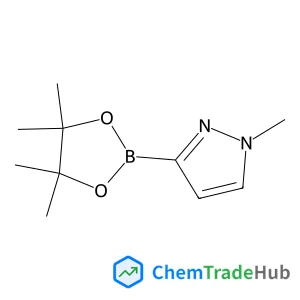
1-Methyl-3-(4,4,5,5-tetramethyl-1,3,2-dioxaborolan-2-yl)-1H-pyrazole
CAS番号:
1020174-04-2
分子式:
C10H17BN2O2
おすすめサプライヤー




免責事項
このページに表示される学術雑誌情報は、参考および研究目的のみを目的としています。当社は雑誌出版社とは提携しておらず、投稿の取り扱いも行っておりません。出版に関するお問い合わせは、各雑誌出版社に直接ご連絡ください。
表示されている情報に誤りがある場合は、support@chemtradehub.com までご連絡ください。迅速に確認し、対応いたします。