


![Ethyl 3-((6-(4,5-dihydro-1H-benzo[d]azepin-3(2H)-yl)-2-(pyridin-2-yl)pyrimidin-4-yl)amino)propanoate structure](https://static.chemtradehub.com/structs/137/1373423-53-0-496a.webp "Ethyl 3-((6-(4,5-dihydro-1H-benzo[d]azepin-3(2H)-yl)-2-(pyridin-2-yl)pyrimidin-4-yl)amino)propanoate structure")
A low-cost and high-performance 3D micromixer over a wide working range and its application for high-sensitivity biomarker detection
文献情報
出版日
2022-07-27
DOI
10.1039/D2RE00103A
インパクトファクター
4.239
著者
Liuyong Shi
原文を見る
要旨
Homogenous mixing in microfluidic devices is often required for efficient chemical and biological reactions. Passive micromixing without external energy input has attracted much research interest. We have developed a high-performance 3D micromixer over a wide range of Reynolds number (Re) and viscosity, which was fabricated in a low-cost method of 3D printing. The characterization of the 3D printer was performed by measuring the surface roughness and fabrication error. The mixing mechanism and performance of the micromixer were investigated through numerical simulations and experiments. Influences of geometry parameters, including length, rotation direction and connection angle of helical elements, were also investigated. The mixing performance of the micromixer was studied over an ultra-wide range of flow rates from 0.3 to 70 000 μL min−1 (Re = 0.01–2333.3). The mixer presented an excellent mixing performance, with a mixing efficiency of more than 96.5% for water and more than 85.1% for solutions with viscosities nearly 13 times that of water. The micromixer can achieve rapid mixing with a mixing time of 883.7 μs for aqueous solutions. In addition, the high-performance micromixer was integrated into a versatile electrochemical detection platform to enhance enzyme-catalyzed reactions. The bare microelectrode array (μEA) on the detection platform has a wide linear detection range to sarcosine from 30 to 1000 μM with a limit of detection (LOD) of 9.7 μM. The highest sensitivity for sarcosine detection (281.7 μA mM−1 cm−2) and enhancement of current response up to 57.1% were achieved on the detection platform. This work broadens the scope of micromixer applications and sheds new light on the development of high-performance micromixers.
おすすめジャーナル

Polycyclic Aromatic Compounds

Cellulose

Heteroatom Chemistry

Medicinal Chemistry Research

Journal of Asian Natural Products Research

Acta Metallurgica Sinica-English Letters

Critical Reviews in Solid State and Materials Sciences

Bioorganic & Medicinal Chemistry

Chinese Journal of Chemistry

Atomization and Sprays
関連文献
Generating transition states of isomerization reactions with deep learning
Lagnajit Pattanaik, John B. Ingraham, Colin A. Grambow, William H. Green
2020-10-05
Paper
DOI: 10.1039/D0CP04670A
Luminescence and energy transfer mechanisms in photo-thermo-refractive glasses co-doped with silver molecular clusters and Eu3+
Dmitriy V. Marasanov, Leonid Yu. Mironov, Yevgeniy M. Sgibnev, Ilya E. Kolesnikov, Nikolay V. Nikonorov
2020-10-12
Paper
DOI: 10.1039/D0CP02786C
Anharmonic coupling behind vibrational spectra of solvated ammonium: lighting up overtone states by Fermi resonance through tuning solvation environments
Chih-Kai Lin, Qian-Rui Huang, Jer-Lai Kuo
2020-09-30
Paper
DOI: 10.1039/D0CP03519J
UV-photoelectron spectroscopy of stable radicals: the electronic structure of planar Blatter radicals as materials for organic electronics
Aniket A. Hande, Clovis Darrigan, Paulina Bartos, Patrick Baylère, Anna Chrostowska
2020-09-23
Paper
DOI: 10.1039/D0CP03896B
A density functional theoretical study on the stability of Pt clusters in MOF-808
Xiaohui Song, Donghai Mei
2020-09-28
Paper
DOI: 10.1039/D0CP04444J
Quantifying how step-wise fluorination tunes local solute hydrophobicity, hydration shell thermodynamics and the quantum mechanical contributions of solute–water interactions
João R. Robalo, Denilson Mendes de Oliveira, Petra Imhof, Dor Ben-Amotz, Ana Vila Verde
2020-09-29
Paper
DOI: 10.1039/D0CP04205F
Ab initio modelling of spin relaxation lengths in disordered graphene nanoribbons
Cesar E. P. Villegas, Alexandre R. Rocha
2019-10-21
Paper
DOI: 10.1039/C9CP04054D
Dynamics and kinetics of the OH + HO2 → H2O + O2 (1Δg) reaction on a global full-dimensional singlet-state potential energy surface
Xiaoxiao Lu, Bina Fu, Dong H. Zhang
2020-10-28
Paper
DOI: 10.1039/D0CP04611F
Driving interference control by side carbon chains in molecular and two-dimensional nano-constrictions
Weiwei Ju, Shuai Zhang, Caijuan Xia
2019-11-05
Paper
DOI: 10.1039/C9CP05185F
Superconductivity in an organometallic compound
Liu-Cheng Chen, Hui Yang, Ming-An Fu, Jia Cheng, Xiao-Lin Wu, Yun Gao, Zhong-Bing Huang, Xiao-Jia Chen
2019-10-14
Paper
DOI: 10.1039/C9CP04227J
こちらもおすすめ
化合物よくある質問
噻奈普汀乙酯の物理化学的性質は何ですか?
CAS番号66981-77-9の噻奈普汀乙酯は、結晶性白色粉末であり、分子量は476.9 g/molです。この化合物は水に溶けにくく、一般的には有機溶媒で溶解し...
66981-77-9Ethyl 7-[(3-chloro-6...
化合物よくある質問
アミピシリン不純物Fとは何ですか?
アミピシリン不純物Fは、CAS番号124774-48-7の化合物です。これは、抗生物質アミピシリンの生産過程で生成される不純物の一つであり、(4S)-2-({[...
124774-48-7Ampicillin impurity ...
化合物よくある質問
イリジウム(I)ヘキサフルオロフォスファートの代替品はありますか?
イリジウム(I)ヘキサフルオロフォスファートの代替品として、他の有機金属化合物や非有機金属化合物が使用されることがあります。具体的には、ダイゾニウム塩や他の金属...
870077-94-43-Di-i-propylphosphi...
化合物よくある質問
含有3-(苯氧基甲基)苯硼酸频那醇酯の廃棄物はどのように処理すべきですか?
含有3-(苯氧基甲基)苯硼酸频那醇酯の廃棄物は、安全な方法で処理する必要があります。まず、廃棄物を適切な容器に収集し、避けて保管します。次に、専門の廃棄処理業者...
912569-68-74,4,5,5-Tetramethyl-...
化合物よくある質問
2-甲基辛-1-醇を取り扱う際の実験室安全事項は何ですか?
取り扱う際は、密閉のゴーグルと手袋を着用することが推奨されます。ドラフトチャンバーを使用し、漏洩時には速やかに取り扱いを中止し、適切な排気設備を使用してください...
818-81-52-Methyl-1-octanol
14066-05-8Scandium triperchlor...
化合物よくある質問
3α-アセトキノイドコレステロールエステルはどのように保存すればよいですか?
3α-アセトキノイドコレステロールエステルは、常温から低温(0-5℃)の暗所で保存し、密閉容器に入れることで安定性を保つことが推奨されます。また、湿気や酸素から...
30365-63-0Methyl (3alpha,5beta...
化合物よくある質問
2-ぶンジロキシ-4-(トリフルオロメチル)フェノルビノン酸の主な用途は何ですか?
2-ぶンジロキシ-4-(トリフルオロメチル)フェノルビノン酸は、化学合成の触媒としての使用や、医薬品の合成材料としての役割があります。また、特定の合成路線で使用...
1701435-39-3[2-(Benzyloxy)-4-(tr...
化合物よくある質問
(2S,3R)-2-氨基-3-甲基丁二酸はどのように合成されますか?
(2S,3R)-2-氨基-3-甲基丁二酸は、2-ヒドロキシ-3-メチル丁酸とアミノ化反応を行うことで合成されます。触媒としてジクロロメタンが使用され、選択性と収...
121570-10-3(2S,3R)-2-amino-3-me...
化合物よくある質問
1-Benzyl-2-phenyl-1H-imidazoleはどのように保存すればよいですか?
この化合物は常温で避けてください。直射日光を避け、密閉容器で保存し、湿気を防水の容器に入れて保管してください。
37734-89-71-Benzyl-2-phenyl-1H...
掲載誌
Reaction Chemistry & Engineering

CiteScore:
0
自己引用率:
8.8%
年間論文数:
284
Reaction Chemistry & Engineering is an interdisciplinary journal reporting cutting-edge research focused on enhancing the understanding and efficiency of reactions. Reaction engineering leverages the interface where fundamental molecular chemistry meets chemical engineering and technology. Challenges in chemistry can be overcome by the application of new technologies, while engineers may find improved solutions for process development from the latest developments in reaction chemistry. Reaction Chemistry & Engineering is a unique forum for researchers whose interests span the broad areas of chemical engineering and chemical sciences to come together in solving problems of importance to wider society. All papers should be written to be approachable by readers across the engineering and chemical sciences. Papers that consider multiple scales, from the laboratory up to and including plant scale, are particularly encouraged.
おすすめ化合物
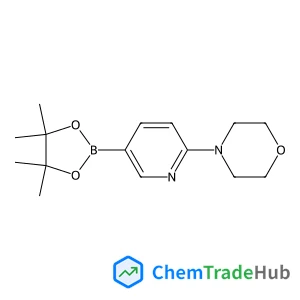
4-(5-(4,4,5,5-tetramethyl-1,3,2-dioxaborolan-2-yl)pyridin-2-yl)morpholine
CAS番号:
485799-04-0
分子式:
C15H23BN2O3
おすすめサプライヤー




免責事項
このページに表示される学術雑誌情報は、参考および研究目的のみを目的としています。当社は雑誌出版社とは提携しておらず、投稿の取り扱いも行っておりません。出版に関するお問い合わせは、各雑誌出版社に直接ご連絡ください。
表示されている情報に誤りがある場合は、support@chemtradehub.com までご連絡ください。迅速に確認し、対応いたします。