












Pore flow-through catalytic membrane reactor for steam methane reforming: characterization and performance
文献情報
出版日
2022-07-12
DOI
10.1039/D1RE00571E
インパクトファクター
4.239
著者
M. Angulo, I. Agirre, A. Arratibel, M. A. Llosa Tanco, D. A. Pacheco Tanaka, V. L. Barrio
原文を見る
要旨
A series of pore flow-through catalytic nonselective membrane reactors (PTCMRs) were studied for steam methane reforming (SMR) in the 500 to 900 °C temperature range under 10 barg pressure and a steam-to-carbon ratio of 5. The reactants flow through the pores of the membrane where they react on contact with the Pd nanoparticles. Various reactor configurations were prepared and tested with porous α-Al2O3-based ceramic tubes with one or more γ-Al2O3/YSZ layers on the external surface. The palladium content and dispersion affect the catalytic activity of the reactors and the results show that the efficiency of the reactions depends on the number of γ-Al2O3/YSZ layers.
関連文献
Selective bond breaking of halothane induced by electron transfer in potassium collisions
A. I. Lozano, L. S. Maioli, B. Pamplona, M. Mendes, F. Ferreira da Silva, F. Kossoski, D. Süβ, M. H. F. Bettega, G. García, P. Limão-Vieira
2020-09-24
Paper
DOI: 10.1039/D0CP02570D
Chemical reactions of a CL-20 crystal under heat and shock determined by ReaxFF reactive molecular dynamics simulations
Fuping Wang, Lang Chen, Deshen Geng, Jianying Lu, Junying Wu
2020-09-17
Paper
DOI: 10.1039/D0CP02796K
Hydrophilic dangling chain interfacial segregation in polyurethane networks at aqueous interfaces and its underlying mechanisms: molecular dynamics simulations
Hassan Ghermezcheshme, Hesam Makki, Mohsen Mohseni, Morteza Ebrahimi
2020-10-28
Paper
DOI: 10.1039/D0CP04244G
Charge regulation of colloidal particles in aqueous solutions
Amin Bakhshandeh, Derek Frydel, Yan Levin
2020-09-15
Paper
DOI: 10.1039/D0CP03633A
Quantifying how step-wise fluorination tunes local solute hydrophobicity, hydration shell thermodynamics and the quantum mechanical contributions of solute–water interactions
João R. Robalo, Denilson Mendes de Oliveira, Petra Imhof, Dor Ben-Amotz, Ana Vila Verde
2020-09-29
Paper
DOI: 10.1039/D0CP04205F
Mechanistic insight into H2-mediated Ni surface diffusion and deposition to form branched Ni nanocrystals: a theoretical study
Yan Li, Ning Liu, Chengna Dai, Ruinian Xu, Bin Wu, Gangqiang Yu, Biaohua Chen
2020-09-21
Paper
DOI: 10.1039/D0CP03126G
Solvent-dependent termination, size and stability in polyynes synthesized via laser ablation in liquids
Sonia Peggiani, Pietro Marabotti, Riccardo Alberto Lotti, Anna Facibeni, Patrick Serafini, Alberto Milani, Valeria Russo, Andrea Li Bassi, Carlo Spartaco Casari
2020-10-16
Paper
DOI: 10.1039/D0CP04132G
New approach to increase the sensitivity of Tb–Eu-based luminescent thermometer
Alexander I. Dalinger, Leonid S. Lepnev, Sergey Z. Vatsadze
2020-10-07
Communication
DOI: 10.1039/D0CP04909C
Simple thiophene-bridged D–π–A type chromophores for DSSCs: a comprehensive study of their sensitization and co-sensitization properties
Kavya S. Keremane, Islam M. Abdellah, Praveen Naik, Ahmed El-Shafei
2020-09-10
Paper
DOI: 10.1039/D0CP02781B
Silica based ionogels: interface effects with aprotic and protic ionic liquids with lithium
Angélique Marie, Bilel Said, Anne Galarneau, Timo Stettner, Andrea Balducci, Maxime Bayle, Bernard Humbert, Jean Le Bideau
2020-10-02
Paper
DOI: 10.1039/D0CP03599H
こちらもおすすめ
化合物よくある質問
噻奈普汀乙酯の物理化学的性質は何ですか?
CAS番号66981-77-9の噻奈普汀乙酯は、結晶性白色粉末であり、分子量は476.9 g/molです。この化合物は水に溶けにくく、一般的には有機溶媒で溶解し...
66981-77-9Ethyl 7-[(3-chloro-6...
化合物よくある質問
アミピシリン不純物Fとは何ですか?
アミピシリン不純物Fは、CAS番号124774-48-7の化合物です。これは、抗生物質アミピシリンの生産過程で生成される不純物の一つであり、(4S)-2-({[...
124774-48-7Ampicillin impurity ...
化合物よくある質問
イリジウム(I)ヘキサフルオロフォスファートの代替品はありますか?
イリジウム(I)ヘキサフルオロフォスファートの代替品として、他の有機金属化合物や非有機金属化合物が使用されることがあります。具体的には、ダイゾニウム塩や他の金属...
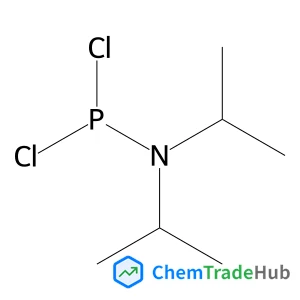
870077-94-43-Di-i-propylphosphi...
化合物よくある質問
含有3-(苯氧基甲基)苯硼酸频那醇酯の廃棄物はどのように処理すべきですか?
含有3-(苯氧基甲基)苯硼酸频那醇酯の廃棄物は、安全な方法で処理する必要があります。まず、廃棄物を適切な容器に収集し、避けて保管します。次に、専門の廃棄処理業者...
912569-68-74,4,5,5-Tetramethyl-...
化合物よくある質問
2-甲基辛-1-醇を取り扱う際の実験室安全事項は何ですか?
取り扱う際は、密閉のゴーグルと手袋を着用することが推奨されます。ドラフトチャンバーを使用し、漏洩時には速やかに取り扱いを中止し、適切な排気設備を使用してください...
818-81-52-Methyl-1-octanol
14066-05-8Scandium triperchlor...
化合物よくある質問
3α-アセトキノイドコレステロールエステルはどのように保存すればよいですか?
3α-アセトキノイドコレステロールエステルは、常温から低温(0-5℃)の暗所で保存し、密閉容器に入れることで安定性を保つことが推奨されます。また、湿気や酸素から...
30365-63-0Methyl (3alpha,5beta...
化合物よくある質問
2-ぶンジロキシ-4-(トリフルオロメチル)フェノルビノン酸の主な用途は何ですか?
2-ぶンジロキシ-4-(トリフルオロメチル)フェノルビノン酸は、化学合成の触媒としての使用や、医薬品の合成材料としての役割があります。また、特定の合成路線で使用...
1701435-39-3[2-(Benzyloxy)-4-(tr...
化合物よくある質問
(2S,3R)-2-氨基-3-甲基丁二酸はどのように合成されますか?
(2S,3R)-2-氨基-3-甲基丁二酸は、2-ヒドロキシ-3-メチル丁酸とアミノ化反応を行うことで合成されます。触媒としてジクロロメタンが使用され、選択性と収...
121570-10-3(2S,3R)-2-amino-3-me...
化合物よくある質問
1-Benzyl-2-phenyl-1H-imidazoleはどのように保存すればよいですか?
この化合物は常温で避けてください。直射日光を避け、密閉容器で保存し、湿気を防水の容器に入れて保管してください。
37734-89-71-Benzyl-2-phenyl-1H...
掲載誌
Reaction Chemistry & Engineering

CiteScore:
0
自己引用率:
8.8%
年間論文数:
284
Reaction Chemistry & Engineering is an interdisciplinary journal reporting cutting-edge research focused on enhancing the understanding and efficiency of reactions. Reaction engineering leverages the interface where fundamental molecular chemistry meets chemical engineering and technology. Challenges in chemistry can be overcome by the application of new technologies, while engineers may find improved solutions for process development from the latest developments in reaction chemistry. Reaction Chemistry & Engineering is a unique forum for researchers whose interests span the broad areas of chemical engineering and chemical sciences to come together in solving problems of importance to wider society. All papers should be written to be approachable by readers across the engineering and chemical sciences. Papers that consider multiple scales, from the laboratory up to and including plant scale, are particularly encouraged.
おすすめ化合物
![N,N'-1,2-Ethanediylbis[2-(vinylsulfonyl)acetamide] structure](https://static.chemtradehub.com/structs/667/66710-66-5-b556.webp "N,N'-1,2-Ethanediylbis[2-(vinylsulfonyl)acetamide] structure")
おすすめサプライヤー




免責事項
このページに表示される学術雑誌情報は、参考および研究目的のみを目的としています。当社は雑誌出版社とは提携しておらず、投稿の取り扱いも行っておりません。出版に関するお問い合わせは、各雑誌出版社に直接ご連絡ください。
表示されている情報に誤りがある場合は、support@chemtradehub.com までご連絡ください。迅速に確認し、対応いたします。