


Lactonizations of carboxylic acid-substituted 3-fluorodihydropyridines with electrophiles: peculiar behaviour of F+
文献情報
出版日
2008-07-08
DOI
10.1039/B807092J
インパクトファクター
6.222
著者
Henri Rudler, Andrée Parlier, Louis Hamon, Patrick Herson, Jean-Claude Daran
原文を見る
要旨
Whereas for 3-fluorodihydropyridine-substituted carboxylic acids electrophiles such as HCl, iodine, bromine and peracids discriminate the double bond lacking and that bearing fluorine, no such differentiation took place in the case of electrophilic fluorine since the formation of both mono and gem-difluorolactones took place.
おすすめジャーナル

Fibre Chemistry

Pure and Applied Chemistry

Organic Preparations and Procedures International

Molecular Pharmacology

Journal of Physics and Chemistry of Solids

Journal of Heterocyclic Chemistry

Pharmacological Reviews

Helvetica Chimica Acta

Nature

Proceedings of the National Academy of Sciences of the United States of America
関連文献
Self-powered triboelectric wearable biosensor using Scotch tape
Yu Lei, Ryan T. Conners, Gang Wang
2023-10-18
Paper
DOI: 10.1039/D3TB01481A
Chaotropic anion induced self-assembly of naphthalimide–glutathione nanohybrids: selective recognition of bisulphate anions in aqueous medium
Monika Chaudhary, Meenakshi Verma, Navneet Kaur, Narinder Singh
2023-11-29
Paper
DOI: 10.1039/D3NJ03912A
Design and photovoltaic studies of W@TiO2/rGO nanocomposites with polymer gel electrolyte
Pramod A. Koyale, Swapnajit V. Mulik, Yash G. Kapdi, Saurabh S. Soni, Sagar D. Delekar
2023-11-06
Paper
DOI: 10.1039/D3NJ04205G
High dehydrogenation of ammonia borane by core–shell heterostructure catalysts formed by carbon template-assisted synthesis
Hui-Ling Zheng, Zi-Hao Zhang, Chen-Gang Feng, Hong-Lin Zhu, Yue-Qing Zheng
2023-11-15
Paper
DOI: 10.1039/D3NJ03802E
3D construction of a cobalt(ii) coordination polymer as a photocatalyst for the degradation of methyl green dye under visible light and its mechanistic pathway
Rais Ahmad Khan, Amal AlFawaz, Afnan Abdullah Alhamed, Nouf Abdulrahman AlMuryyi, Imran Hasan, Anup Paul, Sandeep Dey, Saad. G. Alshammari, Hadi D. Arman, Ali Alsalme
2023-11-29
Paper
DOI: 10.1039/D3NJ03938B
Finding a mononuclear cobalt(iii)-peroxo complex with 1,4,7,10-tetraazacyclododecane, an intermediate for dioxygen reduction
Xiao-Fang Qi, Can-Hao Li, Shu-Zhong Zhan
2023-11-15
Paper
DOI: 10.1039/D3NJ04108E
Glycolysis inhibition for synergistic phototherapy of triple-negative breast cancer
Yuqian Fu, Panpan Xue, Qi Chen, Weili Deng, Shuangqian Yan, Xuemei Zeng
2023-10-25
Paper
DOI: 10.1039/D3TB02059B
Au nanoparticle-decorated Ni2P nanosheet arrays with porous grids for electroanalytical hydroquinone sensing
Wenbo Lu, Xue Zhang, Wenting Tong, Ming Wei
2023-11-16
Paper
DOI: 10.1039/D3NJ03955B
A DFT study of NHC-catalyzed reactions of [3+3] annulations of 2-bromoenals and thioamides: mechanisms and regio- and stereoselectivities
Yan Li, Lina Geng, Zhiyi Song, Zhiqiang Zhang
2023-11-09
Paper
DOI: 10.1039/D3NJ04532C
Correction: Kinetics and mechanism of halide exchange in reactions of CpRu(PPh3)2Cl with alkyl halides: evidence for radical pairs
Katherine Carney, Lauren Polito, Kamilya Reid, Surbhi Srinivas, Gabrielle Blake, Nithin Chintala, Rein U. Kirss
2023-12-06
Correction
DOI: 10.1039/D3NJ90184J
こちらもおすすめ
化合物よくある質問
2-ブロモ-9,9-ジフェニル-9H-フルオレンの主な用途は何ですか?
2-溴-9,9-二苯基芴は、医薬品、工業材料、有機合成の研究分野で応用されます。特に、レーザー材料や機能性ポリマーの合成に使用されることがあります。また、蛍光色...
474918-32-62-Bromo-9,9-diphenyl...
化合物よくある質問
四氯化铱の市場動向や研究トレンドはどうですか?
四氯化铱の市場は研究開発分野で注目されており、特にナノ技術や金属有機框架(MOFs)の分野での需要が増加傾向にあります。価格は安定しており、中国や韓国での生産が...
207399-11-9Tetrachloroiridium h...
882-06-44-Nitrocinnamic acid
化合物よくある質問
1-(4-溴-3-氟苯基)-2-氯乙酮を含む廃棄物はどのように処理すべきですか?
1-(4-溴-3-氟苯基)-2-氯乙酮 (CAS番号: 1260857-14-4) の廃棄物は専門的な廃棄処理が必要です。まず、廃棄物は密閉された容器に収集し、...
1260857-14-41-(4-Bromo-3-fluorop...
化合物よくある質問
苦参酚Kとは何ですか?
苦参酚Kは、CAS番号101236-49-1を持つ化合物で、主に天然由来の生薬から抽出されます。この化合物は、抗炎症作用や抗癌作用を持つことが報告されています。
101236-49-1Kushenol K
化合物よくある質問
POTASSIUM (1-(TERTBUTOXYCARBONYL)AZETIDIN-3-YL)TRIFLUOROBORATE を含む廃棄物はどのように処理すべきですか?
POTASSIUM (1-(TERTBUTOXYCARBONYL)AZETIDIN-3-YL)TRIFLUOROBORATE を含む廃棄物は、まず安全なエント...
1430219-73-0Potassium (1-(tert-b...
化合物よくある質問
4-庚基-4’-联苯羧酸の市場動向や研究トレンドはどうですか?
4-庚基-4’-聯苯羧酸は、特殊化学品や合成化学の分野で用いられる化学物質ですが、市場動向としては、研究開発の進展とともに需要が増加しています。また、環境配慮型...
58573-94-74'-Heptyl-4-biphenyl...
化合物よくある質問
6-ブロモ-3-メトキシ-1-フェニル-1H-インドゾールを含む廃棄物はどのように処理すべきですか?
6-ブロモ-3-メトキシ-1-フェニル-1H-インドゾールを含む廃棄物は、適切な化学廃棄処理が必要です。通常、廃棄物は密閉容器に収集され、専門の廃棄処理業者に引...
1332527-03-36-Bromo-3-methoxy-1-...
化合物よくある質問
4,4-二甲基-2-吡咯烷酮はどの業界で使用されていますか?
4,4-二甲基-2-吡咯烷酮は医薬、ポリマー、センサー、半導体などの業界で広く使用されています。特に溶媒としての性能が高く評価されています。
66899-02-34,4-dimethylpyrrolid...
51312-42-6Sodium Phosphotungst...
掲載誌
Chemical Communications

CiteScore:
8.6
自己引用率:
4.7%
年間論文数:
2458
ChemComm publishes urgent research which is of outstanding significance and interest to experts in the field, while also appealing to the journal’s broad chemistry readership. Our communication format is ideally suited to short, urgent studies that are of such importance that they require accelerated publication. Our scope covers all topics in chemistry, and research at the interface of chemistry and other disciplines (such as materials science, nanoscience, physics, engineering and biology) where there is a significant novelty in the chemistry aspects. Major topic areas covered include: Analytical Chemistry Catalysis Chemical Biology and medicinal chemistry Computational Chemistry and Machine Learning Energy and sustainable chemistry Environmental Chemistry Green Chemistry Inorganic Chemistry Materials Chemistry Nanoscience Organic Chemistry Physical Chemistry Polymer Chemistry Supramolecular Chemistry
おすすめ化合物
![1-[3-(4-Morpholinylsulfonyl)phenyl]methanamine structure](https://static.chemtradehub.com/structs/933/933989-32-3-51af.webp "1-[3-(4-Morpholinylsulfonyl)phenyl]methanamine structure")
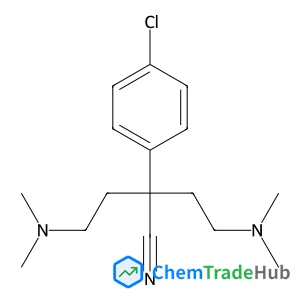
2-(4-Chlorophenyl)-4-(dimethylamino)-2-(2-(dimethylamino)ethyl)butanenitrile
CAS番号:
1246816-57-8
分子式:
C16H24ClN3
おすすめサプライヤー






免責事項
このページに表示される学術雑誌情報は、参考および研究目的のみを目的としています。当社は雑誌出版社とは提携しておらず、投稿の取り扱いも行っておりません。出版に関するお問い合わせは、各雑誌出版社に直接ご連絡ください。
表示されている情報に誤りがある場合は、support@chemtradehub.com までご連絡ください。迅速に確認し、対応いたします。