












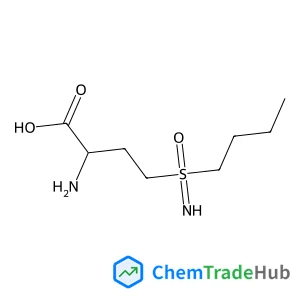
Chaotropic anion induced self-assembly of naphthalimide–glutathione nanohybrids: selective recognition of bisulphate anions in aqueous medium
文献情報
出版日
2023-11-29
DOI
10.1039/D3NJ03912A
インパクトファクター
3.591
著者
Monika Chaudhary, Meenakshi Verma, Navneet Kaur, Narinder Singh
原文を見る
要旨
Anion-induced self-assembly is one of the growing research fields as it provides a better understanding of natural self-assemblies such as DNA, proteins, peptides, etc. Peptides are well known for their aggregation properties owing to their hydrogen bonding interactions. Herein, nanohybrids of the glutathione tripeptide and naphthalimide based compounds were fabricated, in order to explore their self-assembly behaviour. The naphthalimide based compounds were processed into organic nanoparticles using a re-precipitation method and then into nanohybrids with a tripeptide under ultrasonication conditions to get nanohybrids NH-1, NH-2 and NH-3. The morphology of prepared nanohybrids was studied by HRTEM analysis. The photophysical studies of these nanohybrids were carried out by adding various anions. NH-1 shows enhanced fluorescence intensity with bisulphate anions and the rest of the anions do not induce any change in the fluorescence intensity. Furthermore, the morphology of these nanohybrids was monitored using HRTEM and STEM. With bisulphate anions, a beautiful butterfly shaped self-assembly was observed for NH-1. The increase in intensity was a result of the aggregation induced enhanced emission mechanism. These self-assemblies have potential applications in the recognition of bisulphate with a limit of detection (LOD) of 3 nM and a limit of quantification of 10 nM respectively.
関連文献
Epigenetic subtyping of white blood cells using a thermoplastic elastomer-based microfluidic emulsification device for multiplexed, methylation-specific digital droplet PCR
Lidija Malic, Jamal Daoud, Matthias Geissler, Alex Boutin, Ljuboje Lukic, Mojra Janta, Abdelrahman Elmanzalawy, Teodor Veres
2019-10-15
Paper
DOI: 10.1039/C9AN01316D
A BODIPY-carbazole hybrid as a fluorescent probe: the design, synthesis, and discrimination of surfactants and the determination of the CMC values
Xiao-xiao Niu, Qin-chao Xu, An-zhen Li, Yang-jie Li, Xiao-tai Zhang, Guo-wen Xing
2019-10-18
Communication
DOI: 10.1039/C9AN01940E
Functionalization of metal nanoclusters for biomedical applications
Nirmal Goswami, Huang-Hao Yang, Jianping Xie
2016-04-21
Critical Review
DOI: 10.1039/C6AN00773B
Metabolomics for improved treatment monitoring of phenylketonuria: urinary biomarkers for non-invasive assessment of dietary adherence and nutritional deficiencies
Jennifer Wild, Meera Shanmuganathan, Mika Hayashi, Murray Potter
2019-10-03
Paper
DOI: 10.1039/C9AN01642B
Development of portable defocusing micro-scale spatially offset Raman spectroscopy
Marco Realini, Alessandra Botteon, Claudia Conti, Chiara Colombo, Pavel Matousek
2016-04-08
Paper
DOI: 10.1039/C6AN00413J
Voltammetric detection of glutathione: an adsorptive stripping voltammetry approach
Madalena C. C. Areias, Kenichi Shimizu, Richard G. Compton
2016-04-01
Paper
DOI: 10.1039/C6AN00550K
Quantitative analysis of trace palladium contamination in solution using electrochemical X-ray fluorescence (EC-XRF)
Zoë J. Ayres, Mark E. Newton, Julie V. Macpherson
2016-04-20
Paper
DOI: 10.1039/C6AN00340K
An in vivo quantitative Raman-pH sensor of arterial blood based on laser trapping of erythrocytes
Manman Lin, Bin Xu, Huilu Yao, Aiguo Shen, Jiming Hu
2016-03-23
Paper
DOI: 10.1039/C5AN02315G
こちらもおすすめ
化合物よくある質問
2-ブロモ-9,9-ジフェニル-9H-フルオレンの主な用途は何ですか?
2-溴-9,9-二苯基芴は、医薬品、工業材料、有機合成の研究分野で応用されます。特に、レーザー材料や機能性ポリマーの合成に使用されることがあります。また、蛍光色...
474918-32-62-Bromo-9,9-diphenyl...
化合物よくある質問
四氯化铱の市場動向や研究トレンドはどうですか?
四氯化铱の市場は研究開発分野で注目されており、特にナノ技術や金属有機框架(MOFs)の分野での需要が増加傾向にあります。価格は安定しており、中国や韓国での生産が...
207399-11-9Tetrachloroiridium h...
882-06-44-Nitrocinnamic acid
化合物よくある質問
1-(4-溴-3-氟苯基)-2-氯乙酮を含む廃棄物はどのように処理すべきですか?
1-(4-溴-3-氟苯基)-2-氯乙酮 (CAS番号: 1260857-14-4) の廃棄物は専門的な廃棄処理が必要です。まず、廃棄物は密閉された容器に収集し、...
1260857-14-41-(4-Bromo-3-fluorop...
化合物よくある質問
苦参酚Kとは何ですか?
苦参酚Kは、CAS番号101236-49-1を持つ化合物で、主に天然由来の生薬から抽出されます。この化合物は、抗炎症作用や抗癌作用を持つことが報告されています。
101236-49-1Kushenol K
化合物よくある質問
POTASSIUM (1-(TERTBUTOXYCARBONYL)AZETIDIN-3-YL)TRIFLUOROBORATE を含む廃棄物はどのように処理すべきですか?
POTASSIUM (1-(TERTBUTOXYCARBONYL)AZETIDIN-3-YL)TRIFLUOROBORATE を含む廃棄物は、まず安全なエント...
1430219-73-0Potassium (1-(tert-b...
化合物よくある質問
4-庚基-4’-联苯羧酸の市場動向や研究トレンドはどうですか?
4-庚基-4’-聯苯羧酸は、特殊化学品や合成化学の分野で用いられる化学物質ですが、市場動向としては、研究開発の進展とともに需要が増加しています。また、環境配慮型...
58573-94-74'-Heptyl-4-biphenyl...
化合物よくある質問
6-ブロモ-3-メトキシ-1-フェニル-1H-インドゾールを含む廃棄物はどのように処理すべきですか?
6-ブロモ-3-メトキシ-1-フェニル-1H-インドゾールを含む廃棄物は、適切な化学廃棄処理が必要です。通常、廃棄物は密閉容器に収集され、専門の廃棄処理業者に引...
1332527-03-36-Bromo-3-methoxy-1-...
化合物よくある質問
4,4-二甲基-2-吡咯烷酮はどの業界で使用されていますか?
4,4-二甲基-2-吡咯烷酮は医薬、ポリマー、センサー、半導体などの業界で広く使用されています。特に溶媒としての性能が高く評価されています。
66899-02-34,4-dimethylpyrrolid...
51312-42-6Sodium Phosphotungst...
掲載誌
New Journal of Chemistry

CiteScore:
5.3
自己引用率:
3.7%
年間論文数:
2153
NJC (New Journal of Chemistry) is a broad-based primary journal encompassing all branches of chemistry and its sub-disciplines. It contains full research articles, communications, perspectives and focus articles. This well-established journal, owned by the Centre National de la Recherche Scientifique (CNRS) of France, has been co-published with the Royal Society of Chemistry since January 1998. NJC is the forum for the publication of high-quality, original and significant work that opens new directions in chemistry or other scientific disciplines. In addition to having a significant chemical component, work published in NJC must demonstrate that it will have an impact on areas of research other than that of the reported work.
おすすめ化合物

おすすめサプライヤー




免責事項
このページに表示される学術雑誌情報は、参考および研究目的のみを目的としています。当社は雑誌出版社とは提携しておらず、投稿の取り扱いも行っておりません。出版に関するお問い合わせは、各雑誌出版社に直接ご連絡ください。
表示されている情報に誤りがある場合は、support@chemtradehub.com までご連絡ください。迅速に確認し、対応いたします。