













Au nanoparticle-decorated Ni2P nanosheet arrays with porous grids for electroanalytical hydroquinone sensing
文献情報
出版日
2023-11-16
DOI
10.1039/D3NJ03955B
インパクトファクター
3.591
著者
Wenbo Lu, Xue Zhang, Wenting Tong, Ming Wei
原文を見る
要旨
In this study, Au nanoparticle decorated Ni2P nanosheet arrays (Au/Ni2P) with a porous grid are synthesized using hydrothermal and electrodeposition reactions for the first time. The Au/Ni2P nanosheet arrays can electrocatalytically oxidize hydroquinone to produce a current for the detection of hydroquinone. A hydroquinone sensor is fabricated by Au/Ni2P with a porous grid, which can take full advantage of the synergistic catalysis of Au nanoparticles and Ni2P. The catalytic reaction sites of hydroquinone and the potential energy surface of the reaction pathway were predicted by Gaussian 09 and Multiwfn. Prominent performance was recorded for the hydroquinone sensor, attaining a wide linear range from 0.5 to 4000 μM, an excellent sensitivity of 1715 μA mM−1 cm−2, a low detection limit of 0.26 μM, as well as reliable selectivity, repeatability and stability. Gratifyingly, the sensor could satisfy the requirements of hydroquinone determination in actual environmental water, such as in tap water and rainwater.
関連文献
A novel logic gate based on liquid-crystals responding to the DNA conformational transition
Fubing Xiao, Hui Tan, Yan Wu, Shuzhen Liao, Zhaoyang Wu, Guoli Shen, Ruqin Yu
2016-04-13
Communication
DOI: 10.1039/C6AN00504G
Adaptive use of a personal glucose meter (PGM) for acute biotoxicity assessment based on the glucose consumption of microbes
Yuan Yu, Jie Shen, Jinfang Zhi
2016-03-23
Paper
DOI: 10.1039/C5AN02478A
Investigation of an SPR biosensor for determining the influence of connexin 43 expression on the cytotoxicity of cisplatin
Yijia Wang, Shiwu Zhang, Chunze Zhang, Zhenying Zhao, Xiaoli Zheng, Lihua Xue, Jun Liu, X.-C. Yuan
2016-04-20
Paper
DOI: 10.1039/C6AN00264A
Ultrasensitive enrichment of phosphopeptides with Ti4+ immobilized SiO2 graphene-like multilayer nanosheets
Dongpo Xu, Mingxia Gao, Chunhui Deng, Xiangmin Zhang
2016-04-18
Paper
DOI: 10.1039/C6AN00361C
Exonuclease III-assisted signal amplification strategy for sensitive fluorescence detection of polynucleotide kinase based on poly(thymine)-templated copper nanoparticles
Han Zhao, Ying Yan, Mingjian Chen, Tingting Hu, Kefeng Wu, Haisheng Liu, Changbei Ma
2019-10-07
Paper
DOI: 10.1039/C9AN01659G
Electrochemical sensors for rapid diagnosis of pathogens in real time
Olja Simoska, Keith J. Stevenson
2019-10-07
Minireview
DOI: 10.1039/C9AN01747J
A fluorescent turn-on probe for visualizing lysosomes in hypoxic tumor cells
Yingchao Liu, Feiyi Wang, Qiang Fei, Ben Shi, Jiancai An, Chunchang Zhao, Chen-Ho Tung
2016-04-15
Communication
DOI: 10.1039/C6AN00369A
Sensitive analysis of multiple low-molecular-weight thiols in a single human cervical cancer cell by chemical derivatization-liquid chromatography-mass spectrometry
Xian Wang, Quan-Lan Liao, Shuai Zhao, Wei-Hua Huang, Yu-Qi Feng
2019-10-02
Paper
DOI: 10.1039/C9AN01566C
Real-time monitoring of calcification process by Sporosarcina pasteurii biofilm
Dustin Harris, Jyothir Ganesh Ummadi, Andrew R. Thurber, Yvan Allau, Circe Verba, Frederick Colwell, Marta E. Torres, Dipankar Koley
2016-02-29
Paper
DOI: 10.1039/C6AN00007J
こちらもおすすめ
化合物よくある質問
2-ブロモ-9,9-ジフェニル-9H-フルオレンの主な用途は何ですか?
2-溴-9,9-二苯基芴は、医薬品、工業材料、有機合成の研究分野で応用されます。特に、レーザー材料や機能性ポリマーの合成に使用されることがあります。また、蛍光色...
474918-32-62-Bromo-9,9-diphenyl...
化合物よくある質問
四氯化铱の市場動向や研究トレンドはどうですか?
四氯化铱の市場は研究開発分野で注目されており、特にナノ技術や金属有機框架(MOFs)の分野での需要が増加傾向にあります。価格は安定しており、中国や韓国での生産が...
207399-11-9Tetrachloroiridium h...
882-06-44-Nitrocinnamic acid
化合物よくある質問
1-(4-溴-3-氟苯基)-2-氯乙酮を含む廃棄物はどのように処理すべきですか?
1-(4-溴-3-氟苯基)-2-氯乙酮 (CAS番号: 1260857-14-4) の廃棄物は専門的な廃棄処理が必要です。まず、廃棄物は密閉された容器に収集し、...
1260857-14-41-(4-Bromo-3-fluorop...
化合物よくある質問
苦参酚Kとは何ですか?
苦参酚Kは、CAS番号101236-49-1を持つ化合物で、主に天然由来の生薬から抽出されます。この化合物は、抗炎症作用や抗癌作用を持つことが報告されています。
101236-49-1Kushenol K
化合物よくある質問
POTASSIUM (1-(TERTBUTOXYCARBONYL)AZETIDIN-3-YL)TRIFLUOROBORATE を含む廃棄物はどのように処理すべきですか?
POTASSIUM (1-(TERTBUTOXYCARBONYL)AZETIDIN-3-YL)TRIFLUOROBORATE を含む廃棄物は、まず安全なエント...
1430219-73-0Potassium (1-(tert-b...
化合物よくある質問
4-庚基-4’-联苯羧酸の市場動向や研究トレンドはどうですか?
4-庚基-4’-聯苯羧酸は、特殊化学品や合成化学の分野で用いられる化学物質ですが、市場動向としては、研究開発の進展とともに需要が増加しています。また、環境配慮型...
58573-94-74'-Heptyl-4-biphenyl...
化合物よくある質問
6-ブロモ-3-メトキシ-1-フェニル-1H-インドゾールを含む廃棄物はどのように処理すべきですか?
6-ブロモ-3-メトキシ-1-フェニル-1H-インドゾールを含む廃棄物は、適切な化学廃棄処理が必要です。通常、廃棄物は密閉容器に収集され、専門の廃棄処理業者に引...
1332527-03-36-Bromo-3-methoxy-1-...
化合物よくある質問
4,4-二甲基-2-吡咯烷酮はどの業界で使用されていますか?
4,4-二甲基-2-吡咯烷酮は医薬、ポリマー、センサー、半導体などの業界で広く使用されています。特に溶媒としての性能が高く評価されています。
66899-02-34,4-dimethylpyrrolid...
51312-42-6Sodium Phosphotungst...
掲載誌
New Journal of Chemistry

CiteScore:
5.3
自己引用率:
3.7%
年間論文数:
2153
NJC (New Journal of Chemistry) is a broad-based primary journal encompassing all branches of chemistry and its sub-disciplines. It contains full research articles, communications, perspectives and focus articles. This well-established journal, owned by the Centre National de la Recherche Scientifique (CNRS) of France, has been co-published with the Royal Society of Chemistry since January 1998. NJC is the forum for the publication of high-quality, original and significant work that opens new directions in chemistry or other scientific disciplines. In addition to having a significant chemical component, work published in NJC must demonstrate that it will have an impact on areas of research other than that of the reported work.
おすすめ化合物

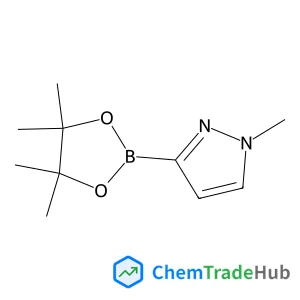
1-Methyl-3-(4,4,5,5-tetramethyl-1,3,2-dioxaborolan-2-yl)-1H-pyrazole
CAS番号:
1020174-04-2
分子式:
C10H17BN2O2


おすすめサプライヤー






免責事項
このページに表示される学術雑誌情報は、参考および研究目的のみを目的としています。当社は雑誌出版社とは提携しておらず、投稿の取り扱いも行っておりません。出版に関するお問い合わせは、各雑誌出版社に直接ご連絡ください。
表示されている情報に誤りがある場合は、support@chemtradehub.com までご連絡ください。迅速に確認し、対応いたします。