


The influence of orbital asymmetry on the kinetics of the gas-phase reactions of ozone with unsaturated compounds
文献情報
出版日
2000-01-25
DOI
10.1039/A908701J
インパクトファクター
3.676
著者
David Johnson, Andrew R. Rickard, Charlotte D. McGill, George Marston
原文を見る
要旨
The relative-rate method was used to obtain room temperature rate constants for the gas-phase reactions of ozone with selected chlorinated alkenes, methylene-substituted cycloalkanes and monoterpenes. Measurements were carried out at 298±2 K and 760±10 Torr. The following rate constants, in units of 10−18 cm3 molecule−1 s−1, were obtained: 2.79±0.32 (methylenecyclopropane), 19.3±2.6 (methylenecyclobutane), 89.5±8.6 (methylenecyclopentane), 28.2±3.6 (methylenecyclohexane), 43.8±5.4 (1-chloro-3-methyl-2-butene), 3.71±0.49 (1-chloro-2-methyl-2-propene), 2.42±0.57 (3-chloro-1-butene), 22.9±1.7 (1-chloro-2-butene), 0.45±0.05 (camphene) and 23.5±2.7 (β-pinene). These rate parameters are interpreted in terms of frontier orbital theory and a correlation with calculated orbital energies is investigated. Scatter in the relationship is examined in terms of the asymmetry of the highest occupied molecular orbital of the alkenes. Differences in the magnitude of the orbital coefficients at either end of the reacting double bond are shown to be consistent with a direct retardation of reaction rate, consistent with the production of a cyclic intermediate via a concerted process. Geometric and spatial requirements of the ozone–alkene reaction mechanism are discussed.
おすすめジャーナル

Colloid Journal

Medicinal Chemistry Research

Biocatalysis and Biotransformation

Chinese Journal of Chemistry

Herald of the Russian Academy of Sciences

Journal of Asian Natural Products Research

Heteroatom Chemistry

Acta Metallurgica Sinica-English Letters

Critical Reviews in Solid State and Materials Sciences

NDT & E International
関連文献
Vibrational spectra and conformational isomerism of calixarene building blocks: 2-benzylphenol
Sergei Katsyuba, Alla Chernova, Reinhard Schmutzler
2003-01-27
Paper
DOI: 10.1039/B211164K
Nitriles as radical acceptors in radical cascade reactions
Kai Sun, Ying-Wu Lin, Bing Yu
2020-10-26
Review Article
DOI: 10.1039/D0QO01058H
Self-recognition and hydrogen bonding by polycyclic bridgehead monoalcohols
Amelia García Fraile, David G. Morris, Antonio García Martínez, Santiago de la Moya Cerero, Kenneth W. Muir, Karl S. Ryder, Enrique Teso Vilar
2003-01-21
Paper
DOI: 10.1039/B209427D
Cascade intramolecular rearrangement/cycloaddition of nitrocyclopropane carboxylates with alkynes/alkenes: access to uncommon bi(hetero)cyclic systems
Rohit Kumar Varshnaya, Priyanka Singh, Navpreet Kaur, Prabal Banerjee
2021-01-21
Research Article
DOI: 10.1039/D0QO01535K
Recent advances in hydride transfer-involved C(sp3)–H activation reactions
Xiao-De An
2021-01-07
Review Article
DOI: 10.1039/D0QO01502D
Metal-free visible-light-induced photoredox-catalyzed intermolecular pyridylation/phosphinoylation of alkenes
Jiaxuan Shen, Yipin Zhang, Yanjiang Yu, Manman Wang
2020-12-22
Research Article
DOI: 10.1039/D0QO01218A
Correction: Fused ambipolar aza-isoindigos with NIR absorption
Danlei Zhu, Hailiang Liao, Sheik Haseena, Mahesh Kumar Ravva, Shengyu Cong, Liuyuan Lan, Yazhou Wang, Zhengke Li, Lang Jiang, Wan Yue
2021-03-03
Correction
DOI: 10.1039/D1QO90017J
A self-assembled tetrathiafulvalene box
Vincent Croué, Olivier Alévêque, Eric Levillain, Magali Allain, Cécile Mézière, Vincent Carré, Frédéric Aubriet, Zoia Voïtenko, Sébastien Goeb, Marc Sallé
2021-01-08
Research Article
DOI: 10.1039/D0QO01543A
Thermodynamic and kinetic studies of hydride transfer from Hantzsch ester under the promotion of organic bases‡
Zhen Li, Jin-Dong Yang, Jin-Pei Cheng
2021-01-04
Research Article
DOI: 10.1039/D0QO01478H
こちらもおすすめ
化合物よくある質問
1-{3-[5-(エチルカルボンイル)-2,4-ジメチル-1H-ピロロール-3-基]プロパニル}ピペリジン-4-カルボン酸について、適用される法規ガイドラインは何ですか?
この化合物はCAS番号1142209-81-1であり、GHS分類では corrosive (腐食性物質) と classified (分類物質) として指定され...
1142209-81-11-{3-[5-(Ethoxycarbo...
化合物よくある質問
2,2-二氟-1,3-ベンゾジオキサン-5-カルボキシlic酸とは何ですか?
2,2-二氟-1,3-ベンゾジオキサン-5-カルボキシlic酸は、CAS番号656-46-2の化合物で、化学式はC8H4F2O4です。この化合物は白色の結晶性粉...
656-46-22,2-Difluoro-1,3-ben...
化合物よくある質問
8-氯-4-色原酮の代替品はありますか?
8-氯-4-色原酮(CAS番号: 49701-11-3)の代替品には、他の色原酮類似物や、構造が似ている化合物があります。例えば、8-メチル-4-色原酮や、他の...
49701-11-38-Chloro-2,3-dihydro...
化合物よくある質問
エチル6,6-ジメチル-4,5,6,7-テトラヒドロ-1H-インドアゼー-3-カルボキシレートとは何ですか?
エチル6,6-ジメチル-4,5,6,7-テトラヒドロ-1H-インドアゼー-3-カルボキシレートは、CAS番号1233243-56-5を有する化合物です。これは有...
1233243-56-5Ethyl 6,6-dimethyl-4...
化合物よくある質問
4-叔丁基-6-氯-嘧啶に適用される法規ガイドラインは何ですか?
4-叔丁基-6-氯-嘧啶はCAS番号3435-24-3で、GHS分類では毒性物質とみなし、GHSの危険性分類が適用されます。REACH規則では登録が必要で、Eu...
3435-24-34-Tert-butyl-6-chlor...
化合物よくある質問
維库溴铵杂质Bはどのように合成されますか?
維库溴铵杂质Bは、アンドロステンデンから始まり、一連の合成反応、包括的な選択性と高い収率で合成されます。具体的には、ブロミド化、酸化、ジマーゼ反応、アミド化など...
50587-95-6(2beta,3alpha,5alpha...
化合物よくある質問
2-(4-氟苄基)-吡咯烷の物理化学的性質は何ですか?
CAS番号350017-04-8の2-(4-氟苄基)-吡咯烷は、結晶性の白色粉末です。分子量は199.17 g/molで、水に溶けにくいです。化学反応では比較的...
350017-04-82-(4-Fluorobenzyl)py...
化合物よくある質問
3-喹啉甲醛(2-チロール-8-エチル)は安全ですか?
3-喹啉甲醛(2-チロール-8-エチル)は一定の毒性を持つため、取扱には注意が必要です。使用する際は適切な防護具を着用し、密閉容器で保管・搬送し、直接的な接触を...
335196-05-92-Chloro-8-ethyl-3-q...
化合物よくある質問
エチル3-(ヒドロキシメチル)-1H-ピロール-2-カルボキシレートはどのように保存すればよいですか?
エチル3-(ヒドロキシメチル)-1H-ピロール-2-カルボキシレートは、室温(25℃)以下で保存し、直射日光を避け、乾燥した環境で保管することが推奨されます。ま...
75448-69-0Ethyl 3-(hydroxymeth...
119410-05-88-Chloro-11-(4-piper...
掲載誌
Physical Chemistry Chemical Physics

CiteScore:
5.5
自己引用率:
10.3%
年間論文数:
3036
Physical Chemistry Chemical Physics (PCCP) is an international journal co-owned by 19 physical chemistry and physics societies from around the world. This journal publishes original, cutting-edge research in physical chemistry, chemical physics and biophysical chemistry. To be suitable for publication in PCCP, articles must include significant innovation and/or insight into physical chemistry; this is the most important criterion that reviewers and Editors will judge against when evaluating submissions. The journal has a broad scope and welcomes contributions spanning experiment, theory, computation and data science. Topical coverage includes spectroscopy, dynamics, kinetics, statistical mechanics, thermodynamics, electrochemistry, catalysis, surface science, quantum mechanics, quantum computing and machine learning. Interdisciplinary research areas such as polymers and soft matter, materials, nanoscience, energy, surfaces/interfaces, and biophysical chemistry are welcomed if they demonstrate significant innovation and/or insight into physical chemistry. Joined experimental/theoretical studies are particularly appreciated when complementary and based on up-to-date approaches.
おすすめ化合物
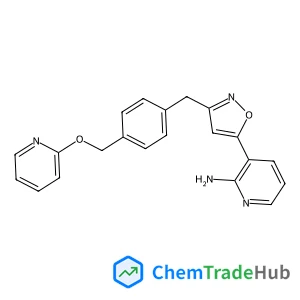
3-(3-(4-((Pyridin-2-yloxy)methyl)benzyl)isoxazol-5-yl)pyridin-2-amine
CAS番号:
936339-60-5
分子式:
C21H18N4O2
おすすめサプライヤー





免責事項
このページに表示される学術雑誌情報は、参考および研究目的のみを目的としています。当社は雑誌出版社とは提携しておらず、投稿の取り扱いも行っておりません。出版に関するお問い合わせは、各雑誌出版社に直接ご連絡ください。
表示されている情報に誤りがある場合は、support@chemtradehub.com までご連絡ください。迅速に確認し、対応いたします。