












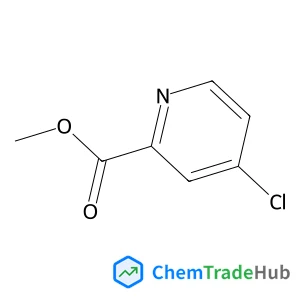
Vibrational spectra and conformational isomerism of calixarene building blocks: 2-benzylphenol
文献情報
出版日
2003-01-27
DOI
10.1039/B211164K
インパクトファクター
3.876
著者
Sergei Katsyuba, Alla Chernova, Reinhard Schmutzler
原文を見る
要旨
The conformations and vibrational spectra of 2-benzylphenol have been analysed within the framework of scaled quantum mechanics. It is shown that the solid-state conformation of the 2-benzylphenol molecule corresponds to one of four potential energy minima predicted by non-empirical quantum chemical calculations for the isolated molecule. In the molten state and in diluted CCl4 solutions of the title compound this conformer coexists with another two spectroscopically detected conformations. The presence of several conformers gives rise to the observation of the corresponding number of νsCH2 and νasCH2 bands in the IR spectra, thus providing experimental evidence of the conformational sensitivity of the νCH2 frequencies. It is shown that νCH2 wavenumbers of different kinds of molecules, containing diphenylmethane fragments, are determined by the dihedral angles between the planes of the aromatic rings and the plane of the connecting methylene bridges, except for the case of short intramolecular contacts with the participation of the methylene protons.
関連文献
Oxygen-17 hyperfine structures in the pure rotational spectra of SrO, SnO, BaO, HfO and ThO
Christopher T. Dewberry, Kerry C. Etchison, Garry S. Grubbs II, Robert A. Powoski, Michal M. Serafin, Sean A. Peebles, Stephen A. Cooke
2007-10-09
Paper
DOI: 10.1039/B712798G
Intracule functional models: I. Angle-corrected correlation kernels
Elise E. Dumont, Deborah L. Crittenden, Peter M. W. Gill
2007-08-13
Paper
DOI: 10.1039/B709513A
Frequency-dependent response properties and excitation energies from one-electron density matrix functionals
Jerzy Cioslowski
2007-07-23
Perspective
DOI: 10.1039/B704797E
Spectroelectrochemical responses of thin-film conducting copolymers prepared electrochemically from mixtures of 3,4-ethylenedioxythiophene and 2,2′-bithiophene
Andrew Glidle, Roger J. Mortimer, Karl S. Ryder
2007-11-02
Paper
DOI: 10.1039/B713018J
On the origin of the forward peak and backward oscillations in the F + H2(v = 0) → HF(v′ = 2) + H reaction
D. Sokolovski, S. Cavalli, V. Aquilanti
2007-09-13
Paper
DOI: 10.1039/B709427B
Structural characterization of an anhydrous polymorph of paclitaxel by solid-state NMR‡
James K. Harper, David M. Grant
2007-10-10
Paper
DOI: 10.1039/B711027H
Barium diffusion in mixed cation glasses
M. Grofmeier, F. V. Natrup, H. Bracht
2007-09-21
Paper
DOI: 10.1039/B709868E
Structures, energetics, and infrared spectra of the Cl−–(H2S)n and Br−–(H2S)n anion clusters from ab initio calculations
T. Lenzer
2007-09-13
Paper
DOI: 10.1039/B710111B
On the position of the potential wall in DFT temporary anion calculations
Nick Sablon, Frank De Proft, Paul Geerlings, David J. Tozer
2007-09-24
Paper
DOI: 10.1039/B711428A
こちらもおすすめ
化合物よくある質問
1-{3-[5-(エチルカルボンイル)-2,4-ジメチル-1H-ピロロール-3-基]プロパニル}ピペリジン-4-カルボン酸について、適用される法規ガイドラインは何ですか?
この化合物はCAS番号1142209-81-1であり、GHS分類では corrosive (腐食性物質) と classified (分類物質) として指定され...
1142209-81-11-{3-[5-(Ethoxycarbo...
化合物よくある質問
2,2-二氟-1,3-ベンゾジオキサン-5-カルボキシlic酸とは何ですか?
2,2-二氟-1,3-ベンゾジオキサン-5-カルボキシlic酸は、CAS番号656-46-2の化合物で、化学式はC8H4F2O4です。この化合物は白色の結晶性粉...
656-46-22,2-Difluoro-1,3-ben...
化合物よくある質問
8-氯-4-色原酮の代替品はありますか?
8-氯-4-色原酮(CAS番号: 49701-11-3)の代替品には、他の色原酮類似物や、構造が似ている化合物があります。例えば、8-メチル-4-色原酮や、他の...
49701-11-38-Chloro-2,3-dihydro...
化合物よくある質問
エチル6,6-ジメチル-4,5,6,7-テトラヒドロ-1H-インドアゼー-3-カルボキシレートとは何ですか?
エチル6,6-ジメチル-4,5,6,7-テトラヒドロ-1H-インドアゼー-3-カルボキシレートは、CAS番号1233243-56-5を有する化合物です。これは有...
1233243-56-5Ethyl 6,6-dimethyl-4...
化合物よくある質問
4-叔丁基-6-氯-嘧啶に適用される法規ガイドラインは何ですか?
4-叔丁基-6-氯-嘧啶はCAS番号3435-24-3で、GHS分類では毒性物質とみなし、GHSの危険性分類が適用されます。REACH規則では登録が必要で、Eu...
3435-24-34-Tert-butyl-6-chlor...
化合物よくある質問
維库溴铵杂质Bはどのように合成されますか?
維库溴铵杂质Bは、アンドロステンデンから始まり、一連の合成反応、包括的な選択性と高い収率で合成されます。具体的には、ブロミド化、酸化、ジマーゼ反応、アミド化など...
50587-95-6(2beta,3alpha,5alpha...
化合物よくある質問
2-(4-氟苄基)-吡咯烷の物理化学的性質は何ですか?
CAS番号350017-04-8の2-(4-氟苄基)-吡咯烷は、結晶性の白色粉末です。分子量は199.17 g/molで、水に溶けにくいです。化学反応では比較的...
350017-04-82-(4-Fluorobenzyl)py...
化合物よくある質問
3-喹啉甲醛(2-チロール-8-エチル)は安全ですか?
3-喹啉甲醛(2-チロール-8-エチル)は一定の毒性を持つため、取扱には注意が必要です。使用する際は適切な防護具を着用し、密閉容器で保管・搬送し、直接的な接触を...
335196-05-92-Chloro-8-ethyl-3-q...
化合物よくある質問
エチル3-(ヒドロキシメチル)-1H-ピロール-2-カルボキシレートはどのように保存すればよいですか?
エチル3-(ヒドロキシメチル)-1H-ピロール-2-カルボキシレートは、室温(25℃)以下で保存し、直射日光を避け、乾燥した環境で保管することが推奨されます。ま...
75448-69-0Ethyl 3-(hydroxymeth...
119410-05-88-Chloro-11-(4-piper...
掲載誌
Organic & Biomolecular Chemistry

CiteScore:
3.4
自己引用率:
10.3%
年間論文数:
1041
Organic & Biomolecular Chemistry (OBC) publishes original and high impact research and reviews in organic chemistry. We welcome research that shows new or significantly improved protocols or methodologies in total synthesis, synthetic methodology or physical and theoretical organic chemistry as well as research that shows a significant advance in the organic chemistry or molecular design aspects of chemical biology, catalysis, supramolecular and macromolecular chemistry, theoretical chemistry, mechanism-oriented physical organic chemistry, medicinal chemistry or natural products. Articles published in the journal should report new work which makes a highly-significant impact in the field. Routine and incremental work is generally not suitable for publication in the journal. More details about key areas of our scope are below. In all cases authors should include in their article clear rationale for why their research has been carried out.
おすすめ化合物

おすすめサプライヤー





免責事項
このページに表示される学術雑誌情報は、参考および研究目的のみを目的としています。当社は雑誌出版社とは提携しておらず、投稿の取り扱いも行っておりません。出版に関するお問い合わせは、各雑誌出版社に直接ご連絡ください。
表示されている情報に誤りがある場合は、support@chemtradehub.com までご連絡ください。迅速に確認し、対応いたします。