












![Methyl 4-({[(2-methyl-2-propanyl)oxy]carbonyl}amino)bicyclo[2.2.2]octane-1-carboxylate structure](https://static.chemtradehub.com/structs/943/943845-74-7-b7e5.webp "Methyl 4-({[(2-methyl-2-propanyl)oxy]carbonyl}amino)bicyclo[2.2.2]octane-1-carboxylate structure")
Boosting the interfacial dynamics and thermodynamics in polyanion cathode by carbon dots for ultrafast-charging sodium ion batteries
文献情報
出版日
2023-11-30
DOI
10.1039/D3SC05593K
インパクトファクター
9.825
著者
Yujin Li, Yu Mei, Roya Momen, Bai Song, Yujie Huang, Xue Zhong, Hanrui Ding, Wentao Deng, Guoqiang Zou, Hongshuai Hou, Xiaobo Ji
原文を見る
要旨
Ultrafast-charging is the focus of next-generation rechargeable batteries for widespread economic success by reducing the time cost. However, the poor ion diffusion rate, intrinsic electronic conductivity and structural stability of cathode materials seriously hinder the development of ultrafast-charging technology. To overcome these challenges, an interfacial dynamics and thermodynamics synergistic strategy is proposed to synchronously enhance the fast-charging capability and structural stability of polyanion cathode materials. As a case study, a Na3V2(PO4)3 composite (NVP/NSC) is successfully obtained by introducing an interface layer derived from N/S co-doped carbon dots. Density functional theory calculations validate that the interfacial bonding effect of V–N/S–C significantly reduces the Na+ transport energy barrier. D-band center theory analysis confirms the downward shift of the V d-band center enhances the strength of the V–O bond and considerably inhibits irreversible phase transformation. Benefitting from this interfacial synergistic strategy, NVP/NSC achieves a high capability and excellent cycling stability with a surprisingly low carbon content (2.23%) at an extremely high rate of 100C for 10 000 cycles (87.2 mA h g−1, 0.0028% capacity decay per cycle). Furthermore, a superior performance at 5C (115.3 mA h g−1, 92.1% capacity retention after 800 cycles) is exhibited by the NVP/NSC‖HC full cell. These findings provide timely new insights for the systematic design of ultrafast-charging cathode materials.
関連文献
A simple route for fabricating poly(para-phenylene vinylene) (PPV) particles by using ionic liquids and a solvent evaporation process
Hiroshi Yabu, Atsunori Tajima, Takeshi Higuchi
2008-08-06
Communication
DOI: 10.1039/B809765H
Kagomé type extra-large microporous solid based on a paddle-wheel Cu2+ dimer
Satoshi Horike, Shinpei Hasegawa, Daisuke Tanaka, Masakazu Higuchi
2008-07-21
Communication
DOI: 10.1039/B806616G
[60]Fullerene-based liquid crystals acting as acid-sensitive fluorescent probes‡
Laura Pérez, Julie Lenoble, Joaquín Barberá, Pilar de la Cruz, Robert Deschenaux, Fernando Langa
2008-08-22
Communication
DOI: 10.1039/B808730J
Selective mono reduction of bis-phosphine oxides under mild conditions
Maria J. Petersson, Wendy A. Loughlin, Ian D. Jenkins
2008-07-30
Communication
DOI: 10.1039/B807695B
Improved oxygen mobility in nanosized mixed-oxide particles synthesized using a simple nanocasting route
Magali Bonne, Nicolas Bion, Frédéric Pailloux, Sabine Valange, Sébastien Royer, Jean-Michel Tatibouët, Daniel Duprez
2008-08-01
Communication
DOI: 10.1039/B808699K
Cyanide-bridged tetradecanuclear RuII3MII11clusters (MII = ZnII and CuII) based on the high connectivity building block [Ru3(HAT)(CN)12]6−: structural and photophysical properties‡
Juan Manuel Herrera, Enrique Colacio, Corine Mathonière, Duane Choquesillo-Lazarte, Michael D. Ward
2008-07-25
Communication
DOI: 10.1039/B807364C
Temporal and spatial imaging of hydrogen storage materials: watching solvent and hydrogen desorption from aluminium hydride by transmission electron microscopy
Shane D. Beattie, Terry Humphries, Louise Weaver, G. Sean McGrady
2008-07-28
Communication
DOI: 10.1039/B807091A
QM/MM simulations predict a covalent intermediate in the hen egg white lysozyme reaction with its natural substrate
Anna L. Bowman, Ian M. Grant, Adrian J. Mulholland
2008-08-05
Communication
DOI: 10.1039/B810099C
こちらもおすすめ
化合物よくある質問
2-ブロモ-9,9-ジフェニル-9H-フルオレンの主な用途は何ですか?
2-溴-9,9-二苯基芴は、医薬品、工業材料、有機合成の研究分野で応用されます。特に、レーザー材料や機能性ポリマーの合成に使用されることがあります。また、蛍光色...
474918-32-62-Bromo-9,9-diphenyl...
化合物よくある質問
四氯化铱の市場動向や研究トレンドはどうですか?
四氯化铱の市場は研究開発分野で注目されており、特にナノ技術や金属有機框架(MOFs)の分野での需要が増加傾向にあります。価格は安定しており、中国や韓国での生産が...
207399-11-9Tetrachloroiridium h...
882-06-44-Nitrocinnamic acid
化合物よくある質問
1-(4-溴-3-氟苯基)-2-氯乙酮を含む廃棄物はどのように処理すべきですか?
1-(4-溴-3-氟苯基)-2-氯乙酮 (CAS番号: 1260857-14-4) の廃棄物は専門的な廃棄処理が必要です。まず、廃棄物は密閉された容器に収集し、...
1260857-14-41-(4-Bromo-3-fluorop...
化合物よくある質問
苦参酚Kとは何ですか?
苦参酚Kは、CAS番号101236-49-1を持つ化合物で、主に天然由来の生薬から抽出されます。この化合物は、抗炎症作用や抗癌作用を持つことが報告されています。
101236-49-1Kushenol K
化合物よくある質問
POTASSIUM (1-(TERTBUTOXYCARBONYL)AZETIDIN-3-YL)TRIFLUOROBORATE を含む廃棄物はどのように処理すべきですか?
POTASSIUM (1-(TERTBUTOXYCARBONYL)AZETIDIN-3-YL)TRIFLUOROBORATE を含む廃棄物は、まず安全なエント...
1430219-73-0Potassium (1-(tert-b...
化合物よくある質問
4-庚基-4’-联苯羧酸の市場動向や研究トレンドはどうですか?
4-庚基-4’-聯苯羧酸は、特殊化学品や合成化学の分野で用いられる化学物質ですが、市場動向としては、研究開発の進展とともに需要が増加しています。また、環境配慮型...
58573-94-74'-Heptyl-4-biphenyl...
化合物よくある質問
6-ブロモ-3-メトキシ-1-フェニル-1H-インドゾールを含む廃棄物はどのように処理すべきですか?
6-ブロモ-3-メトキシ-1-フェニル-1H-インドゾールを含む廃棄物は、適切な化学廃棄処理が必要です。通常、廃棄物は密閉容器に収集され、専門の廃棄処理業者に引...
1332527-03-36-Bromo-3-methoxy-1-...
化合物よくある質問
4,4-二甲基-2-吡咯烷酮はどの業界で使用されていますか?
4,4-二甲基-2-吡咯烷酮は医薬、ポリマー、センサー、半導体などの業界で広く使用されています。特に溶媒としての性能が高く評価されています。
66899-02-34,4-dimethylpyrrolid...
51312-42-6Sodium Phosphotungst...
掲載誌
Chemical Science
CiteScore:
14.4
自己引用率:
3.9%
年間論文数:
1413
Our journal has a wide-ranging scope which covers the full breadth of the chemical sciences. The research we publish contains the sorts of novel ideas, challenging questions and progressive thinking that bring undiscovered breakthroughs within reach. Your paper could focus on a single area, or cross many. It could be beyond the accepted bounds of the chemical sciences. It might address an immediate challenge, contribute to a future breakthrough or be wholly conceptual. We’re a team from every field of the chemical sciences, and know from experience that breakthroughs that drive the solutions to global challenges can come from anywhere, at any time. You could even start an entirely new area of research. Too bold? Too progressive? No such thing
おすすめ化合物
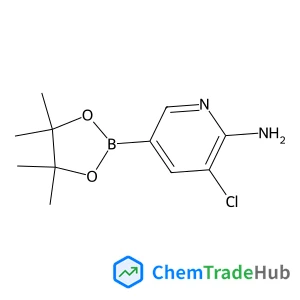
3-Chloro-5-(4,4,5,5-tetramethyl-1,3,2-dioxaborolan-2-yl)-2-pyridinamine
CAS番号:
1032758-99-8
分子式:
C11H16BClN2O2
おすすめサプライヤー






免責事項
このページに表示される学術雑誌情報は、参考および研究目的のみを目的としています。当社は雑誌出版社とは提携しておらず、投稿の取り扱いも行っておりません。出版に関するお問い合わせは、各雑誌出版社に直接ご連絡ください。
表示されている情報に誤りがある場合は、support@chemtradehub.com までご連絡ください。迅速に確認し、対応いたします。