












Cyanide-bridged tetradecanuclear RuII3MII11clusters (MII = ZnII and CuII) based on the high connectivity building block [Ru3(HAT)(CN)12]6−: structural and photophysical properties‡
文献情報
出版日
2008-07-25
DOI
10.1039/B807364C
インパクトファクター
6.222
著者
Juan Manuel Herrera, Enrique Colacio, Corine Mathonière, Duane Choquesillo-Lazarte, Michael D. Ward
原文を見る
要旨
Reaction of the anionic cyanometallate chromophore [{Ru(CN)4}3(μ3-HAT)]6− with [MII(tren)]2+ complexes (M = ZnII, CuII) provides discrete tetradecanuclear clusters of formula [{MII(tren)(μ-CN)}11{Ru3(HAT)(CN)}]16+; the weak luminescence of the Ru3 chromophore is substantially enhanced in the presence of ZnII ions, whereas it is completely quenched when CuII centers are present.
関連文献
Luminescent covalent organic cages with a C3-symmetric structure for effective enantioseparation
Tianyu Li, Yuan Pan, Haixin Song, Hui Jiang, Yujing Guo, Linlin Shi, Xinqi Hao, Mao-Ping Song
2023-11-14
Paper
DOI: 10.1039/D3NJ04719A
Preparation of acid-driven magnetically imprinted micromotors and selective loading of phycocyanin
Guangdong Yang, Jiajing Liu, Li Yuan, Hongye Tian, Xingbin Yang
2023-10-31
Paper
DOI: 10.1039/D3TB02021E
Sorghum-derived porous carbon for outstanding green supercapacitors
Fuming Zhang, Hongchao Lang, Jinggao Wu, Jing Huang
2023-11-22
Paper
DOI: 10.1039/D3NJ04881K
3D construction of a cobalt(ii) coordination polymer as a photocatalyst for the degradation of methyl green dye under visible light and its mechanistic pathway
Rais Ahmad Khan, Amal AlFawaz, Afnan Abdullah Alhamed, Nouf Abdulrahman AlMuryyi, Imran Hasan, Anup Paul, Sandeep Dey, Saad. G. Alshammari, Hadi D. Arman, Ali Alsalme
2023-11-29
Paper
DOI: 10.1039/D3NJ03938B
Atropisomers and a copper(ii) complex derived from 1,3-dimethyl-5-(8′-quinolinylazo)-6-aminouracil: structures, magnetism and biological properties
Nishithendu Bikash Nandi, Nishan Das, Susanta Ghanta, Krishti Rekha Puzari, Pranab Dutta, Julia Kłak, Lesław Sieroń, Waldemar Maniukiewicz, Tarun Kumar Misra
2023-11-06
Paper
DOI: 10.1039/D3NJ04598F
Salts of barbituric and 2-thiobarbituric acids with imidazole: polymorphism, supramolecular structure, thermal stability and water solubility
Taisiya S. Sukhikh, Irina A. Kurzina, Natalia M. Korotchenko, Dmitriy S. Nikitin
2023-11-17
Paper
DOI: 10.1039/D3NJ04516A
Manganese-mineralized cancer cells as immunogenic cancer vaccines for tumor immunotherapy
Zhenyu Liu, Benke Li, Chen Li, Yihao Cui, Fengchao Tian, Ruikang Tang, Xiaoyu Wang
2023-11-01
Paper
DOI: 10.1039/D3TB01538F
Hydroxyapatite nanoparticle-modified porous bone grafts with improved cell attachment
Prachi Dhavalikar, Dana Jenkins, Natalie Rosen, Aparajith Kannapiran, Karim Salhadar, Orren Shachaf, Michael Silverstein, Elizabeth Cosgriff-Hernández
2023-10-19
Paper
DOI: 10.1039/D3TB01839C
Cobalt oxide confined in mesoporous SBA-15 as a highly efficient catalyst for enhanced degradation of sulfamethoxazole
Tingting Jiang, Jinqi Zhu, Tingwei Rui, Shourong Zheng, Zhixin Hu
2023-11-24
Paper
DOI: 10.1039/D3NJ04129H
Effect of SO2 introduction into CeO2 on its surface acidity and redox property for the selective catalytic reduction of NO with NH3
Xuejun Zhang, Dujuan Mo, Zhongxian Song, Wei Liu, Haiyang Li, Nana Guan, Mengru Zhang, Ruihua Guo, Zhenzhen Huang
2023-11-27
Paper
DOI: 10.1039/D3NJ03924B
こちらもおすすめ
化合物よくある質問
2-ブロモ-9,9-ジフェニル-9H-フルオレンの主な用途は何ですか?
2-溴-9,9-二苯基芴は、医薬品、工業材料、有機合成の研究分野で応用されます。特に、レーザー材料や機能性ポリマーの合成に使用されることがあります。また、蛍光色...
474918-32-62-Bromo-9,9-diphenyl...
化合物よくある質問
四氯化铱の市場動向や研究トレンドはどうですか?
四氯化铱の市場は研究開発分野で注目されており、特にナノ技術や金属有機框架(MOFs)の分野での需要が増加傾向にあります。価格は安定しており、中国や韓国での生産が...
207399-11-9Tetrachloroiridium h...
882-06-44-Nitrocinnamic acid
化合物よくある質問
1-(4-溴-3-氟苯基)-2-氯乙酮を含む廃棄物はどのように処理すべきですか?
1-(4-溴-3-氟苯基)-2-氯乙酮 (CAS番号: 1260857-14-4) の廃棄物は専門的な廃棄処理が必要です。まず、廃棄物は密閉された容器に収集し、...
1260857-14-41-(4-Bromo-3-fluorop...
化合物よくある質問
苦参酚Kとは何ですか?
苦参酚Kは、CAS番号101236-49-1を持つ化合物で、主に天然由来の生薬から抽出されます。この化合物は、抗炎症作用や抗癌作用を持つことが報告されています。
101236-49-1Kushenol K
化合物よくある質問
POTASSIUM (1-(TERTBUTOXYCARBONYL)AZETIDIN-3-YL)TRIFLUOROBORATE を含む廃棄物はどのように処理すべきですか?
POTASSIUM (1-(TERTBUTOXYCARBONYL)AZETIDIN-3-YL)TRIFLUOROBORATE を含む廃棄物は、まず安全なエント...
1430219-73-0Potassium (1-(tert-b...
化合物よくある質問
4-庚基-4’-联苯羧酸の市場動向や研究トレンドはどうですか?
4-庚基-4’-聯苯羧酸は、特殊化学品や合成化学の分野で用いられる化学物質ですが、市場動向としては、研究開発の進展とともに需要が増加しています。また、環境配慮型...
58573-94-74'-Heptyl-4-biphenyl...
化合物よくある質問
6-ブロモ-3-メトキシ-1-フェニル-1H-インドゾールを含む廃棄物はどのように処理すべきですか?
6-ブロモ-3-メトキシ-1-フェニル-1H-インドゾールを含む廃棄物は、適切な化学廃棄処理が必要です。通常、廃棄物は密閉容器に収集され、専門の廃棄処理業者に引...
1332527-03-36-Bromo-3-methoxy-1-...
化合物よくある質問
4,4-二甲基-2-吡咯烷酮はどの業界で使用されていますか?
4,4-二甲基-2-吡咯烷酮は医薬、ポリマー、センサー、半導体などの業界で広く使用されています。特に溶媒としての性能が高く評価されています。
66899-02-34,4-dimethylpyrrolid...
51312-42-6Sodium Phosphotungst...
掲載誌
Chemical Communications

CiteScore:
8.6
自己引用率:
4.7%
年間論文数:
2458
ChemComm publishes urgent research which is of outstanding significance and interest to experts in the field, while also appealing to the journal’s broad chemistry readership. Our communication format is ideally suited to short, urgent studies that are of such importance that they require accelerated publication. Our scope covers all topics in chemistry, and research at the interface of chemistry and other disciplines (such as materials science, nanoscience, physics, engineering and biology) where there is a significant novelty in the chemistry aspects. Major topic areas covered include: Analytical Chemistry Catalysis Chemical Biology and medicinal chemistry Computational Chemistry and Machine Learning Energy and sustainable chemistry Environmental Chemistry Green Chemistry Inorganic Chemistry Materials Chemistry Nanoscience Organic Chemistry Physical Chemistry Polymer Chemistry Supramolecular Chemistry
おすすめ化合物
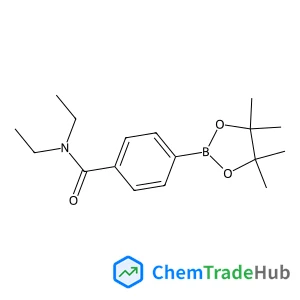
N,N-Diethyl-4-(4,4,5,5-tetramethyl-1,3,2-dioxaborolan-2-yl)benzamide
CAS番号:
325142-99-2
分子式:
C17H26BNO3
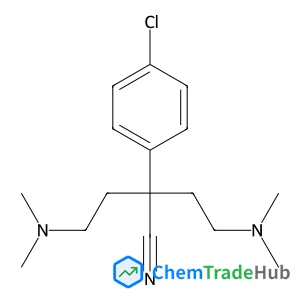
2-(4-Chlorophenyl)-4-(dimethylamino)-2-(2-(dimethylamino)ethyl)butanenitrile
CAS番号:
1246816-57-8
分子式:
C16H24ClN3
![2,6-Bis({(2R)-2-[hydroxy(diphenyl)methyl]-1-pyrrolidinyl}methyl)-4-methylphenol structure](https://static.chemtradehub.com/structs/877/877395-58-9-70bf.webp "2,6-Bis({(2R)-2-[hydroxy(diphenyl)methyl]-1-pyrrolidinyl}methyl)-4-methylphenol structure")
![Pyrazolo[1,5-a]pyridine-3-carbothioamide structure](https://static.chemtradehub.com/structs/885/885275-44-5-aae0.webp "Pyrazolo[1,5-a]pyridine-3-carbothioamide structure")
おすすめサプライヤー





免責事項
このページに表示される学術雑誌情報は、参考および研究目的のみを目的としています。当社は雑誌出版社とは提携しておらず、投稿の取り扱いも行っておりません。出版に関するお問い合わせは、各雑誌出版社に直接ご連絡ください。
表示されている情報に誤りがある場合は、support@chemtradehub.com までご連絡ください。迅速に確認し、対応いたします。