












Computationally guided bioengineering of the active site, substrate access pathway, and water channels of thermostable cytochrome P450, CYP175A1, for catalyzing the alkane hydroxylation reaction
文献情報
出版日
2023-12-04
DOI
10.1039/D3SC02857G
インパクトファクター
9.825
著者
Mohd Taher, Kshatresh Dutta Dubey, Shyamalava Mazumdar
原文を見る
要旨
Understanding structure–function relationships in proteins is pivotal in their development as industrial biocatalysts. In this regard, rational engineering of protein active site access pathways and various tunnels and channels plays a central role in designing competent enzymes with high stability and enhanced efficiency. Here, we report the rational evolution of a thermostable cytochrome P450, CYP175A1, to catalyze the C–H activation reaction of longer-chain alkanes. A strategy combining computational tools with experiments has shown that the substrate scope and enzymatic activity can be enhanced by rational engineering of certain important channels such as the substrate entry and water channels along with the active site of the enzyme. The evolved enzymes showed an improved catalytic rate for hexadecane hydroxylation with high regioselectivity. The Q67L/Y68F mutation showed binding of the substrate in the active site, water channel mutation L80F/V220T showed improved catalytic activity through the peroxide shunt pathway and substrate entry channel mutation W269F/I270A showed better substrate accessibility to the active pocket. All-atom MD simulations provided the rationale for the inactivity of the wild-type CYP175A1 for hexadecane hydroxylation and predicted the above hot-spot residues to enhance the activity. The reaction mechanism was studied by QM/MM calculations for enzyme–substrate complexes and reaction intermediates. Detailed thermal and thermodynamic stability of all the mutants were analyzed and the results showed that the evolved enzymes were thermally stable. The present strategy showed promising results, and insights gained from this work can be applied to the general enzymatic system to expand substrate scope and improve catalytic activity.
関連文献
Subtractive assembly of DNA nanoarchitectures driven by fuel strand displacement
Zhe Li, Yonggang Ke, Chenxiang Lin, Hao Yan, Yan Liu
2008-07-17
Communication
DOI: 10.1039/B807933A
Hydrogen adsorption in microporous organic framework polymer
Saad Makhseed, Jacob Samuel
2008-07-18
Communication
DOI: 10.1039/B805656K
Lactonizations of carboxylic acid-substituted 3-fluorodihydropyridines with electrophiles: peculiar behaviour of F+
Henri Rudler, Andrée Parlier, Louis Hamon, Patrick Herson, Jean-Claude Daran
2008-07-08
Communication
DOI: 10.1039/B807092J
Nanoparticles of iron(ii) spin-crossover
Thibaut Forestier, Stéphane Mornet, Nathalie Daro, Taishi Nishihara, Shin-ichiro Mouri, Koichiro Tanaka, Olivier Fouché, Eric Freysz, Jean-François Létard
2008-07-16
Communication
DOI: 10.1039/B806347H
Strategic synthesis of SBA-15 nanorods
Xiulei Ji, Kyu T. Lee, Muguette Monjauze, Linda F. Nazar
2008-06-20
Communication
DOI: 10.1039/B804327B
Gold mediated glycosylations: selective activation of propargyl 1,2-orthoesters in the presence of aglycones containing a propargyl moiety
Gopalsamy Sureshkumar, Srinivas Hotha
2008-07-21
Communication
DOI: 10.1039/B806707D
Cyanide-bridged tetradecanuclear RuII3MII11clusters (MII = ZnII and CuII) based on the high connectivity building block [Ru3(HAT)(CN)12]6−: structural and photophysical properties‡
Juan Manuel Herrera, Enrique Colacio, Corine Mathonière, Duane Choquesillo-Lazarte, Michael D. Ward
2008-07-25
Communication
DOI: 10.1039/B807364C
Lewis base-catalyzed conjugate reduction and reductive aldol reaction of α,β-unsaturated ketones using trichlorosilane
Masaharu Sugiura, Norimasa Sato, Shunsuke Kotani, Makoto Nakajima
2008-07-17
Communication
DOI: 10.1039/B807529H
A facile approach to fabricate functionalized superparamagnetic copolymer-silica nanocomposite spheres
Dechao Niu, Yongsheng Li, Xiaoli Qiao, Liang Li, Wenru Zhao, Hangrong Chen, Qiaoling Zhao, Zhi Ma
2008-07-29
Communication
DOI: 10.1039/B807781A
Click chemistry step growth polymerization of novel α-azide-ω-alkyne monomers
Denis Damiron, Thierry Hamaide, Jean-Pierre Pascault, Etienne Fleury, Eric Drockenmuller
2008-07-21
Communication
DOI: 10.1039/B805164J
こちらもおすすめ
化合物よくある質問
2-ブロモ-9,9-ジフェニル-9H-フルオレンの主な用途は何ですか?
2-溴-9,9-二苯基芴は、医薬品、工業材料、有機合成の研究分野で応用されます。特に、レーザー材料や機能性ポリマーの合成に使用されることがあります。また、蛍光色...
474918-32-62-Bromo-9,9-diphenyl...
化合物よくある質問
四氯化铱の市場動向や研究トレンドはどうですか?
四氯化铱の市場は研究開発分野で注目されており、特にナノ技術や金属有機框架(MOFs)の分野での需要が増加傾向にあります。価格は安定しており、中国や韓国での生産が...
207399-11-9Tetrachloroiridium h...
882-06-44-Nitrocinnamic acid
化合物よくある質問
1-(4-溴-3-氟苯基)-2-氯乙酮を含む廃棄物はどのように処理すべきですか?
1-(4-溴-3-氟苯基)-2-氯乙酮 (CAS番号: 1260857-14-4) の廃棄物は専門的な廃棄処理が必要です。まず、廃棄物は密閉された容器に収集し、...
1260857-14-41-(4-Bromo-3-fluorop...
化合物よくある質問
苦参酚Kとは何ですか?
苦参酚Kは、CAS番号101236-49-1を持つ化合物で、主に天然由来の生薬から抽出されます。この化合物は、抗炎症作用や抗癌作用を持つことが報告されています。
101236-49-1Kushenol K
化合物よくある質問
POTASSIUM (1-(TERTBUTOXYCARBONYL)AZETIDIN-3-YL)TRIFLUOROBORATE を含む廃棄物はどのように処理すべきですか?
POTASSIUM (1-(TERTBUTOXYCARBONYL)AZETIDIN-3-YL)TRIFLUOROBORATE を含む廃棄物は、まず安全なエント...
1430219-73-0Potassium (1-(tert-b...
化合物よくある質問
4-庚基-4’-联苯羧酸の市場動向や研究トレンドはどうですか?
4-庚基-4’-聯苯羧酸は、特殊化学品や合成化学の分野で用いられる化学物質ですが、市場動向としては、研究開発の進展とともに需要が増加しています。また、環境配慮型...
58573-94-74'-Heptyl-4-biphenyl...
化合物よくある質問
6-ブロモ-3-メトキシ-1-フェニル-1H-インドゾールを含む廃棄物はどのように処理すべきですか?
6-ブロモ-3-メトキシ-1-フェニル-1H-インドゾールを含む廃棄物は、適切な化学廃棄処理が必要です。通常、廃棄物は密閉容器に収集され、専門の廃棄処理業者に引...
1332527-03-36-Bromo-3-methoxy-1-...
化合物よくある質問
4,4-二甲基-2-吡咯烷酮はどの業界で使用されていますか?
4,4-二甲基-2-吡咯烷酮は医薬、ポリマー、センサー、半導体などの業界で広く使用されています。特に溶媒としての性能が高く評価されています。
66899-02-34,4-dimethylpyrrolid...
51312-42-6Sodium Phosphotungst...
掲載誌
Chemical Science
CiteScore:
14.4
自己引用率:
3.9%
年間論文数:
1413
Our journal has a wide-ranging scope which covers the full breadth of the chemical sciences. The research we publish contains the sorts of novel ideas, challenging questions and progressive thinking that bring undiscovered breakthroughs within reach. Your paper could focus on a single area, or cross many. It could be beyond the accepted bounds of the chemical sciences. It might address an immediate challenge, contribute to a future breakthrough or be wholly conceptual. We’re a team from every field of the chemical sciences, and know from experience that breakthroughs that drive the solutions to global challenges can come from anywhere, at any time. You could even start an entirely new area of research. Too bold? Too progressive? No such thing
おすすめ化合物
![1-[3-(4-Morpholinylsulfonyl)phenyl]methanamine structure](https://static.chemtradehub.com/structs/933/933989-32-3-51af.webp "1-[3-(4-Morpholinylsulfonyl)phenyl]methanamine structure")

2-(4-Chlorophenyl)-4-(dimethylamino)-2-(2-(dimethylamino)ethyl)butanenitrile
CAS番号:
1246816-57-8
分子式:
C16H24ClN3
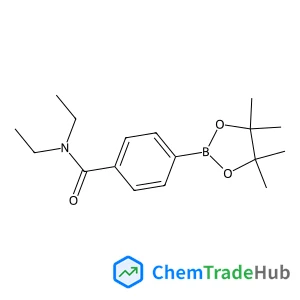
N,N-Diethyl-4-(4,4,5,5-tetramethyl-1,3,2-dioxaborolan-2-yl)benzamide
CAS番号:
325142-99-2
分子式:
C17H26BNO3
おすすめサプライヤー




免責事項
このページに表示される学術雑誌情報は、参考および研究目的のみを目的としています。当社は雑誌出版社とは提携しておらず、投稿の取り扱いも行っておりません。出版に関するお問い合わせは、各雑誌出版社に直接ご連絡ください。
表示されている情報に誤りがある場合は、support@chemtradehub.com までご連絡ください。迅速に確認し、対応いたします。