


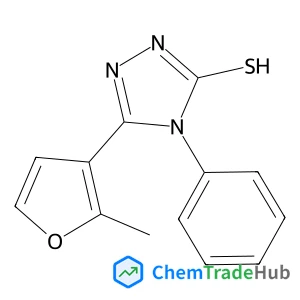
5-(2-Methyl-3-furyl)-4-phenyl-2,4-dihydro-3H-1,2,4-triazole-3-thione
CAS番号:
346464-59-3
分子式:
C13H11N3OS
Asmaa Khalil, Alexandre Barras, Rabah Boukherroub, David Devos, Sabine Szunerits
Paracellular permeability across epithelial and endothelial cells is, in large part, regulated by apical intercellular junctions also referred to as tight junctions (TJs). These junctions contribute to the spatial definition of different tissue compartments within organisms, separating them from the outside world as well as from inner compartments, with their primary physiological role of maintaining tissue homeostasis. TJs restrict the free, passive diffusion of ions and hydrophilic small molecules through paracellular clefts and are important for appropriate cell polarization and transporter protein localisation, supporting the controlled transcellular diffusion of smaller and larger hydrophilic as well as hydrophobic substances. This traditional diffusion barrier concept of TJs has been challenged lately, owing to a better understanding of the components that are associated with TJs. It is now well-established that mutations in TJ proteins are associated with a range of human diseases and that a change in the membrane fluidity of neighbouring cells can open possibilities for therapeutics to cross intercellular junctions. Nanotechnological approaches, exploiting ultrasound or hyperosmotic agents and permeation enhancers, are the paradigm for achieving enhanced paracellular diffusion. The other widely used transport route of drugs is via transcellular transport, allowing the passage of a variety of pro-drugs and nanoparticle-encapsulated drugs via different mechanisms based on receptors and others. For a long time, there was an expectation that lipidic nanocarriers and polymeric nanostructures could revolutionize the field for the delivery of RNA and protein-based therapeutics across different biological barriers equipped with TJs (e.g., blood–brain barrier (BBB), retina–blood barrier (RBB), corneal TJs, etc.). However, only a limited increase in therapeutic efficiency has been reported for most systems until now. The purpose of this review is to explore the reasons behind the current failures and to examine the emergence of synthetic and cell-derived nanomaterials and nanotechnological approaches as potential game-changers in enhancing drug delivery to target locations both at and across TJs using innovative concepts. Specifically, we will focus on recent advancements in various nanotechnological strategies enabling the bypassing or temporally opening of TJs to the brain and to the retina, and discuss their advantages and limitations.

Acta Metallurgica Sinica-English Letters

Journal of the Indian Institute of Science

Bioorganic & Medicinal Chemistry

NDT & E International

Medicinal Chemistry Research

Biocatalysis and Biotransformation

Critical Reviews in Solid State and Materials Sciences

Atomization and Sprays

Electroanalysis

Herald of the Russian Academy of Sciences
Tomer Zidki
DOI: 10.1039/C0CP01037E
Akihiro Kushima, David Parfitt, Alexander Chroneos, Bilge Yildiz, John A. Kilner, Robin W. Grimes
DOI: 10.1039/C0CP01603A
Alexander Karl Opitz, Herbert Hutter, Jürgen Fleig
DOI: 10.1039/C0CP00309C
Wensheng Bian
DOI: 10.1039/C0CP01186J
Yan-Wen Tan, Haw Yang
DOI: 10.1039/C0CP02412K
DOI: 10.1039/C0CP01966F
Mohamed Taha, Ming-Jer Lee
DOI: 10.1039/C0CP00253D
Florian Heym, Bastian J. M. Etzold, Christoph Kern, Andreas Jess
DOI: 10.1039/C0CP00097C
Wenbin Zhang, Ian J. Burgess
DOI: 10.1039/C0CP01251C
取り扱いにはPPE(プロテクティブ・パーソナル・エイド)が必要で、防ぐ手袋と保護眼鏡を着用してください。ドラフトチャンバーの使用を推奨します。漏洩した場合は、適...
この化合物の代替品としては、BOC保護基を有さないアミノ酸やその他の保護基化合物が考えられます。また、メチオキシ基を有しない他の芳香族アミノ酸も代替品として挙げ...
Methyl 2-(chloromethyl)-3-nitrobenzoate(1218910-61-2)の代替品としては、化学組成を変えることで効果を達成する...
(2R)-2-アミノ-N-ベンジル-3-ヒドロキシプロパナミドを含む廃棄物は、適切な廃棄物管理ガイドラインに基づき処理する必要があります。まず、廃棄物を適切に収...
6,7-二氢-咪唑並[1,2-a]ピリドイン-8(5h)-酮は、2-ブロモフェニルアセトインとリン酸ハロゲン化物を反応させることで合成できます。この反応は高温で...
エチル(3R)-3-ピロリジニル酢酸水和塩は、CAS番号1332459-32-1の化合物で、(R)-乙基2-(ピロリジン-3-基)酢酸塩水和塩と呼ばれます。この...
(2S)-{[(2-メチルエチルオキシ]カルボニル}アミノ)[2-(トリアフルオロメチルフェニル]エチカシック酸のCAS番号は1203454-45-8です。この...
2-ブロモ-1-(2-メチル-2-プロパニル)-4-ニトロベンゼンは、直射日光を避けて暗所で、室温(約15℃〜25℃)、乾燥した場所に保存する必要があります。ま...
市場動向としては、1-[(4-硝基フェニル)スルホニル]-1H-1,2,4-三唑は主に農業用除草剤や合成化学製品の原料として利用されています。研究トレンドとして...
Nanoscale Horizons is a leading journal for the publication of exceptionally high-quality, innovative nanoscience and nanotechnology. The journal places an emphasis on original research that demonstrates a new concept or a new way of thinking (a conceptual advance), rather than primarily reporting technological improvements. However, outstanding articles featuring truly breakthrough developments such as record performance alone may also be published in the journal. For work to be published it must be of significant general interest to our community-spanning readership. Topics covered in the journal include, but are not limited to: Synthesis of nanostructured and nanoscale materials Quantum materials 2D materials Layered materials Layered quantum materials Characterisation of functional nanoscale materials and bio-assemblies Properties of nanoscale materials Self-assembly and molecular organisation Complex hybrid nanostructures Nanocomposites, nanoparticles, nanocrystalline materials, and nanoclusters Nanotubes, molecular nanowires and nanocrystals Molecular nanoscience Nanocatalysis Theoretical modelling Single-molecules Plasmonics Nanoelectronics and molecular electronics Nanophotonics Nanochips, nanosensors, nanofluidics and nanofabrication Carbon-based nanoscale materials and devices Biomimetic materials Nanobiotechnology/bionanomaterials Nanomedicine Regulatory approaches and risk assessment
![N-[2-(2-Pyridinyl)ethyl]-1-propanamine structure](https://static.chemtradehub.com/structs/554/55496-57-6-22b4.webp "N-[2-(2-Pyridinyl)ethyl]-1-propanamine structure")
![tert-butyl 8-benzyl-2,8-diazaspiro[4.5]decane-2-carboxylate structure](https://static.chemtradehub.com/structs/336/336191-16-3-bb55.webp "tert-butyl 8-benzyl-2,8-diazaspiro[4.5]decane-2-carboxylate structure")




