


The metal atomic substitution induced half-metallic properties, metallic properties and semiconducting properties in X–N4 nanoribbons
文献情報
出版日
2023-10-07
DOI
10.1039/D3CP03983H
インパクトファクター
3.676
著者
Dong Fan, Zhihao Wang, Maoye Yin, Hengshuai Li, Haiquan Hu, Feng Guo, Zhenbao Feng, Jun Li, Dong Zhang, Zhi Li, Minghui Zhu
原文を見る
要旨
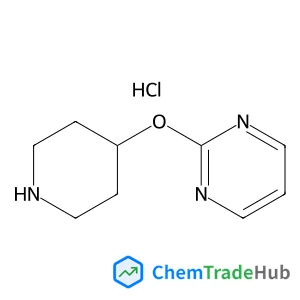
Armchair X–N4 nanoribbons (X–AN4NRs) and zigzag X–N4 nanoribbons (X–ZN4NRs) were calculated using first-principles calculations. Ferromagnets (FM) were found to be the most stable among the initial magnetic structures. Furthermore, nanoribbons were found to be thermodynamically stable through molecular dynamics simulations. It can be found that when the temperature and total energy of X–AN4NRs and X–ZN4NRs change with time, they have a small oscillation range, which confirms the dynamic stability of X–AN4NRs and X–ZN4NRs under realistic experimental conditions. Subsequently, the magnetic moment analysis of the X–AN4NRs and X–ZN4NRs revealed that the magnetic moment of the X–AN4NRs is significantly smaller than that of X–ZN4NRs. The band structure and density of states (DOS) of the X–AN4NRs and X–ZN4NRs were also computed, which indicate different properties for different transition metal nanoribbons. The results suggest that different edge structures and transition metals can influence the electronic structure of the nanoribbons. Moreover, based on the band structure and DOS, it was found that Mn–AN4NRs and Fe–ZN4NRs exhibit half-metallic properties. They can generate 100% polarized currents at the Fermi level, providing valuable information for developing spintronic devices. Our study has a positive value for regulating the properties of the nanoribbons by metal atom substitution.
おすすめジャーナル

Acta Metallurgica Sinica-English Letters

Colloid Journal

Journal of Asian Natural Products Research

Polycyclic Aromatic Compounds

Medicinal Chemistry Research

Herald of the Russian Academy of Sciences

Atomization and Sprays

Cellulose

Chinese Journal of Chemistry

Critical Reviews in Solid State and Materials Sciences
関連文献
Multidimensional steric effect for the XeF* (B, C) formation in the oriented Xe* (3P2, MJ = 2) + oriented NF3 reaction
H. Ohoyama
2010-10-21
Paper
DOI: 10.1039/C0CP00648C
High-resolution solid-state 13C μMAS NMR with long coherence life times
Suresh K. Vasa, Hans Janssen, Ernst R. H. Van Eck, Arno P. M. Kentgens
2010-11-12
Communication
DOI: 10.1039/C0CP01929A
Thermodynamics of liquids: standard molar entropies and heat capacities of common solvents from 2PT molecular dynamics
Shiang-Tai Lin
2010-11-23
Paper
DOI: 10.1039/C0CP01549K
A sublattice-model isotherm for the competitive coadsorption of hydrogen and bromide on a Pt(100)electrode
M. T. M Koper
2009-11-07
Paper
DOI: 10.1039/B912091B
Similarity between the kinetic parameters of the buffer-mediated proton exchange reaction of a xanthenic derivative in its ground- and excited-state
Jose M. Paredes, Angel Orte, Luis Crovetto, Jose M. Alvarez-Pez, Ramon Rios, Maria J. Ruedas-Rama, Eva M. Talavera
2009-11-04
Communication
DOI: 10.1039/B917333C
An ab initio insight into the Cu(111)-mediated Ullmann reaction
Manh-Thuong Nguyen, Carlo A. Pignedoli, Daniele Passerone
2010-10-26
Paper
DOI: 10.1039/C0CP00759E
Ionic liquid silver salt complexes for propene/propane separation
Friederike Agel, Fee Pitsch, Florian Felix Krull, Peter Schulz, Matthias Wessling, Thomas Melin, Peter Wasserscheid
2010-11-04
Paper
DOI: 10.1039/C0CP01104E
Guiding the time-evolution of a molecule: optical control by computer
Graham A. Worth, Cristina Sanz Sanz
2010-11-04
Perspective
DOI: 10.1039/C0CP01740J
ZnO-based dye solar cell with pure ionic-liquid electrolyte and organic sensitizer: the relevance of the dye–oxide interaction in an ionic-liquid medium
E. Guillén, J. Idígoras, T. Berger, J. A. Anta, C. Fernández-Lorenzo, R. Alcántara, J. Navas, J. Martín-Calleja
2010-10-26
Paper
DOI: 10.1039/C0CP00507J
こちらもおすすめ
化合物よくある質問
6-苄基-6,7-二氢-5H-吡咯并3,4-b吡啶とは何ですか?
6-苄基-6,7-二氢-5H-吡咯并3,4-b吡啶は、CAS番号109966-30-5の化合物です。これは、6-ベンジル基を持つ6,7-二氢-5H-吡咯並みの化...
109966-30-56-Benzyl-6,7-dihydro...
化合物よくある質問
半硫酸奎宁单水水合物はどのように保存すればよいですか?
半硫酸奎宁单水水合物は、乾燥した涼しい場所に保管し、直射日光や湿気を避ける必要があります。保存温度は常温(15〜25℃)が適切で、湿度は40%以下を維持すること...
6119-70-6Quinine sulfate hydr...
化合物よくある質問
D-核糖-5-リン酸二ナトリウムとは何ですか?
D-核糖-5-リン酸二ナトリウムは、CAS番号18265-46-8を有する化合物で、D-核糖の5位付加部位にリン酸基が結合した化合物です。この化合物は、水溶性で...
18265-46-8Disodium (2R,3R,4R)-...
2257-52-5Isopropylhydrazine
化合物よくある質問
3-乙酰基-4-羟基喹啉-2(1H)-酮はどのように合成されますか?
3-乙酰基-4-羟基喹啉-2(1H)-酮は、ハイドロキノンと酢酸アセトイルアミドのアミド化反応により合成されます。この反応は塩基触媒を用いて行われ、選択性は良好...
26138-64-73-Acetyl-4-hydroxyqu...
2280037-51-44-Amino-1-(3-bipheny...
化合物よくある質問
5-溴-4-甲基-1H-吲唑とは何ですか?
5-溴-4-甲基-1H-吲唑は、CAS番号1082041-34-6の化学物質で、化学式はC10H9BrNです。この化合物は淡黄色の結晶性粉末で、吸湿性があります...
1082041-34-65-Bromo-4-methyl-1H-...
化合物よくある質問
3-(4メトキシフェニル)オキテナン-3カーボイル酸の代替品はありますか?
3-(4メトキシフェニル)オキテナン-3カーボイル酸の代替品は、その用途により異なりますが、例えば4-(メトキシフェニル)オキテナン-3カーボイル酸や、他のオキ...
1416323-25-53-(4-Methoxyphenyl)-...
化合物よくある質問
3-イリドオキシピロロ[2,3-b]ピリジン-5-カルボキシlic酸は安全ですか?
3-イリドオキシピロロ[2,3-b]ピリジン-5-カルボキシlic酸は危険な化合物ではありませんが、適切な手袋や保護眼鏡の使用を推奨します。誤って摂取または接触...
1060816-80-93-Iodo-1H-pyrrolo[2,...
化合物よくある質問
3-氟-4- iodobenolを取り扱う際の実験室安全事項は何ですか?
3-氟-4- iodobenolは可燃性を有し、強力な反応性を持つため、取り扱いには注意が必要です。PPE(個人保護具)の着用、ドラフトチャンバーの使用、漏洩時...
122927-84-83-Fluoro-4-iodopheno...
掲載誌
Physical Chemistry Chemical Physics

CiteScore:
5.5
自己引用率:
10.3%
年間論文数:
3036
Physical Chemistry Chemical Physics (PCCP) is an international journal co-owned by 19 physical chemistry and physics societies from around the world. This journal publishes original, cutting-edge research in physical chemistry, chemical physics and biophysical chemistry. To be suitable for publication in PCCP, articles must include significant innovation and/or insight into physical chemistry; this is the most important criterion that reviewers and Editors will judge against when evaluating submissions. The journal has a broad scope and welcomes contributions spanning experiment, theory, computation and data science. Topical coverage includes spectroscopy, dynamics, kinetics, statistical mechanics, thermodynamics, electrochemistry, catalysis, surface science, quantum mechanics, quantum computing and machine learning. Interdisciplinary research areas such as polymers and soft matter, materials, nanoscience, energy, surfaces/interfaces, and biophysical chemistry are welcomed if they demonstrate significant innovation and/or insight into physical chemistry. Joined experimental/theoretical studies are particularly appreciated when complementary and based on up-to-date approaches.
おすすめ化合物
おすすめサプライヤー





免責事項
このページに表示される学術雑誌情報は、参考および研究目的のみを目的としています。当社は雑誌出版社とは提携しておらず、投稿の取り扱いも行っておりません。出版に関するお問い合わせは、各雑誌出版社に直接ご連絡ください。
表示されている情報に誤りがある場合は、support@chemtradehub.com までご連絡ください。迅速に確認し、対応いたします。