












Mechanistic insight into the photocatalytic degradation of organic pollutants and electrochemical behavior of modified MWCNTs/Cu–Co3O4 nanocomposites
文献情報
出版日
2022-05-16
DOI
10.1039/D2RE00117A
インパクトファクター
4.239
著者
M. F. Sanakousar, Vidyasagar C. C, Víctor M. Jiménez-Pérez, Mounesh, A. H. Shridhar
原文を見る
要旨
The present work reported the synthesis of pure Co3O4 and Cu–Co3O4 nanocrystals by the PEG (polyethylene glycol)-assisted microwave heating route. The crystallinity, morphology, elemental composition, and optical and electrical properties of the as-synthesized materials were characterized by XRD, FE-SEM, EDX, FTIR, UV-vis, PL, BET, EIS, and CV (electrochemical behavior) studies. The existence of cubic nanocrystals with interstitial doping was confirmed by XRD analysis. The incorporation of the dopant resulted in a reduction in the crystallite size of the synthesized samples. In addition, crystallite sizes were calculated from XRD peak broadening using both Scherrer and William–Hall plot methods. The crystallinity of the samples was confirmed by FESEM images and EDX analysis of elemental composition revealed the presence of dopant elements in the synthesized sample. FTIR spectra indicated the two absorption bands from the stretching vibration of the metal–oxygen bonds in Co3O4. The optical properties of Cu–Co3O4 nanocrystals examined using UV-visible spectroscopy showed a shift of maximum absorption to the UV region (blue shift), indicating an increase in band-gap energy. Photoluminescence spectroscopy was used to measure the trapping efficiency and migration of charge carriers which revealed the electron–hole pair's recombination behavior. The specific surface area of the synthesized samples was recorded by BET analysis. Electrochemical measurements were performed on modification of the glassy carbon electrode (GCE) with multi-walled carbon nanotubes (MWCNT) decorated with Co3O4 and Cu–Co3O4 using cyclic voltammetry and electrochemical impedance studies. The photocatalytic performance of both pure and Cu–Co3O4 nanocrystals was evaluated by the degradation of EY dye under UV-visible light irradiation. Experimental parameters including the initial dye concentration, catalyst dose, and pH were ascertained under favorable conditions for photocatalytic degradation. The maximum degradation (84.50%) was achieved at natural pH for continuous irradiation up to 300 min. The experimental results showed that the incorporation of Cu into pure Co3O4 enhanced its photocatalytic activity, which is due to a decreased rate of electron–hole recombination and an increase in specific surface area of Cu–Co3O4 nanocrystals. The in situ capture study suggests that the major active species were found to be photogenerated holes (h+) and superoxide radical anions (˙O2−) for the degradation of EY dye. The predicted masses of fragments are well justified by the mass spectral data and the cycling degradation of EY showed good reusability for Cu–Co3O4. The antimicrobial activity of pure Co3O4 and Cu–Co3O4 nanocrystals was investigated using the well-diffusion method against Gram-negative (Streptococcus mutans) and Gram-positive (Salmonella typhi) bacterial strains. Cu–Co3O4 nanocrystals can be a good candidate for environmental remediation.
おすすめジャーナル
関連文献
Structural investigation of Au(111)/butylthiolate adsorption phases
A. Chaudhuri, D. C. Jackson, T. J. Lerotholi, Robert G. Jones, T.-L. Lee, B. Detlefs, D. P. Woodruff
2010-02-23
Paper
DOI: 10.1039/B921281G
Tunable depolarized light scattering from gold and gold/silvernanorods
Boris Khlebtsov, Vitaly Khanadeev
2010-02-11
Paper
DOI: 10.1039/B925102B
Ligand dynamics on the surface of zirconium oxo clusters
Philip Walther, Michael Puchberger, F. Rene Kogler, Karlheinz Schwarz, Ulrich Schubert
2009-03-26
Paper
DOI: 10.1039/B820731C
Holey nanosheets by patterning with UV/ozone
Christoph T. Nottbohm, Sebastian Wiegmann, André Beyer, Armin Gölzhäuser
2010-02-17
Paper
DOI: 10.1039/B923863H
Characterization of surface and bulk nitrates of γ-Al2O3–supported alkaline earth oxides using density functional theory
Donghai Mei, Qingfeng Ge, Ja Hun Kwak, Do Heui Kim, Christelle Verrier, Janos Szanyi, Charles H. F. Peden
2009-03-03
Paper
DOI: 10.1039/B819347A
Influence of OHgroups on charge transport across organic–organic interfaces: a systematic approach employing an “ideal” device
Zhi-Hong Wang, Daniel Käfer, Asif Bashir, Jan Götzen, Alexander Birkner, Gregor Witte, Christof Wöll
2010-02-03
Paper
DOI: 10.1039/B924230A
Elucidation of the role of hexamine and other precursors in the formation of magnetitenanorods and their stoichiometry
Hema Singh, Shrikant Bhagwat, Samuel Jouen, Benoît Lefez, Anjali A. Athawale, Beatrice Hannoyer, Satishchandra Ogale
2010-02-19
Paper
DOI: 10.1039/B917407A
Dipole effects on molecular and electronic structures in a novel conjugate of oligo(phenyleneethynylene) and helical peptide
Hidenori Nakayama, Tomoyuki Morita, Shunsaku Kimura
2009-03-10
Paper
DOI: 10.1039/B817685J
こちらもおすすめ
化合物よくある質問
噻奈普汀乙酯の物理化学的性質は何ですか?
CAS番号66981-77-9の噻奈普汀乙酯は、結晶性白色粉末であり、分子量は476.9 g/molです。この化合物は水に溶けにくく、一般的には有機溶媒で溶解し...
66981-77-9Ethyl 7-[(3-chloro-6...
化合物よくある質問
アミピシリン不純物Fとは何ですか?
アミピシリン不純物Fは、CAS番号124774-48-7の化合物です。これは、抗生物質アミピシリンの生産過程で生成される不純物の一つであり、(4S)-2-({[...
124774-48-7Ampicillin impurity ...
化合物よくある質問
イリジウム(I)ヘキサフルオロフォスファートの代替品はありますか?
イリジウム(I)ヘキサフルオロフォスファートの代替品として、他の有機金属化合物や非有機金属化合物が使用されることがあります。具体的には、ダイゾニウム塩や他の金属...
870077-94-43-Di-i-propylphosphi...
化合物よくある質問
含有3-(苯氧基甲基)苯硼酸频那醇酯の廃棄物はどのように処理すべきですか?
含有3-(苯氧基甲基)苯硼酸频那醇酯の廃棄物は、安全な方法で処理する必要があります。まず、廃棄物を適切な容器に収集し、避けて保管します。次に、専門の廃棄処理業者...
912569-68-74,4,5,5-Tetramethyl-...
化合物よくある質問
2-甲基辛-1-醇を取り扱う際の実験室安全事項は何ですか?
取り扱う際は、密閉のゴーグルと手袋を着用することが推奨されます。ドラフトチャンバーを使用し、漏洩時には速やかに取り扱いを中止し、適切な排気設備を使用してください...
818-81-52-Methyl-1-octanol
14066-05-8Scandium triperchlor...
化合物よくある質問
3α-アセトキノイドコレステロールエステルはどのように保存すればよいですか?
3α-アセトキノイドコレステロールエステルは、常温から低温(0-5℃)の暗所で保存し、密閉容器に入れることで安定性を保つことが推奨されます。また、湿気や酸素から...
30365-63-0Methyl (3alpha,5beta...
化合物よくある質問
2-ぶンジロキシ-4-(トリフルオロメチル)フェノルビノン酸の主な用途は何ですか?
2-ぶンジロキシ-4-(トリフルオロメチル)フェノルビノン酸は、化学合成の触媒としての使用や、医薬品の合成材料としての役割があります。また、特定の合成路線で使用...
1701435-39-3[2-(Benzyloxy)-4-(tr...
化合物よくある質問
(2S,3R)-2-氨基-3-甲基丁二酸はどのように合成されますか?
(2S,3R)-2-氨基-3-甲基丁二酸は、2-ヒドロキシ-3-メチル丁酸とアミノ化反応を行うことで合成されます。触媒としてジクロロメタンが使用され、選択性と収...
121570-10-3(2S,3R)-2-amino-3-me...
化合物よくある質問
1-Benzyl-2-phenyl-1H-imidazoleはどのように保存すればよいですか?
この化合物は常温で避けてください。直射日光を避け、密閉容器で保存し、湿気を防水の容器に入れて保管してください。
37734-89-71-Benzyl-2-phenyl-1H...
掲載誌
Reaction Chemistry & Engineering

CiteScore:
0
自己引用率:
8.8%
年間論文数:
284
Reaction Chemistry & Engineering is an interdisciplinary journal reporting cutting-edge research focused on enhancing the understanding and efficiency of reactions. Reaction engineering leverages the interface where fundamental molecular chemistry meets chemical engineering and technology. Challenges in chemistry can be overcome by the application of new technologies, while engineers may find improved solutions for process development from the latest developments in reaction chemistry. Reaction Chemistry & Engineering is a unique forum for researchers whose interests span the broad areas of chemical engineering and chemical sciences to come together in solving problems of importance to wider society. All papers should be written to be approachable by readers across the engineering and chemical sciences. Papers that consider multiple scales, from the laboratory up to and including plant scale, are particularly encouraged.
おすすめ化合物
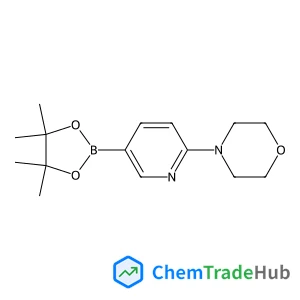
4-(5-(4,4,5,5-tetramethyl-1,3,2-dioxaborolan-2-yl)pyridin-2-yl)morpholine
CAS番号:
485799-04-0
分子式:
C15H23BN2O3
おすすめサプライヤー




免責事項
このページに表示される学術雑誌情報は、参考および研究目的のみを目的としています。当社は雑誌出版社とは提携しておらず、投稿の取り扱いも行っておりません。出版に関するお問い合わせは、各雑誌出版社に直接ご連絡ください。
表示されている情報に誤りがある場合は、support@chemtradehub.com までご連絡ください。迅速に確認し、対応いたします。