











Tunable depolarized light scattering from gold and gold/silvernanorods
文献情報
出版日
2010-02-11
DOI
10.1039/B925102B
インパクトファクター
3.676
著者
Boris Khlebtsov, Vitaly Khanadeev
原文を見る
要旨
We combine the fabrication of Au and Au/Ag core/shell nanorods (NRs), as well as experimental measurements of vis-NIR extinction, unpolarized, and cross-polarized light scattering spectra, with T-matrix and separation-of-variables simulations, to gain insight into the relation between the morphology/composition of nanoparticles and their isotropic and anisotropic optical responses. Using several Au and Au/Ag core/shell NR samples, we present unambiguous experimental evidence of a tunable correlation between the longitudinal plasmon resonances of NRs and their spectral depolarization maxima. For gold NRs, the depolarization maxima follow the extinction plasmon resonances blue-shifted from 80 to 270 nm. In contrast, the depolarization maximum of Au/Ag NRs is located just near the longitudinal resonance, and the spectral shift of the depolarization maximum is about 10 to 20 nm. The experimental extinction and depolarization spectra of gold NRs are in good agreement with T-matrix simulations based on TEM-fitted models that account for the aspect ratio polydispersity and byproduct contributions. For composite Au/Ag NRs, the separation-of-variables simulations provide a calibration curve that correlates the relative spectral shift of the extinction resonance with the silver shell thicknesses and generates experimental data that are in good agreement with estimations based on the Ag/Au mass ratio.
関連文献
Diverging surface reactions at TiO2- or ZnO-based photoanodes in dye-sensitized solar cells
Raffael Ruess, Sabina Scarabino, Andreas Ringleb, Kazuteru Nonomura, Nick Vlachopoulos, Anders Hagfeldt, Gunther Wittstock, Derck Schlettwein
2019-05-27
Paper
DOI: 10.1039/C9CP01215J
4He/3He separation using oxygen-functionalized nanoporous graphene
Maryam S. Motallebiour, Javad Karimi-Sabet, Ali Maghari
2019-05-21
Paper
DOI: 10.1039/C9CP01364D
Dynamical fluxionality, multiplicity of structural forms, and electronic properties of the B3Si11 cluster: anion photoelectron spectroscopy and theoretical calculations
Sheng-Jie Lu, Li-Shun Wu, Bao-Hua Yin, Feng Lin, Ming-Yong Chao
2019-05-10
Paper
DOI: 10.1039/C9CP01752F
The catalytic mechanism of S-acyltransferases: acylation is triggered on by a loose transition state and deacylation is turned off by a tight transition state
Xia Wang, Grace Mercure Bakanina Kissanga, E. Li, Qiang Li, Jianzhuang Yao
2019-05-17
Paper
DOI: 10.1039/C9CP02248A
Hydrophobic confinement modulates thermal stability and assists knotting in the folding of tangled proteins
João Especial, Antonio Rey
2019-05-16
Paper
DOI: 10.1039/C9CP01701A
Single Pt atom supported on penta-graphene as an efficient catalyst for CO oxidation
Ranganathan Krishnan, Shiuan-Yau Wu, Hsin-Tsung Chen
2019-05-20
Paper
DOI: 10.1039/C9CP02306B
Coarse-grained simulation studies on the adsorption of polyelectrolyte complexes upon lipid membranes
2019-05-21
Paper
DOI: 10.1039/C9CP01448A
Pretransitional behavior of viscoelastic parameters at the nematic to twist-bend nematic phase transition in flexible n-mers
Zeinab Parsouzi, Mojtaba Rajabi, Rony Saha, Prabesh Gyawali, Alan R. Baldwin, Chris Welch, Georg H. Mehl, J. T. Gleeson, Samuel Sprunt
2019-05-20
Paper
DOI: 10.1039/C9CP00984A
Enhanced photocatalytic activity of perovskite NaNbO3 by oxygen vacancy engineering
Bian Yang, Jihong Bian, Lei Wang, Jianwei Wang, Yaping Du, Zhiguang Wang, Chao Wu, Yaodong Yang
2019-05-10
Paper
DOI: 10.1039/C9CP01763A
Polarizable embedding for simulating redox potentials of biomolecules
Ruslan N. Tazhigulov, Pradeep Kumar Gurunathan, Yongbin Kim, Lyudmila V. Slipchenko, Ksenia B. Bravaya
2019-04-15
Paper
DOI: 10.1039/C9CP01533G
こちらもおすすめ
化合物よくある質問
噻奈普汀乙酯の物理化学的性質は何ですか?
CAS番号66981-77-9の噻奈普汀乙酯は、結晶性白色粉末であり、分子量は476.9 g/molです。この化合物は水に溶けにくく、一般的には有機溶媒で溶解し...
66981-77-9Ethyl 7-[(3-chloro-6...
化合物よくある質問
アミピシリン不純物Fとは何ですか?
アミピシリン不純物Fは、CAS番号124774-48-7の化合物です。これは、抗生物質アミピシリンの生産過程で生成される不純物の一つであり、(4S)-2-({[...
124774-48-7Ampicillin impurity ...
化合物よくある質問
イリジウム(I)ヘキサフルオロフォスファートの代替品はありますか?
イリジウム(I)ヘキサフルオロフォスファートの代替品として、他の有機金属化合物や非有機金属化合物が使用されることがあります。具体的には、ダイゾニウム塩や他の金属...
870077-94-43-Di-i-propylphosphi...
化合物よくある質問
含有3-(苯氧基甲基)苯硼酸频那醇酯の廃棄物はどのように処理すべきですか?
含有3-(苯氧基甲基)苯硼酸频那醇酯の廃棄物は、安全な方法で処理する必要があります。まず、廃棄物を適切な容器に収集し、避けて保管します。次に、専門の廃棄処理業者...
912569-68-74,4,5,5-Tetramethyl-...
化合物よくある質問
2-甲基辛-1-醇を取り扱う際の実験室安全事項は何ですか?
取り扱う際は、密閉のゴーグルと手袋を着用することが推奨されます。ドラフトチャンバーを使用し、漏洩時には速やかに取り扱いを中止し、適切な排気設備を使用してください...
818-81-52-Methyl-1-octanol
14066-05-8Scandium triperchlor...
化合物よくある質問
3α-アセトキノイドコレステロールエステルはどのように保存すればよいですか?
3α-アセトキノイドコレステロールエステルは、常温から低温(0-5℃)の暗所で保存し、密閉容器に入れることで安定性を保つことが推奨されます。また、湿気や酸素から...
30365-63-0Methyl (3alpha,5beta...
化合物よくある質問
2-ぶンジロキシ-4-(トリフルオロメチル)フェノルビノン酸の主な用途は何ですか?
2-ぶンジロキシ-4-(トリフルオロメチル)フェノルビノン酸は、化学合成の触媒としての使用や、医薬品の合成材料としての役割があります。また、特定の合成路線で使用...
1701435-39-3[2-(Benzyloxy)-4-(tr...
化合物よくある質問
(2S,3R)-2-氨基-3-甲基丁二酸はどのように合成されますか?
(2S,3R)-2-氨基-3-甲基丁二酸は、2-ヒドロキシ-3-メチル丁酸とアミノ化反応を行うことで合成されます。触媒としてジクロロメタンが使用され、選択性と収...
121570-10-3(2S,3R)-2-amino-3-me...
化合物よくある質問
1-Benzyl-2-phenyl-1H-imidazoleはどのように保存すればよいですか?
この化合物は常温で避けてください。直射日光を避け、密閉容器で保存し、湿気を防水の容器に入れて保管してください。
37734-89-71-Benzyl-2-phenyl-1H...
掲載誌
Physical Chemistry Chemical Physics

CiteScore:
5.5
自己引用率:
10.3%
年間論文数:
3036
Physical Chemistry Chemical Physics (PCCP) is an international journal co-owned by 19 physical chemistry and physics societies from around the world. This journal publishes original, cutting-edge research in physical chemistry, chemical physics and biophysical chemistry. To be suitable for publication in PCCP, articles must include significant innovation and/or insight into physical chemistry; this is the most important criterion that reviewers and Editors will judge against when evaluating submissions. The journal has a broad scope and welcomes contributions spanning experiment, theory, computation and data science. Topical coverage includes spectroscopy, dynamics, kinetics, statistical mechanics, thermodynamics, electrochemistry, catalysis, surface science, quantum mechanics, quantum computing and machine learning. Interdisciplinary research areas such as polymers and soft matter, materials, nanoscience, energy, surfaces/interfaces, and biophysical chemistry are welcomed if they demonstrate significant innovation and/or insight into physical chemistry. Joined experimental/theoretical studies are particularly appreciated when complementary and based on up-to-date approaches.
おすすめ化合物
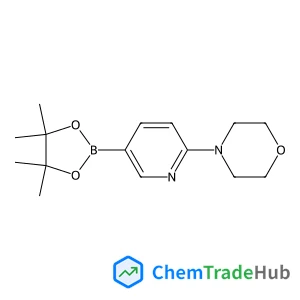
4-(5-(4,4,5,5-tetramethyl-1,3,2-dioxaborolan-2-yl)pyridin-2-yl)morpholine
CAS番号:
485799-04-0
分子式:
C15H23BN2O3
おすすめサプライヤー




免責事項
このページに表示される学術雑誌情報は、参考および研究目的のみを目的としています。当社は雑誌出版社とは提携しておらず、投稿の取り扱いも行っておりません。出版に関するお問い合わせは、各雑誌出版社に直接ご連絡ください。
表示されている情報に誤りがある場合は、support@chemtradehub.com までご連絡ください。迅速に確認し、対応いたします。