












![1-[3-(4-Morpholinylsulfonyl)phenyl]methanamine structure](https://static.chemtradehub.com/structs/933/933989-32-3-51af.webp "1-[3-(4-Morpholinylsulfonyl)phenyl]methanamine structure")
Synthesis and characterisation of polyamides based on 2,5-furandicarboxylic acid as a sustainable building block for engineering plastics
文献情報
出版日
2022-05-16
DOI
10.1039/D2PY00189F
インパクトファクター
5.582
著者
Sicco de Vos, Vasilios Tsanaktsis, Bahar Yeniad
原文を見る
要旨
Polyphthalamides (PPAs) are promising engineering thermoplastics employed in several demanding applications. At present, most of the commercially available PPAs are based on non-renewable petroleum derived resources. Herein, we investigated the synthesis of a semi-aromatic polyamide, poly(hexamethylene furanamide) (PA6F), based on a bio-based monomer, 2,5-furandicarboxylic acid (FDCA), using melt polycondesation in the presence of two catalysts: Ti-isopropoxide (TIPT) and Ti-citrate (TIC). Initial experimentation and optimisation conducted in a thin-film reactor led to PA6F having number-average molecular weight (Mn) of 14 000 g mol−1 at very low catalyst loading (400 ppm TIPT). The reaction was scaled-up to further assess the catalytic activity of these catalysts. Both catalysts displayed strong selectivity for the ester amidation reaction compared to the uncatalysed system, resulting in PA6Fs with improved molecular weights and glass transition temperatures. Incorporating a slight excess (4.5 mol%) of hexamethylenediamine (HMDA) in the feed, resulted in further enhancement in the glass transition temperature; an increase of up to 10 °C was observed. The polymer structure and properties were extensively investigated with the help of a range of analytical techniques. The resultant polymer showed high glass transition temperature (130 °C) and elastic modulus (3.5 GPa), and comparable thermal stability to its structural analogue poly(hexamethylene terephthalamide) (PA6T). For the uncatalysed system, MALDI-ToF mass spectrometry revealed a series of methylated chain ends at both oligomerisation and polycondensation steps, inhibiting molecular weight growth.
関連文献
A tunable single-component warm white-light Sr3Y(PO4)3:Eu2+,Mn2+ phosphor for white-light emitting diodes
Hongpeng You
2011-07-20
Paper
DOI: 10.1039/C1CP20635D
Electrocatalytic oxygen evolution from water on a Mn(iii–v) dimer model catalyst—A DFT perspective
I. Panas
2011-07-20
Paper
DOI: 10.1039/C0CP02132F
Molecular dynamics studies of native and substituted cyclodextrins in different media: 1. Charge derivation and force field performances
Christine Cézard, Frédéric Aubry, Florence Djedaïni-Pilard, François-Yves Dupradeau
2011-07-26
Paper
DOI: 10.1039/C1CP20854C
Modus operandi of controlled release from mesoporous matrices: a theoretical perspective
Tina Ukmar, Miran Gaberšček, Franci Merzel, Aljaž Godec
2011-07-26
Paper
DOI: 10.1039/C1CP20636B
A theoretical study of pure and mixed caesium clusters and cluster ions, CslHmO 0/+n, l ≤ 5: geometry, energetics and photofragmentation
Sebastian Krapf, Maria Schill, Sebastian Krötz, Thorsten Koslowski
2011-07-14
Paper
DOI: 10.1039/C1CP21274E
Steady-state photoinduced absorption of CdSe/CdS octapod shaped nanocrystals
Maria Rosa Antognazza, Francesco Scotognella, Karol Miszta, Dirk Dorfs, Marco Zanella, Margherita Zavelani-Rossi, Liberato Manna, Francesco Tassone
2011-07-25
Paper
DOI: 10.1039/C1CP21402K
Self-doping of molecular quantum-dot cellular automata: mixed valence zwitterions
Yuhui Lu, Craig Lent
2011-07-14
Paper
DOI: 10.1039/C1CP21332F
Bias-controlled selective excitation of vibrational modes in molecular junctions: a route towards mode-selective chemistry
Roie Volkovich, Rainer Härtle, Michael Thoss, Uri Peskin
2011-07-20
Paper
DOI: 10.1039/C1CP21161G
Interactions of 1-butyl-3-methylimidazolium carboxylate ionic liquids with glucose in water: a study of volumetric properties, viscosity, conductivity and NMR
Kelei Zhuo, Yujuan Chen, Jing Chen, Guangyue Bai, Jianji Wang
2011-07-12
Paper
DOI: 10.1039/C1CP20948E
こちらもおすすめ
化合物よくある質問
2-ヒドロキシ-5-ニトロベンジンブロモイドの代替品はありますか?
2-ヒドロキシ-5-ニトロベンジンブロモイドは特定の化学反応に適しているため、代替品は限られています。しかし、同様の構造を持つ2-ヒドロキシ-4-ニトロベンジン...
772-33-82-(Bromomethyl)-4-ni...
化合物よくある質問
N-(2-ブロモフェニル)-1-チロール-3-オキソ-3-(ピペリジニル)プロペン-2-イル)ベンゼンアミドを取り扱う際の実験室安全事項は何ですか?
N-(2-ブロモフェニル)-1-チロール-3-オキソ-3-(ピペリジニル)プロペン-2-イル)ベンゼンアミドは有毒で、皮膚や粘膜に刺激を与える可能性があります。...
1800044-77-2N-[(1Z)-1-(2-Bromoph...
化合物よくある質問
1,3プロパンジオール,2-[2-(2アミノ-6クロロ-9Hピリミジン-9-イル)エチル-1,1,2,2-D4]-2,3-ジアセタートの市場動向や研究トレンドはどうですか?
この化合物は、新規治療薬の開発に注目されています。市場では、その有効性と安全性が評価され、研究分野では、分子生物学と医薬化学の新たな発見が期待されています。
1020718-81-31,3-Propanediol, 2-[...
579-44-2Ethanone, 2-hydroxy-...
化合物よくある質問
Succinimidyl-alanyl-phenylalanyl-prolyl-phenylalanine 4-nitroanilide はどの業界で使用されていますか?
Succinimidyl-alanyl-phenylalanyl-prolyl-phenylalanine 4-nitroanilide は主に医薬品開発やポ...
128802-73-3succinimidyl-alanyl-...
化合物よくある質問
メチル6-アミノ-5-クロロピリジン-2-カーボイル酸について、適用される法規ガイドラインは何ですか?
メチル6-アミノ-5-クロロピリジン-2-カーボイル酸(CAS番号: 1256794-05-4)の使用には、GHS( Globally Harmonized S...
1256794-05-4Methyl 6-amino-5-chl...
化合物よくある質問
エチル4-(シクロ Pentagonyl)アミノ-2-メチル硫化基ピリミジン-5-カルボキシレートを取り扱う際の実験室安全事項は何ですか?
取り扱いには、耐薬品性の容器を使用し、通気性の良い場所で操作することを推奨します。漏れ時は、SDS(安全データシート)を参照して適切な措置を取ること。手洗いと洗...
211245-62-4ethyl 4-(cyclopentyl...
化合物よくある質問
(S)-3-ベンZYルピペリジン塩酸塩とは何ですか?
(S)-3-ベンZYルピペリジン塩酸塩は、CAS番号1258940-00-9で表される化合物です。これは、(S)-3-苯基哌啶的盐酸盐であり、主に医薬品の原料と...
1258940-00-9(S)-3-Phenylpiperidi...
化合物よくある質問
3,5-二甲基金剛胺の主な用途は何ですか?
3,5-二甲基金剛胺は、主に医薬品の原料として使用され、また抗うつ薬や抗アルツハイマー薬の開発に利用されます。さらに、化粧品や食品添加物の製造でも重要な役割を果...
19988-45-52-(2,3-Dihydroxyphen...
化合物よくある質問
ビス(4-メチル-2-ペンチル)フェニルカルボン酸エステルの代替品はありますか?
ビス(4-メチル-2-ペンチル)フェニルカルボン酸エステル (CAS番号: 1398066-13-1) の代替品には、ビス(2-エチルヘキシル)フェノールカルボ...
1398066-13-1Bis(4-methyl-2-penty...
掲載誌
Polymer Chemistry

CiteScore:
8.6
自己引用率:
7.3%
年間論文数:
457
Polymer Chemistry welcomes submissions in all areas of polymer science that have a strong focus on macromolecular chemistry. Manuscripts may cover a broad range of fields, yet no direct application focus is required.
おすすめ化合物
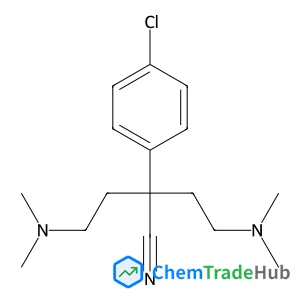
2-(4-Chlorophenyl)-4-(dimethylamino)-2-(2-(dimethylamino)ethyl)butanenitrile
CAS番号:
1246816-57-8
分子式:
C16H24ClN3
おすすめサプライヤー






免責事項
このページに表示される学術雑誌情報は、参考および研究目的のみを目的としています。当社は雑誌出版社とは提携しておらず、投稿の取り扱いも行っておりません。出版に関するお問い合わせは、各雑誌出版社に直接ご連絡ください。
表示されている情報に誤りがある場合は、support@chemtradehub.com までご連絡ください。迅速に確認し、対応いたします。